Neuroscience Explains Why Sounds Like Chewing and Clicking Cause Irritation

New neuroscience research sheds light on why certain everyday sounds such as chewing, tapping, or clicking trigger intense irritation in some people. The study explores brain mechanisms behind misophonia, revealing how specific auditory stimuli activate emotional and sensory pathways. Discover how neuroscience reveals the brain mechanisms behind irritation caused by sounds like chewing, tapping, and…
Read More

Male Fertility Myths Debunked: Why Penis Size Does Not Influence Reproductive Health

Recent scientific studies indicate that penis size is not a determining factor in male fertility and overall reproductive health. Experts emphasize that other factors such as sperm quality and hormonal balance play a more critical role in male reproductive success. Scientific studies reveal that penis size does not impact male fertility; sperm health and hormonal…

Read More

Magnetars Identified as Potential Cosmic Producers of Gold, Challenging Established Theories

Scientists are reconsidering the origins of gold in the universe, with new research suggesting magnetars—highly magnetic neutron stars—as possible first cosmic goldsmiths. This challenges conventional views that primarily attribute gold production to neutron star mergers and supernovae. New research suggests magnetars could be key in cosmic gold production, revising established theories about how gold forms…

Read More

India Advances Marine Mammal Research with State-of-the-Art Acoustic Tracking Technology

India is set to enhance its marine mammal research through the deployment of advanced acoustic tracking systems. This initiative aims to provide deeper insights into the behavior and migration patterns of marine mammals along the Indian coastline, supporting conservation efforts. India enhances marine mammal research with new acoustic tracking technology to monitor migration and support…

Read More

42,000-Year-Old Crayon Discovery Sheds Light on Early Human Creativity

Scientists have unearthed a 42,000-year-old crayon in a prehistoric site, providing new insights into the artistic skills and cognitive abilities of early humans. The discovery challenges previous assumptions about the timeline of symbolic expression in human history. Scientists discover 42,000-year-old crayon, revealing early human creativity and pushing back the timeline of symbolic expression in prehistoric…

Read More

How Horror Films Affect Brain Activity and Emotional Response

Recent studies reveal the impact of horror films on brain activity, highlighting how fear and suspense stimulate emotional and cognitive functions. Researchers explain why horror movies trigger heightened alertness and the release of adrenaline, engaging viewers in unique psychological ways. Explore how horror films affect brain activity, triggering fear responses and emotional engagement, and why…

Read More

Scientific Study Confirms Women Require More Sleep Than Men

Recent scientific research indicates that women need more sleep than men to function optimally. The study explores biological and cognitive factors behind this difference and highlights the importance of sufficient rest for women’s health and productivity. Study confirms women require more sleep than men due to biological and cognitive factors, highlighting the importance of rest…

Read More

Scientists Unravel Long-Standing Mystery of the Tiny T-Rex Fossil

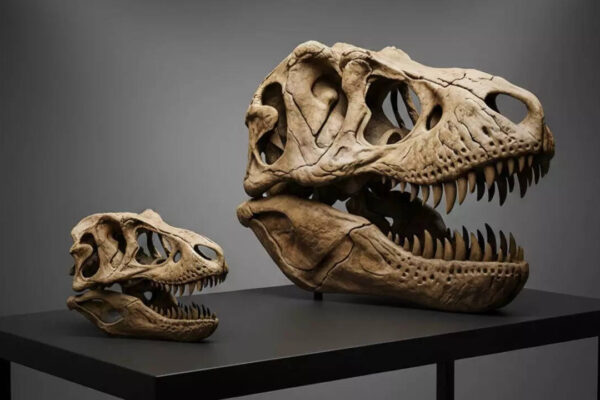
Researchers have resolved a decades-old paleontological mystery surrounding the existence of a tiny Tyrannosaurus rex specimen. The new findings clarify whether the fossil represents a juvenile or a distinct species, reshaping our understanding of T-Rex growth and evolution. Scientists have solved the mystery of tiny T-Rex fossils, revealing they are juveniles, not separate species, enhancing…

Read More