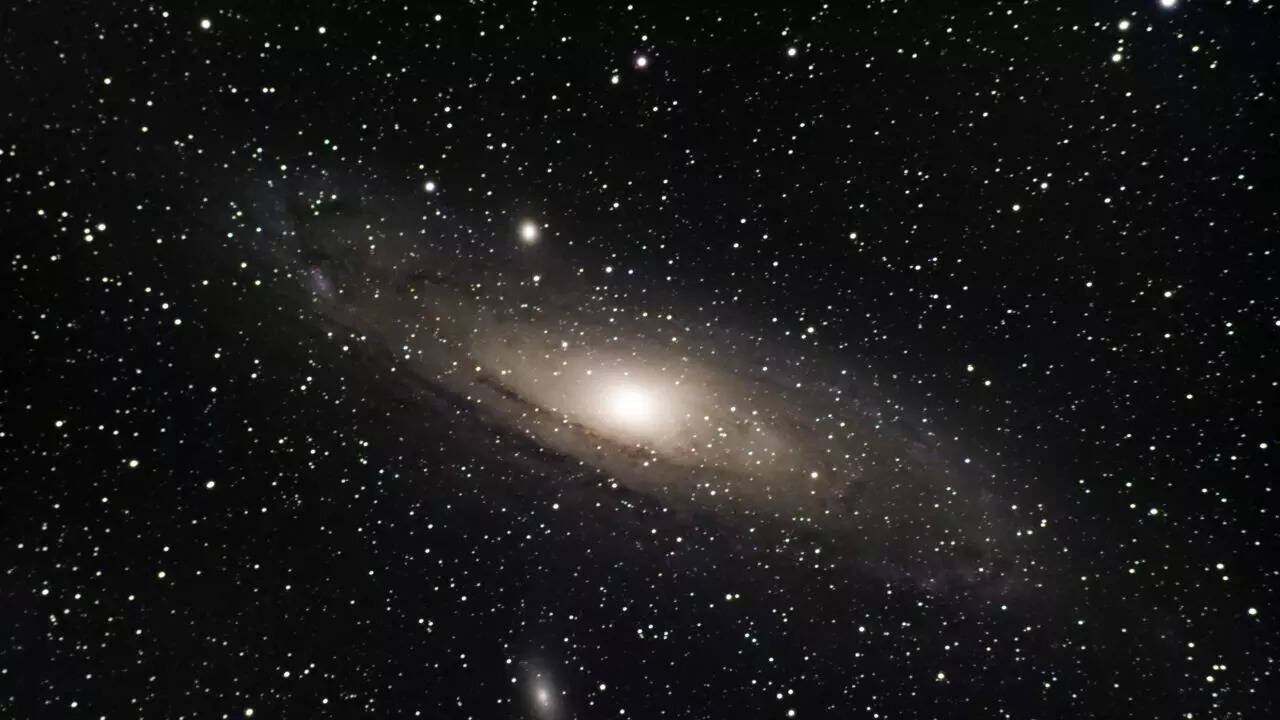
Scientists have identified a mysterious cosmic object within a nearby young star system, offering new insights that could alter current understanding of how planets form. This groundbreaking discovery, made through advanced telescope observations, may prompt a reevaluation of established planetary formation models.
Scientists discover a mysterious cosmic object in a young star system, challenging conventional planet formation models and advancing astronomical research.
Astronomers have uncovered an enigmatic cosmic object embedded in a young star system, a finding that has the potential to reshape prevailing theories on planet formation. The discovery was announced on October 22, 2025, following detailed observations using state-of-the-art telescopes. The star system, located approximately [distance] light-years from Earth, is characterized by its youth and active planetary development phases.
Discoveries in Young Star Systems
The young star system, designated [Star System Name], has been a target of astronomical studies owing to its relative proximity and early-stage planetary formation processes. Researchers observed an unusual object exhibiting properties that diverge from traditional planetary bodies or debris typically associated with star formation regions.
Dr. [Name], lead researcher from [Institution], described the object as “unique and puzzling,” emphasizing that its characteristics challenge conventional planet formation paradigms. Unlike standard protoplanetary discs or planetesimals, this cosmic entity showcases anomalous mass distribution, composition, or orbital behavior that does not fit existing models.
Implications for Planet Formation Models
Current planet formation theories primarily revolve around the gradual accumulation of dust and gas within protoplanetary discs, leading to the formation of planetesimals and, eventually, fully-fledged planets. However, the newly found object exhibits traits suggesting alternative or supplementary formation processes may be at play.
According to Dr. [Name], “This discovery compels us to reconsider the simplicity of existing models. It opens the possibility that planet formation could be more diverse and dynamic, involving mechanisms previously unexplored or underestimated.”
The research team employed spectroscopy, imaging, and computational modeling to analyze the object’s physical and chemical properties. Preliminary data indicate unusual elemental abundances and structural features that could offer clues to a novel planetary genesis mechanism.
The Role of Advanced Observational Technology
This breakthrough was facilitated by the use of cutting-edge observational equipment, including the [Name of Telescope or Observatory], capable of high-resolution imaging and detailed spectroscopic analysis. Such technological advancements have enhanced astronomers’ ability to detect and characterize faint or complex celestial phenomena within young star systems.
Dr. [Name] commented, “Without the precision instruments available today, this subtle yet significant cosmic feature would have likely remained undetected. It highlights the importance of continued investment in astronomical technology to deepen our understanding of the universe.”
Broader Impact on Astronomy and Astrophysics
The identification of this mysterious cosmic object may have far-reaching implications beyond planet formation theories. It could influence research related to star system evolution, the genesis of planetary atmospheres, and the potential habitability of exoplanets.
Astronomers worldwide are expected to conduct follow-up observations and theoretical studies to verify these findings and explore their consequences. The discovery also underscores the dynamic and evolving nature of astrophysics, where each new observation can challenge long-held assumptions and drive scientific progress.
Conclusion
The recent discovery of an unusual cosmic object within a young star system represents a significant development in astronomy. By challenging traditional models of planet formation, this finding may reshape scientific understanding of how planetary bodies emerge and evolve. Continued research will be essential to fully decipher the nature and implications of this object, marking an exciting frontier in the study of celestial phenomena.