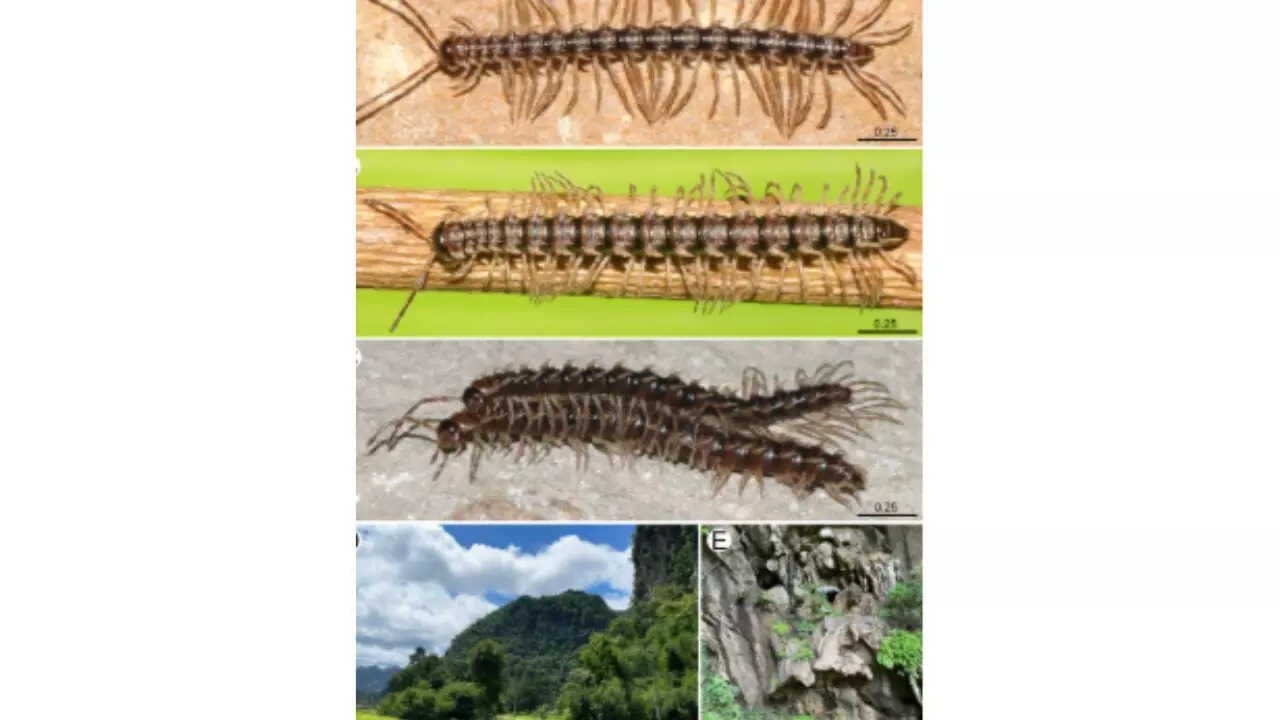
Scientists have discovered a new dragon-like millipede species in Thailand’s Pha Daeng cave, shedding light on previously unknown subterranean ecosystems. This finding highlights the biodiversity of cave habitats and the importance of preserving such environments.
Scientists discover a new dragon-like millipede in Thailand’s Pha Daeng cave, revealing unique subterranean ecosystems and biodiversity.
In a remarkable discovery announced on October 19, 2025, researchers have identified a new species of millipede exhibiting dragon-like features in the Pha Daeng cave system located in northern Thailand. This finding not only adds to the known biodiversity of the region but also offers fresh insights into the complex and mysterious ecosystems thriving beneath the earth’s surface.
Discovery and Description
The newly found millipede was uncovered during a recent expedition led by a team of biologists specializing in cave fauna. Characterized by its elongated body and distinctive spiny projections reminiscent of mythical dragons, the millipede represents a unique addition to the Diplopoda class. The specimen was found deep within the Pha Daeng cave, an area previously underexplored by scientists despite its ecological significance.
According to Dr. Ananda Phanichphant, the expedition’s lead scientist, “The morphology of this millipede is unlike any other documented species in Southeast Asia. Its dragon-like appearance is truly fascinating and may provide clues about evolutionary adaptations to cave environments.”
Ecological Significance
The discovery underscores the complexity of subterranean ecosystems, which often harbor species adapted to extreme and isolated conditions. Caves like Pha Daeng function as pockets of biodiversity, with organisms that have evolved over millennia in response to limited light, scarce resources, and stable temperatures.
This new species’ presence indicates a potentially larger community of specialized cave-dwelling organisms that remain undocumented. The researchers emphasize that such discoveries highlight the critical need for continued biological surveys and conservation efforts to protect these fragile habitats from threats such as pollution, tourism, and habitat destruction.
Conservation and Future Research
Thailand’s Pha Daeng cave is part of a larger karst landscape known for its rich geological formations and biological diversity. Protecting this area aligns with broader environmental goals to preserve biodiversity hotspots. The research team plans to conduct further studies to understand the millipede’s ecology, behavior, and possible roles within the cave ecosystem.
Dr. Phanichphant added, “Our work is just beginning. Each new species we uncover is a reminder of how much of the natural world remains a mystery, especially in subterranean environments. Continued research and conservation are vital to safeguard these ecosystems for future generations.”
Conclusion
The discovery of the dragon-like millipede species within Thailand’s Pha Daeng cave is a significant contribution to the understanding of subterranean biodiversity. It opens new avenues for scientific exploration and reinforces the importance of protecting delicate cave ecosystems. As research progresses, further insights into these hidden biological communities are anticipated, potentially revealing more unique and unknown species.