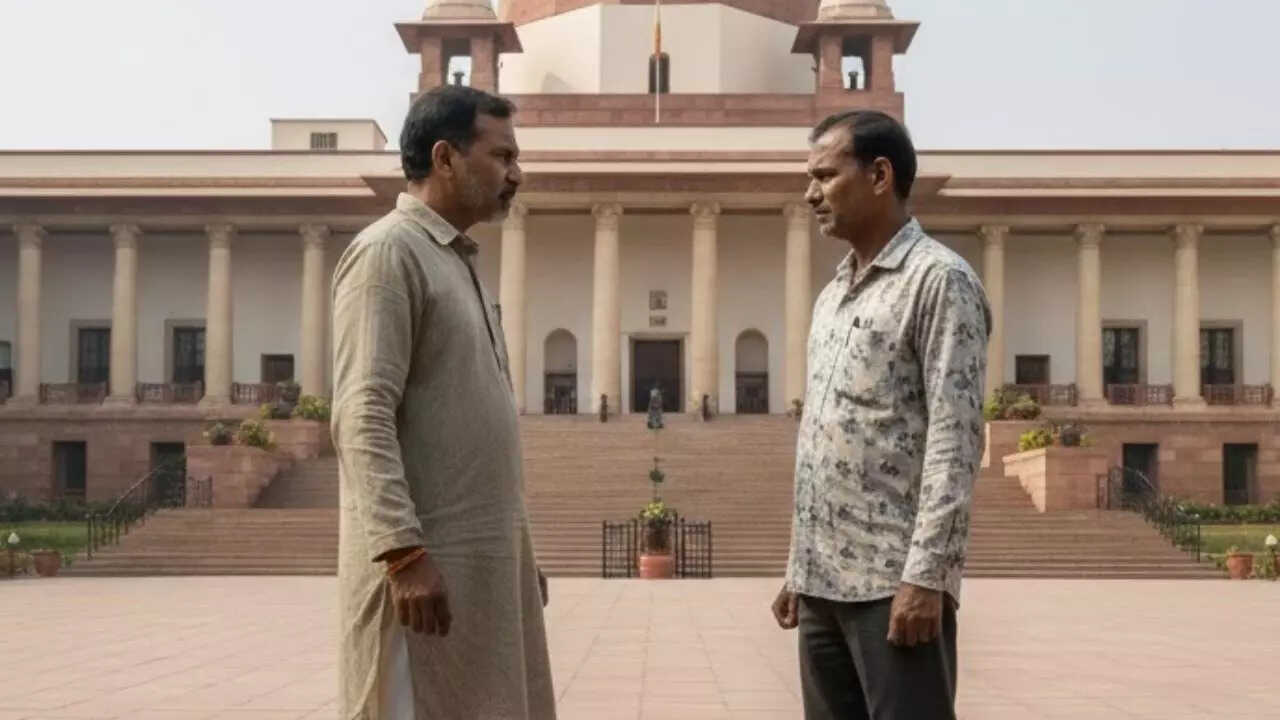
The Supreme Court of India ruled in favor of a brother who sold his late father’s house despite not being a beneficiary in the Will. The apex court’s decision clarified legal aspects surrounding property rights among heirs in absence of explicit shares in a Will.
Supreme Court rules brother’s sale of father’s house valid despite no share in Will, clarifying heirs’ property rights under Indian succession laws.
In a landmark judgment delivered on October 30, 2025, the Supreme Court of India ruled in favor of a brother who had sold his father’s house even though he was not explicitly mentioned as a beneficiary in the Will. The case has significant implications for property inheritance disputes and clarifies aspects of successor rights when the Will does not specify shares for all legal heirs.
The dispute originated when the deceased father’s property, a residential house, was sold by one of his sons without the consent of his siblings, who were named successors in the inheritance Will. These siblings contested the sale, arguing that the brother had no legal right to dispose of the property as he was not a beneficiary entitled to a share in the Will.
The Supreme Court, after examining the facts and relevant laws, ruled that the brother was entitled to sell the house because, under applicable succession laws, all legal heirs possess rights over ancestral property irrespective of the Will’s distribution specifics. The court emphasized that a Will does not necessarily override the statutory rights of heirs unless the property is strictly self-acquired and bequeathed solely to named beneficiaries.
Legal experts note that this judgment highlights the distinction between self-acquired and ancestral property in Indian inheritance law. Ancestral properties are inherited by legal heirs through lineage and cannot be alienated without consent from all co-sharers. Conversely, self-acquired property can be freely disposed of by the owner unless otherwise restricted.
Justice A.K. Mehta, delivering the verdict, stated, “The absence of a share in the Will does not nullify the brother’s rights as a legal heir under Hindu Succession Act. The sale, under the circumstances and given the nature of the property, is valid and enforceable.”
This ruling comes amid growing concerns regarding property disputes among heirs in India, where ambiguities in Wills and absence of clear documentation often lead to prolonged legal battles. The apex court’s decision aims to reduce such conflicts by clarifying heirs’ rights and the enforceability of property transactions involving ancestral assets.
In conclusion, the Supreme Court’s judgment reinforces that legal heirs maintain significant rights over their ancestral property regardless of Will stipulations and that property sales conducted by such heirs may stand valid if aligned with prevailing succession laws. This case sets a precedent for future inheritance disputes, emphasizing the importance of understanding legal frameworks beyond the terms of a Will.