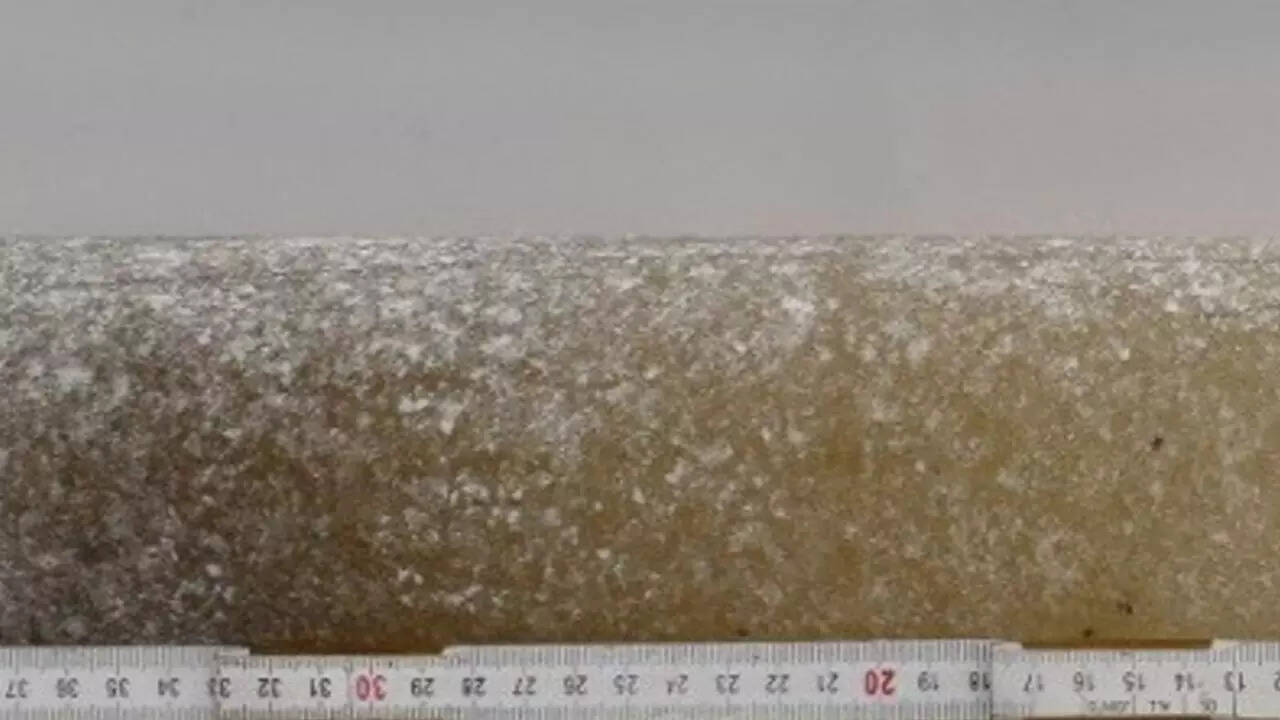
Scientists have analyzed 6-million-year-old Antarctic ice cores to understand Earth’s historical warming patterns. The findings reveal critical insights into past temperature fluctuations, offering warnings for future climate change projections.
Study of 6-million-year-old Antarctic ice reveals past global warming patterns, offering crucial insights and warnings about future climate change.
In a groundbreaking study published recently, researchers have examined Antarctic ice dating back six million years to uncover vital clues about Earth’s historical climate conditions. This ancient ice, preserved in one of the planet’s most remote regions, offers a unique window into how the Earth’s temperature rose and fell before the current era, shedding light on mechanisms that may influence future global warming.
The research team, comprising climate scientists from leading institutions worldwide, analyzed isotopic compositions and trapped gas bubbles within the ice cores extracted from the Antarctic continent. These data provided detailed records of atmospheric temperatures and greenhouse gas concentrations from the late Miocene Epoch, a period when Earth experienced significant warmth compared to today.
Understanding Earth’s Past Climate
The late Miocene period, approximately 6 million years ago, was characterized by temperatures several degrees higher than current global averages. This warmth facilitated reduced ice coverage and higher sea levels. By studying the Antarctic ice cores from this era, scientists have been able to reconstruct temperature trends and atmospheric composition, enhancing understanding of how natural climatic processes operated under warmer conditions.
According to lead researcher Dr. Emily Carter, “The isotopic signatures trapped in these ancient ice layers help us decode the Earth’s temperature history and reveal how greenhouse gases interacted with global temperatures during periods of natural warming.”
Implications for Contemporary Climate Change
The detailed insights gleaned from this ancient ice have direct implications for current climate change scenarios. Modern global temperatures are rising at unprecedented rates due to anthropogenic greenhouse gas emissions. By comparing historical warming events with present-day trends, researchers can improve climate models and predict potential long-term impacts more accurately.
Co-author Professor Michael Hughes stated, “Studying past warm periods allows us to identify tipping points and feedback mechanisms in the climate system. This knowledge is crucial for anticipating the trajectory of today’s climate crisis and informing mitigation strategies.”
Future Warnings Drawn from Ancient Ice
One critical finding from the study is how sensitive Earth’s climate system was to changes in atmospheric carbon dioxide millions of years ago. The ancient warming episodes demonstrate that even modest increases in greenhouse gases can trigger significant temperature rises and ice loss. This serves as a stark warning as current CO2 levels continue to escalate.
The research thus emphasizes the importance of limiting greenhouse gas emissions to prevent crossing critical thresholds that could lead to irreversible climate shifts. It also highlights the Antarctic ice’s role as both a recorder and indicator of climate dynamics.
Conclusion
The analysis of 6-million-year-old Antarctic ice cores provides invaluable insights into Earth’s natural climate variability and the mechanisms driving global warming. These findings underscore the urgency of understanding and addressing current climate change challenges by learning from the planet’s distant past. As scientific investigations continue, such research stands at the forefront of informing global efforts to mitigate and adapt to a warming world.