Scientists have detected organic compounds, often referred to as the ‘seeds of life,’ embedded in icy particles far beyond our own galaxy. This groundbreaking discovery sheds light on the potential for life-forming materials to exist across the cosmos, expanding our understanding of astrobiology and the origins of life.
Scientists discover organic molecules, the ‘seeds of life,’ in deep space ice beyond the Milky Way, revealing life’s building blocks across the cosmos.
In a remarkable discovery announced on October 29, 2025, astronomers have identified organic molecules, often termed as “seeds of life,” within deep space ice located far beyond the Milky Way galaxy. This finding offers new insights into the distribution of life-forming compounds across the universe and lends support to theories that the basic building blocks of life are widespread in cosmic environments.
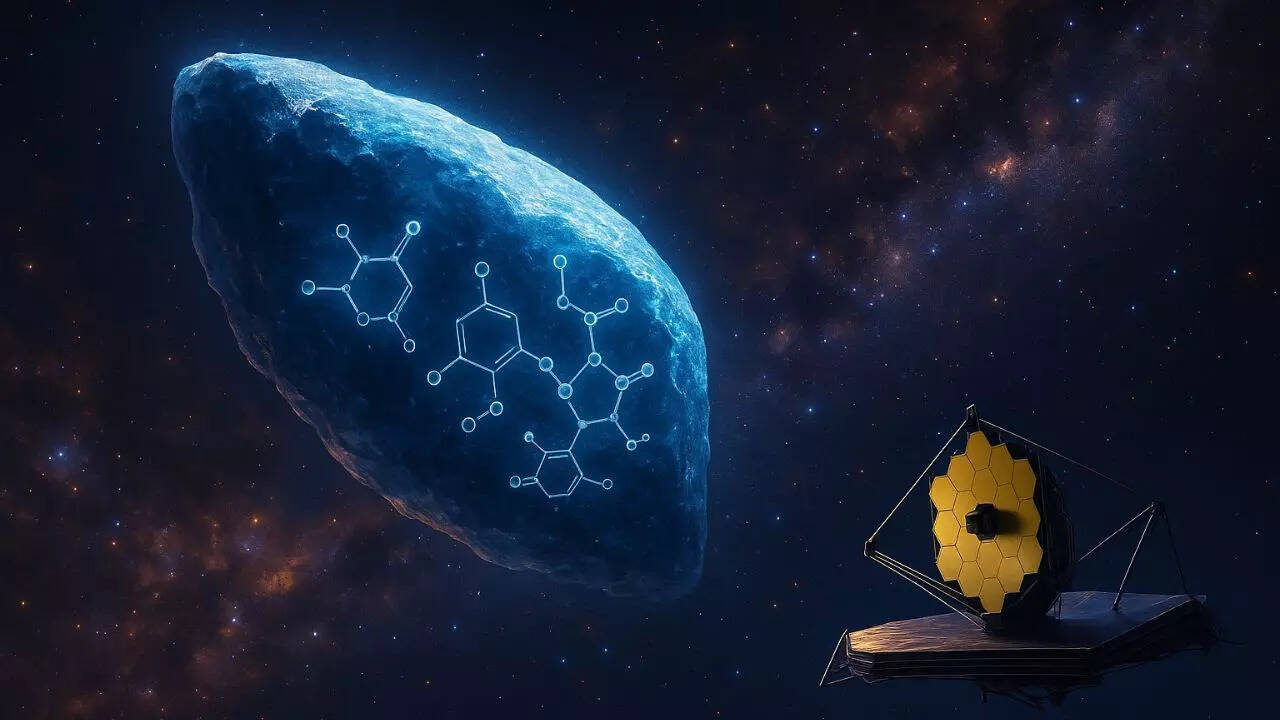
Scientists from an international consortium employed advanced spectroscopic techniques aboard a space observatory to analyze icy particles existing in distant intergalactic clouds. These particles, primarily composed of water ice mixed with complex organic molecules such as methanol, formaldehyde, and potentially amino acid precursors, were detected in regions previously considered too remote or inhospitable for such materials.
The lead researcher, Dr. Elena Vassiliev of the European Space Agency, commented, “Our analysis revealed the presence of complex organic compounds embedded in icy grains more than several million light-years away, marking the furthest detection of these life-related molecules to date.” She added, “This discovery suggests that the fundamental components necessary for life could be more common throughout the universe than previously believed.”
The presence of these organic molecules in extraterrestrial ice supports hypotheses that prebiotic chemistry—the set of chemical processes leading to life—is not confined to Earth or even our galaxy. Instead, it may occur in a variety of cosmic environments where ice and radiation interact, potentially providing the raw materials for life wherever conditions permit.
Astrobiologists see this as a significant step forward in understanding panspermia theories, which propose that life or its precursors can be distributed via space dust, comets, and asteroids. The discovery fuels optimism for future missions targeting exoplanets and interstellar objects, where similar chemical signatures might be found, indicating the possibility of life or pre-life conditions.
Moreover, the analytical methods used hold promise for further research. By expanding our capability to study molecular compositions at vast cosmic distances, scientists can better explore the chemical diversity of the universe.
While the direct connection between these organic molecules and actual life remains to be studied, the detection of complex organic chemistry far beyond the Milky Way provides compelling evidence of the universality of life’s chemical foundations.
Continued observations and upcoming space missions, including the launch of next-generation telescopes and probes, aim to refine our understanding of the distribution and formation of these organic compounds across different galaxies. Such investigations will deepen humanity’s understanding of the origins of life and the potential for life elsewhere in the cosmos.
In summary, the groundbreaking detection of organic molecules in deep space ice beyond our galaxy highlights the widespread presence of life’s precursors in the universe, opening new frontiers in astrobiology and cosmic chemistry.