Astronomers have identified the comet 3I/ATLAS as possibly the oldest comet ever observed, with an estimated age of around 7 billion years, predating the formation of the Solar System. This discovery offers invaluable insights into the early universe and the origins of celestial bodies.
Astronomers discover comet 3I/ATLAS, potentially the oldest comet at 7 billion years, offering insights into the early universe before the Solar System’s formation.
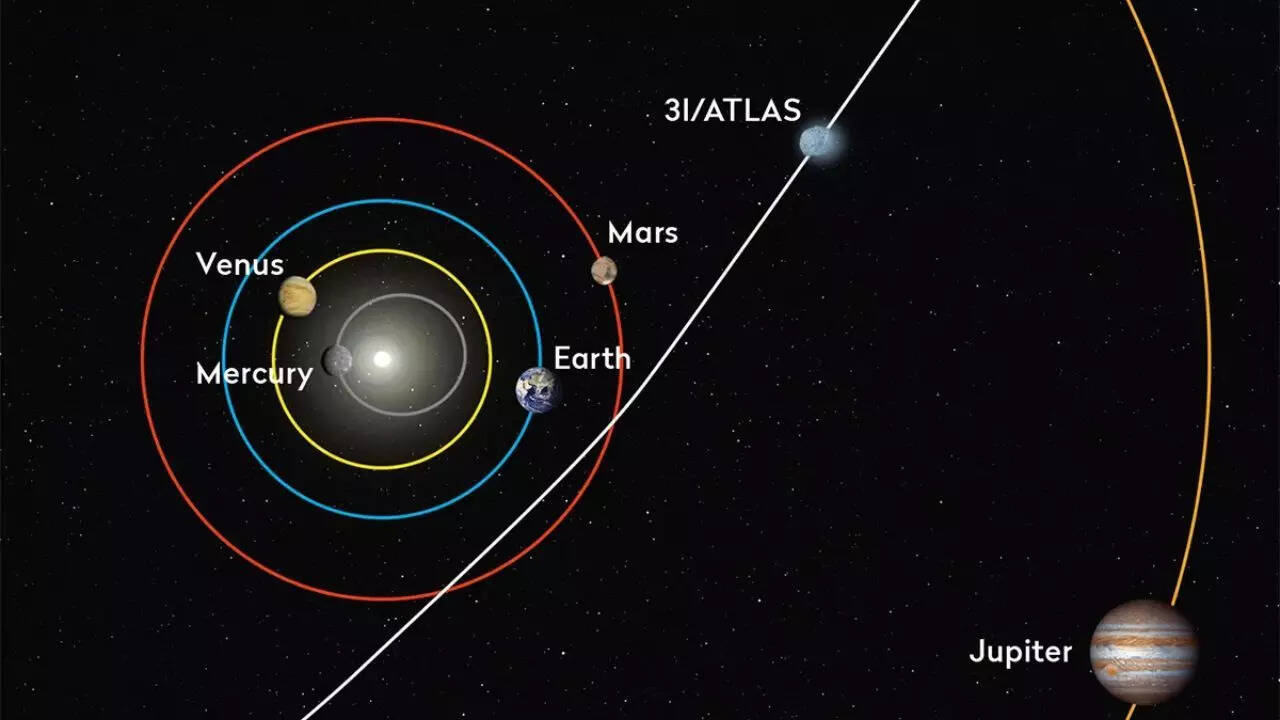
Astronomers around the world are abuzz with the recent discovery of comet 3I/ATLAS, an interstellar visitor that may be the oldest comet ever recorded, with an estimated age of roughly 7 billion years—significantly predating the formation of our Solar System. First observed in 2024 by the Asteroid Terrestrial-impact Last Alert System (ATLAS) in Hawaii, this comet’s ancient origins present a groundbreaking opportunity to understand the early universe and the materials that existed before the birth of our cosmic neighborhood. 3I/ATLAS’s trajectory through the solar system was tracked meticulously by telescopes globally, confirming its interstellar nature due to its hyperbolic orbit, which indicates it originated beyond the sun’s gravitational influence. Unlike comets native to our Solar System, which typically date back about 4.6 billion years, aligned with the solar system’s formation, 3I/ATLAS carries material formed approximately 7 billion years ago. Scientists believe this comet’s composition preserves primordial matter from before the sun and planets coalesced. Understanding such ancient material could shed light on the processes that governed the early universe’s molecular chemistry and the formation of planetesimals and stars. According to Dr. Elena Martinez, an astrophysicist at the European Southern Observatory, “3I/ATLAS offers an unprecedented window into the conditions of the galaxy some 3 billion years before our Solar System existed. Studying its makeup could help us decipher what the building blocks of planets and life looked like eons ago.” The comet’s discovery was facilitated by the ATLAS survey’s continuous monitoring of the night sky, designed primarily to identify potentially hazardous asteroids. Its detection relies on spotting moving objects against the backdrop of fixed stars. Once identified, follow-up observations using ground-based and space telescopes assessed its trajectory, speed, and spectral properties. Early analyses of 3I/ATLAS’s composition suggest it contains an exotic mix of ices and organic compounds not typically found in local comets, supporting the hypothesis of its ancient extragalactic origin. Researchers involved in studying 3I/ATLAS emphasize its uniqueness, as few interstellar objects have been observed passing through the Solar System to date. The prior interstellar visitor, ‘Oumuamua, detected in 2017, sparked intense debate due to its unusual shape and behavior, but 3I/ATLAS offers a different window—one into ancient cometary materials. The implications of this discovery extend beyond astronomy, potentially influencing our understanding of cosmic dust, molecular clouds, and even the origins of life. Long-term monitoring and potential missions might be planned to examine interstellar objects like 3I/ATLAS more closely in the future. In conclusion, the identification of comet 3I/ATLAS as possibly the oldest comet ever observed at 7 billion years old offers a remarkable glimpse into the history of matter that predates our Solar System. Continued study of this ancient visitor promises to deepen scientific insight into the universe’s formative years and the processes that led to the creation of stars, planets, and ultimately life itself.