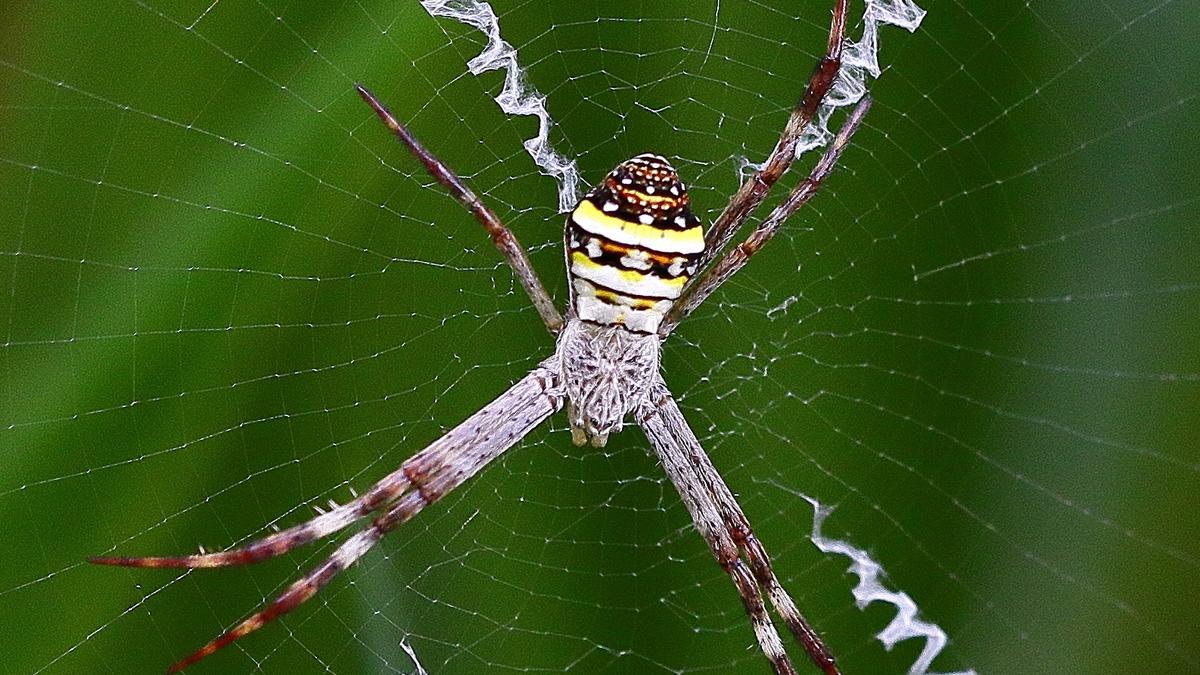
New research has unveiled that the mysterious decorations found in spider webs play a crucial role in improving prey detection. The findings provide novel insights into spider behavior and could influence future studies on arachnid predation strategies.
New research reveals spider web decorations, stabilimenta, improve prey detection by enhancing vibrational signals, offering fresh insights into spider behavior.
Scientists have long been intrigued by the peculiar decorations — known as stabilimenta — that some spiders weave into their webs. These conspicuous patterns, often made of silk, have puzzled researchers regarding their true purpose. However, a recent study published on October 31, 2025, in a leading scientific journal has revealed that these web decorations enhance the spiders’ ability to detect and capture prey.
Located in various habitats, including tropical forests and temperate regions, spiders belonging to species such as Argiope have been known to create these elaborate silk designs. Until now, hypotheses about their function ranged from camouflage and predator deterrence to attracting prey or regulating web temperature.
Dr. Anjali Rao, lead researcher at the Indian Institute of Science, explained, “Our experiments demonstrate that these silk decorations act as sensory amplifiers. They improve the spider’s ability to perceive vibrations caused by potential prey, thereby increasing hunting efficiency.”
The study involved controlled observations where spiders with and without web decorations were exposed to a variety of prey types. Results showed a significant increase in capture success when the stabilimenta were present. The silk patterns appear to modify the transmission of vibrational signals across the web, effectively alerting spiders to the presence of struggling insects.
Moreover, this discovery refines the understanding of arachnid ecology and behavior. By elucidating the functional role of web decorations, the research contributes to the broader knowledge of predator-prey interactions within ecosystems.
Experts suggest that this insight could have implications beyond academic interest. “Understanding how spiders optimize prey detection could inspire biomimetic designs in sensor technologies,” noted Dr. Michael Chen, an arachnologist not involved in the study.
While the debate over other possible functions of stabilimenta continues, the evidence supporting enhanced prey detection adds a vital piece to the puzzle of spider web adaptations.
In conclusion, the study sheds light on the functional significance of spider web decorations, demonstrating their role in boosting prey detection. These findings enrich scientific comprehension of spider hunting strategies and may inspire future technological innovations based on natural designs.