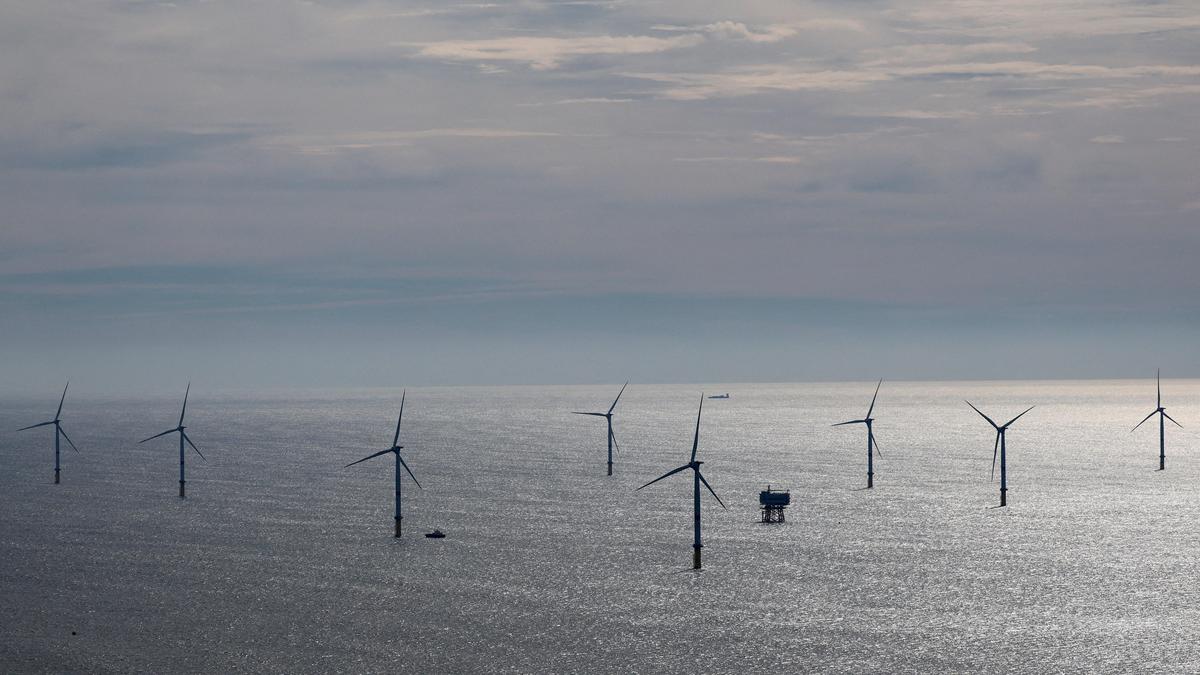
A recent report forecasts that offshore wind energy capacity worldwide is set to triple by 2030, driven by significant growth in Europe and Asia, even as the United States experiences slower development. The expansion underscores the growing emphasis on renewable energy to combat climate change and meet rising electricity demands.
A new report reveals global offshore wind capacity is set to triple by 2030, driven by Europe and Asia despite a U.S. slowdown in offshore wind development.
Offshore wind energy capacity is projected to triple globally by 2030, according to a report released on October 30, 2025. This surge is propelled by substantial investments and policy support primarily in Europe and Asia, even though the United States faces delays and slower growth in its offshore wind sector. The findings highlight the robust momentum in the offshore wind industry as countries strive to transition towards cleaner energy sources to address climate change and energy security.
Global Growth Trajectory
The report outlines that global offshore wind capacity, which stood at approximately 50 gigawatts (GW) in 2025, is expected to exceed 150 GW by 2030. Europe remains the leading region, accounting for the majority of existing and planned projects, buoyed by strong government commitments and technological advancements reducing costs. Asian countries, including China, Taiwan, and South Korea, have also accelerated development, capitalizing on favorable coastal conditions and industrial policies aimed at boosting renewable energy.
United States Faces Challenges
In contrast, the U.S. offshore wind market has encountered significant hurdles, contributing to a slowdown relative to earlier optimistic forecasts. Regulatory complexities, supply chain bottlenecks, and high project costs have delayed several initiatives along the East Coast, traditionally seen as a promising hub for offshore wind. Despite these setbacks, government agencies and industry stakeholders continue efforts to streamline permitting processes and incentivize investment.
Industry Perspectives and Technological Innovations
Industry experts emphasize that technological improvements, such as larger turbines and floating foundations, are enabling access to deeper waters and higher wind speeds, which enhance energy output and economic viability. “The potential of offshore wind to contribute substantially to global clean energy targets remains undeniable,” said Dr. Elaine Matthews, an energy analyst. “Even with regional variations, the overall outlook is highly positive.”
Policy Implications and Climate Goals
The accelerated deployment of offshore wind aligns with worldwide commitments to reduce greenhouse gas emissions under the Paris Agreement. Governments are increasingly integrating offshore wind into national energy strategies to diversify energy mixes, reduce reliance on fossil fuels, and ensure energy resilience. The industry’s expansion also promises economic benefits through job creation and technological leadership.
Conclusion
Despite regional disparities, particularly the slower pace in the United States, the offshore wind sector is on track for significant growth by 2030. The anticipated tripling of capacity underscores a global shift toward sustainable energy sources driven by environmental imperatives and advancing technology. Continued progress will depend on effective policies, innovation, and addressing infrastructure challenges to harness offshore wind’s full potential.