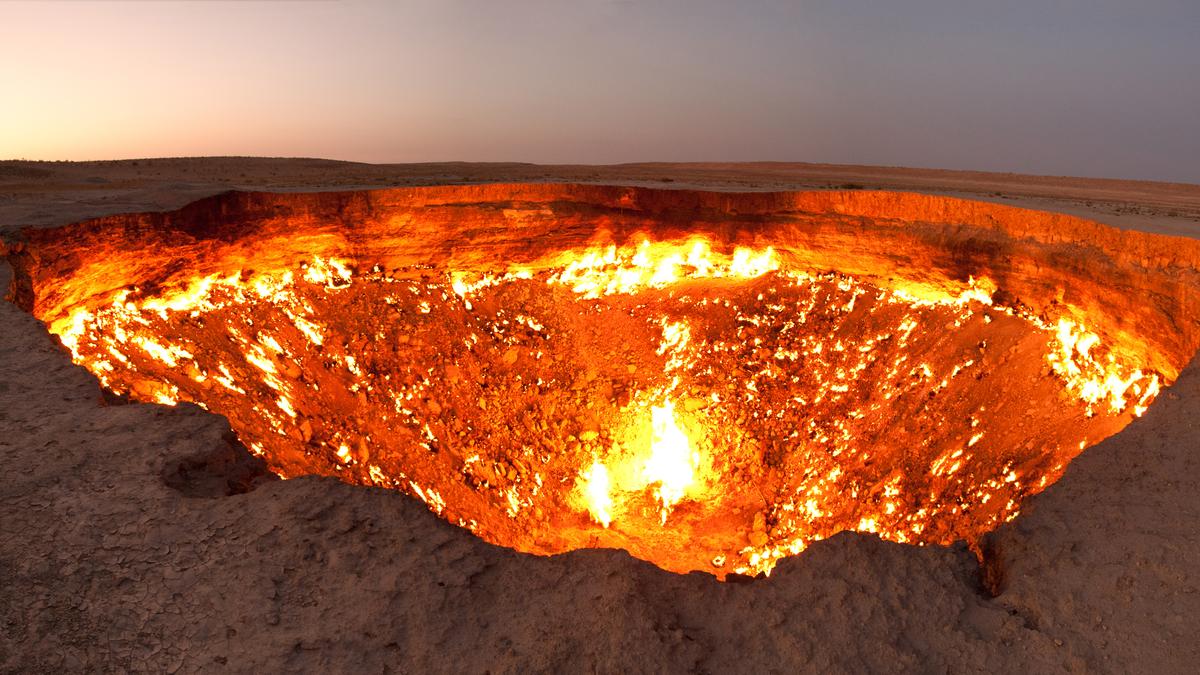
The ‘Door to Hell’ is a fiery gas crater in Turkmenistan that has been burning continuously for over 50 years. Originating from a Soviet-era natural gas drilling accident, it remains a striking geological and tourist landmark in the Karakum Desert.
Explore the history and significance of Turkmenistan’s ‘Door to Hell,’ a continuously burning natural gas crater burning since 1971 in the Karakum Desert.
In the vast Karakum Desert of Turkmenistan lies one of the world’s most infamous geological phenomena known as the “Door to Hell,” a massive fiery gas crater that has been burning relentlessly for over five decades. This natural gas field, set aflame since 1971, continues to draw curiosity and awe, raising questions about its origin, significance, and impact on the environment and local communities.
The story behind the Door to Hell begins during the Soviet Union era in 1971 when Soviet geologists were drilling for natural gas in the Karakum Desert. During their exploration, they accidentally tapped into a cavern of subterranean natural gas, causing the ground to collapse and form a vast crater approximately 70 meters in diameter and 20 meters deep. To mitigate the escape of dangerous methane gas into the atmosphere, the scientists decided to ignite the gas, expecting the fire to burn out in a few weeks. However, the fire has been burning continuously ever since.
This ongoing combustion of methane, a potent greenhouse gas, transformed the site into a remarkable flaming pit that glows eerily at night, earning its ominous nickname: the “Door to Hell.” Located near the village of Derweze, it has become a notable attraction for adventurous tourists and researchers interested in geology and energy resources.
Experts note that the crater’s persistence is due to the vast reserves of natural gas feeding the fire beneath the surface. The continuous burning reduces the risk of uncontained methane release, which poses significant environmental hazards given methane’s capacity to trap heat in the atmosphere at a much higher rate than carbon dioxide.
Though visually captivating, the Door to Hell also highlights the challenges and risks associated with natural resource extraction in fragile environments. Turkmenistan, a country rich in natural gas, faces ongoing debates about balancing energy development with environmental protection and sustainable practices.
In recent years, the Turkmen government has considered efforts to extinguish the crater to prevent environmental hazards, but the cost and technical challenges have so far deterred a feasible solution. Meanwhile, the site remains a poignant reminder of how human activities can inadvertently shape landscapes and ecosystems.
The Door to Hell continues to be a symbol of both natural wonder and industrial risk. Its flaming glow serves as a warning and a spectacle, reflecting the complex relationship between energy exploitation and environmental stewardship in Central Asia. As interest in sustainable energy grows globally, the story of Turkmenistan’s fiery crater underscores the importance of cautious resource management and the lasting impacts of human intervention.