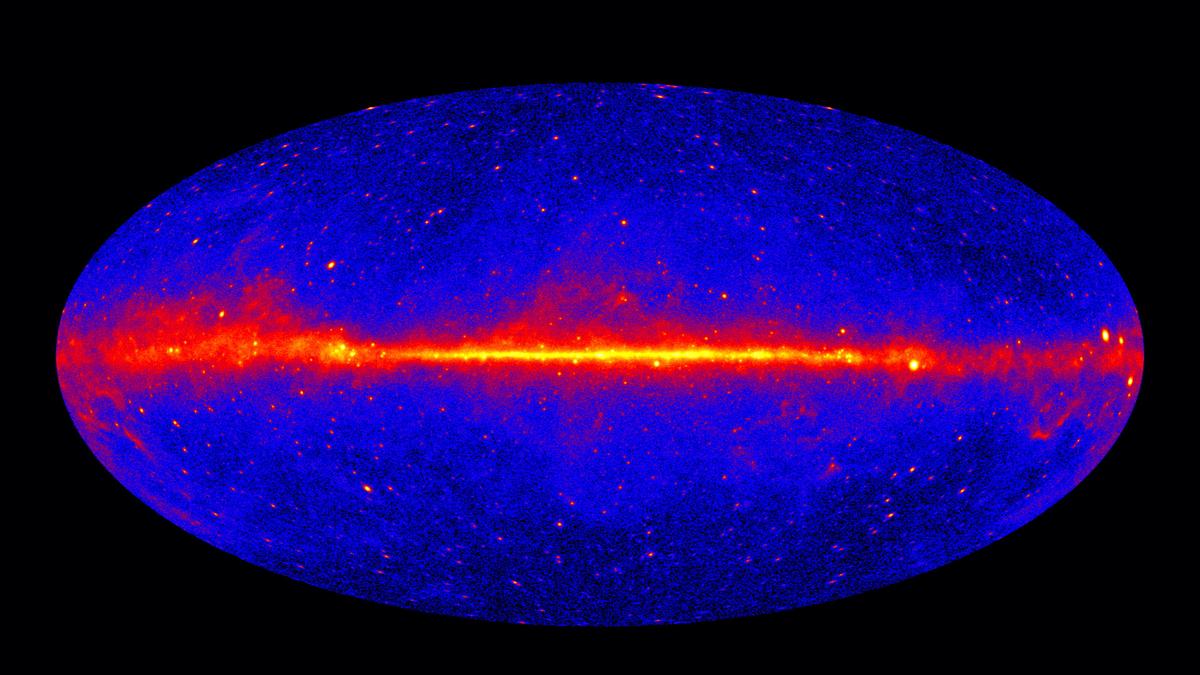
Scientists have made significant progress toward confirming the existence of dark matter, an elusive substance believed to make up most of the universe’s mass. New experimental evidence and observations bring researchers closer to understanding this mysterious component that has puzzled physicists for decades.
Scientists make significant progress in confirming dark matter’s existence, bringing new insights into this elusive cosmic substance.
Scientists around the world are edging closer to confirming the existence of dark matter, a mysterious and invisible form of matter that is thought to constitute approximately 27% of the universe. On October 17, 2025, researchers announced new findings that strengthen the evidence supporting dark matter’s presence, moving the scientific community a step forward in solving one of physics’ greatest mysteries.
Dark matter, which does not emit, absorb, or reflect light, cannot be directly observed with existing telescopes. However, its gravitational effects on visible matter, radiation, and the large-scale structure of the cosmos hint at its existence. Despite decades of theoretical and experimental efforts, direct detection or conclusive proof has remained elusive.
Recent breakthroughs have come from sophisticated detectors buried deep underground and observations conducted via space telescopes and particle accelerators. These experiments aim to detect particles that could make up dark matter, such as Weakly Interacting Massive Particles (WIMPs) or axions. The latest experimental data exhibit anomalies and signals consistent with theoretical predictions for dark matter interactions.
Dr. Elena Ramirez, a lead physicist at the International Dark Matter Collaboration, stated, “While we have not yet achieved definitive detection, these new results reduce uncertainties and open promising new avenues for research. The synergy of various approaches enhances our ability to pinpoint the characteristics of dark matter.”
Moreover, astronomers have observed unusual gravitational behaviors in distant galaxies and galaxy clusters, which cannot be explained solely by ordinary matter. These observations corroborate laboratory findings and strengthen the dark matter hypothesis. The integration of astrophysical data with particle physics experiments marks a critical interdisciplinary effort.
Despite these advances, challenges remain. The exact nature, composition, and properties of dark matter are still not fully understood. Researchers emphasize the need for continued investment in technology development, more sensitive detectors, and extensive data analysis.
The pursuit to unravel dark matter’s mysteries holds profound implications for cosmology, fundamental physics, and our understanding of the universe’s origin and fate. Confirming dark matter’s existence will not only fill a significant gap in the Standard Model of particle physics but also enhance knowledge about the universe’s structure and evolution.
In conclusion, the recent scientific developments represent a milestone in the ongoing quest to confirm dark matter. Through a combination of innovative experiments and comprehensive observations, scientists move closer to illuminating one of the universe’s most enigmatic components, potentially revolutionizing physics and astronomy.