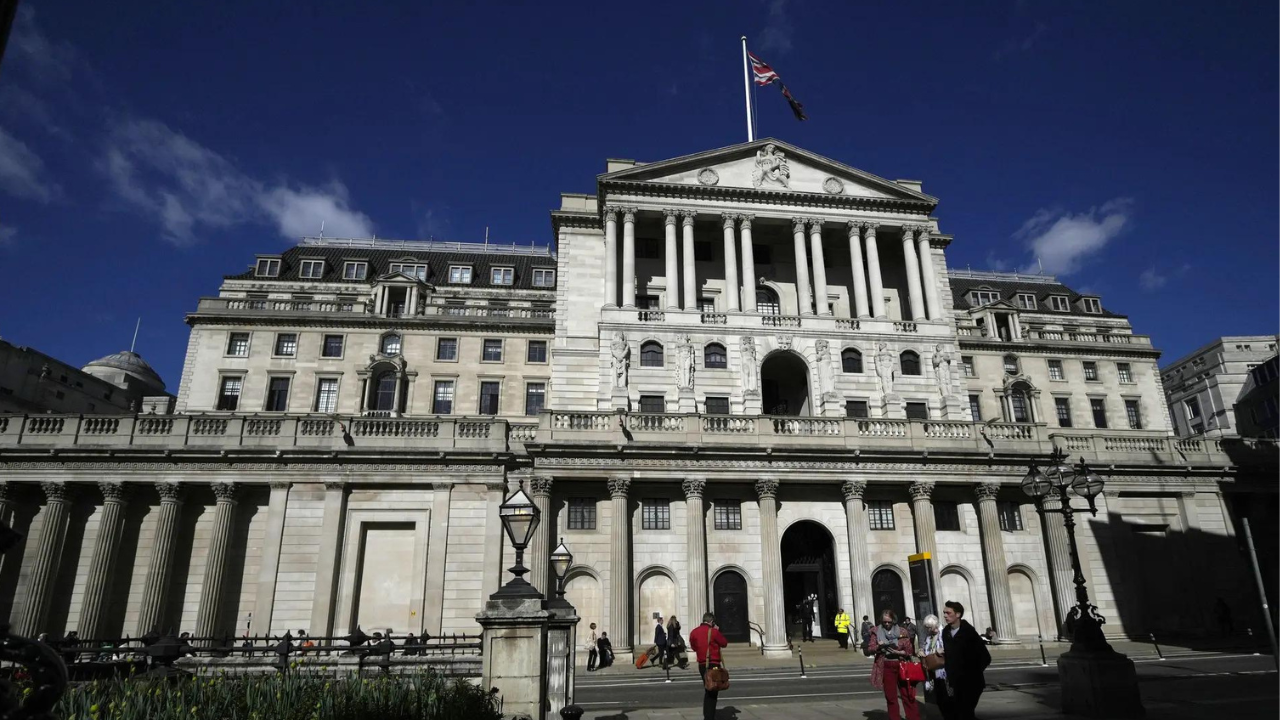
The Bank of England has maintained its benchmark interest rate at 4%, opting for a policy pause ahead of the upcoming UK government budget announcement. Governor Andrew Bailey emphasized continued caution as inflation remains elevated and economic growth pressures persist in the UK.
Bank of England keeps interest rates at 4% ahead of UK budget, signaling caution amid persistent inflation and economic growth challenges.
London – On November 6, 2025, the Bank of England announced it would keep its key interest rate steady at 4%, signaling a cautious approach amid persistent inflation and subdued economic growth. This policy pause comes just days before the UK government is set to unveil its new budget, underscoring the central bank’s careful balancing act between containing inflation and supporting growth.
Bank of England Governor Andrew Bailey highlighted that while inflationary pressures remain significant, the economy shows signs of strain. “Our decision to hold rates reflects the ongoing uncertainty in the economic outlook and the need to assess the impact of prior rate hikes,” Bailey said in a statement. “We will remain vigilant and ready to adjust monetary policy as necessary to ensure inflation returns to target.”
Inflation in the UK has remained above the Bank’s 2% target for several months, driven by higher energy prices, supply chain disruptions, and resilient consumer demand. Despite efforts to cool price growth through monetary tightening, Britain’s economic expansion has decelerated, prompting concerns over a potential slowdown or recession.
The monetary policy committee (MPC) voted unanimously to maintain the Bank Rate at 4%, marking the first pause after a series of consecutive hikes initiated earlier this year. Analysts interpret this move as an attempt to pause and evaluate the cumulative effects of tightening measures before taking further action.
The timing of this decision is particularly critical given the UK Chancellor’s impending budget statement, which may introduce new fiscal measures impacting economic activity. Market participants are closely monitoring both monetary and fiscal policy signals to gauge the future direction of the economy.
Economic experts underscore that the Bank’s cautious stance aims to balance the dual mandate of achieving price stability without derailing growth. “The MPC is navigating a complex environment with persistent inflation headwinds and fragile growth prospects,” said Sarah Johnson, a senior economist at Capital Economics. “A measured approach is prudent to avoid unnecessarily tightening financial conditions.”
Moreover, global economic uncertainties, including fluctuating commodity prices and geopolitical tensions, compound risks to the UK’s economic trajectory. The Bank of England’s forward guidance suggests that future rate adjustments will depend heavily on incoming data related to inflation trends and economic performance.
In summary, the Bank of England’s decision to hold interest rates at 4% reflects a careful, data-driven approach amid ongoing inflation challenges and growth pressures. As the UK government prepares to release its budget, both monetary and fiscal policies will play crucial roles in shaping the economic outlook in the coming months.