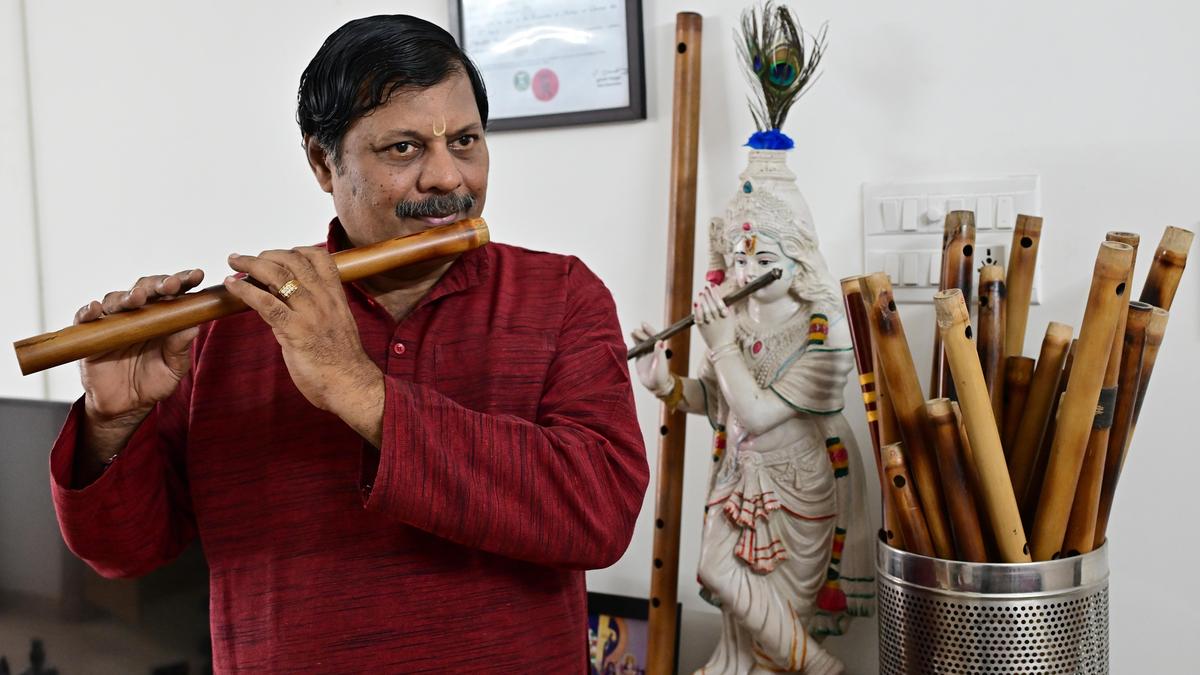
Renowned flutist Prapancham Balachandran has traced the flute’s journey through history in a recent exploration of its evolution across cultures and musical traditions. Balachandran highlights the significance of the flute in various eras, emphasizing its enduring relevance in classical and contemporary music.
Musician Prapancham Balachandran explores the flute’s historical evolution and cultural significance from ancient times to contemporary music.
Musician Prapancham Balachandran recently embarked on an insightful exploration of the flute’s rich history, tracing its evolution through time and diverse cultural traditions. This journey reveals the versatility and enduring presence of the flute as an important musical instrument across centuries and regions.
Tracing the Flute’s Origins and Cultural Significance
The flute is among the oldest known musical instruments, with archaeological evidence dating back thousands of years. Balachandran detailed how the flute evolved from simple bamboo and bone instruments to more complex forms used in classical music traditions around the world. He emphasized the flute’s presence in ancient civilizations and its role as both a folk instrument and a sophisticated tool of musical expression.
Balachandran explained, “The flute’s ability to produce a wide range of emotional tones has made it a universal instrument, woven into the fabric of many musical cultures. From pastoral melodies in rural settings to intricate classical compositions, the flute holds a distinctive place.”
Evolution of Techniques and Materials
Over centuries, the flute saw modifications in design and playing techniques. Balachandran highlighted transitions from traditional transverse flutes to bamboo flutes prevalent in Indian classical music, as well as metal flutes used in Western orchestras. Advances in materials improved tonal quality and playability, enabling diverse musical styles to flourish.
Moreover, Balachandran underscored the importance of maintaining traditional craftsmanship while embracing modern innovations to sustain the instrument’s legacy. “Preserving the authentic tonal nuances is essential, even as contemporary musicians experiment with new sounds and fusion genres,” he said.
Flute in Contemporary and Classical Music
The artist also reflected on the flute’s continuing relevance in both classical and contemporary music scenes. In Indian classical music, the flute remains central, with maestros exploiting its expressive capabilities in ragas and improvisations. Concurrently, the instrument finds a place in world music, jazz, and even popular music, illustrating its adaptability.
Balachandran is known for blending traditional Indian flute techniques with contemporary styles, thereby highlighting the instrument’s versatility. He remarked, “The flute’s journey is one of continuous transformation. This adaptability mirrors music’s evolution and keeps the instrument vibrant across generations.”
Conclusion
Through his detailed exploration, musician Prapancham Balachandran sheds light on the flute’s extensive historical lineage and its dynamic role in musical expression worldwide. From ancient origins to modern-day performances, the flute embodies a timeless connection between culture, history, and artistic innovation.