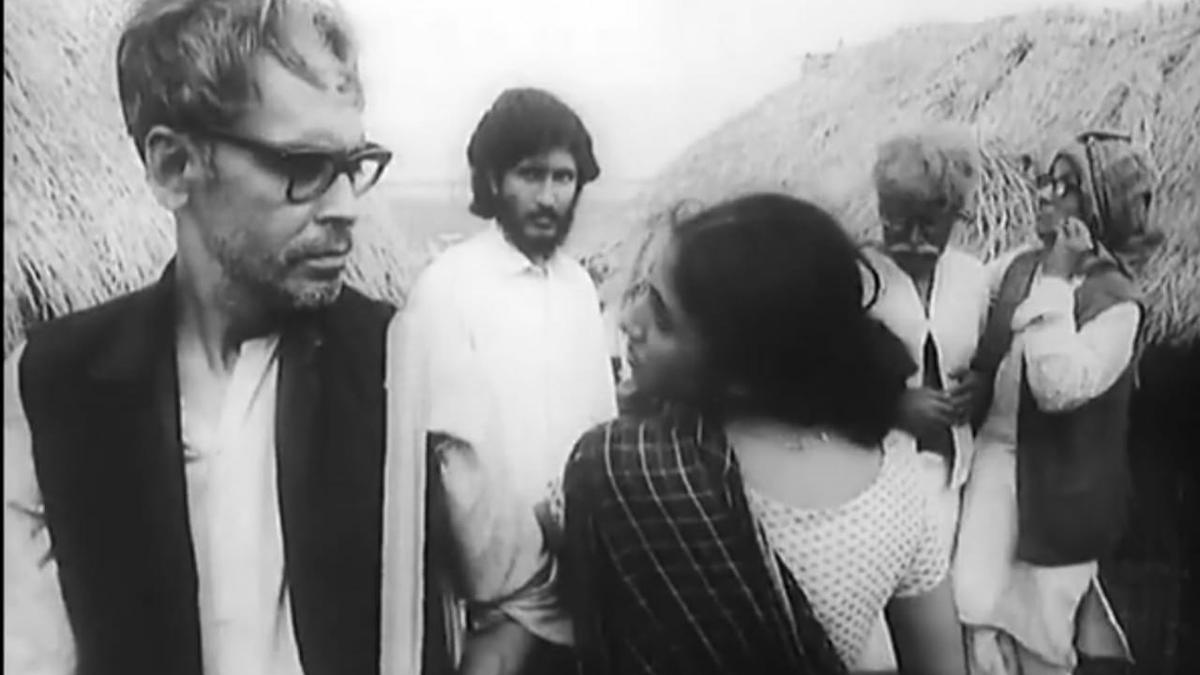
As the film world marks the centenary of Ritwik Ghatak’s birth, filmmakers from the Film and Television Institute of India (FTII) and beyond continue to draw inspiration from the rebel auteur’s pioneering vision. Directors such as John Abraham, Jahnu Barua, Sudhir Mishra, and Anup Singh reflect on Ghatak’s lasting impact on their craft and Indian cinema at large.
Celebrating Ritwik Ghatak’s centenary and his lasting influence on FTII filmmakers and Indian cinema, including John Abraham and Jahnu Barua.
Ritwik Ghatak, one of Indian cinema’s most iconic and revolutionary filmmakers, is celebrated worldwide for his profound contributions to film narrative and aesthetics. On the occasion of his centenary in 2025, industry veterans and emerging filmmakers alike reflect on how Ghatak’s legacy continues to shape contemporary Indian cinema, particularly among students and alumni of the Film and Television Institute of India (FTII).
Born in 1925, Ghatak’s films boldly addressed themes of displacement, identity, and socio-political upheaval, often reflecting the Bengal Partition’s traumatic aftermath. His works, such as “Meghe Dhaka Tara” and “Komal Gandhar,” are revered not only for their poetic storytelling but also for their formal innovation and emotive power. These qualities have made Ghatak a touchstone for generations of filmmakers who seek to blend artistic integrity with social consciousness.
At FTII, where Ghatak himself served as a teacher during the 1960s, his influence remains palpable. Filmmakers such as John Abraham credit Ghatak’s commitment to realism and experimental narrative forms as a critical inspiration. Abraham noted, “Ghatak challenged the orthodoxies of filmmaking, encouraging us to find new means of expression that speak to contemporary realities.”
Similarly, acclaimed director Jahnu Barua, known for his sensitive portrayal of Assam’s culture and history, acknowledges Ghatak’s ways of integrating personal and political narratives. Barua explains, “Ghatak taught us that cinema isn’t just entertainment; it’s a powerful tool to confront social injustices and preserve cultural memory.”
Sudhir Mishra and Anup Singh, both prominent filmmakers whose works often explore layered human and societal conflicts, also cite Ghatak as foundational to their cinematic approach. Mishra remarked, “Ghatak’s fearless storytelling and innovative style pushed the boundaries of Indian cinema, providing a blueprint for filmmakers striving to tell stories that matter.”
Beyond FTII, Ghatak’s influence extends across Indian and international cinema. Film scholars emphasize his pioneering narrative techniques and his use of sound and music to evoke emotional depth. His legacy endures in numerous retrospectives, restored film screenings, and academic studies that keep his artistic vision alive.
The centenary is marked by various tributes, including film festivals and panel discussions that explore Ghatak’s unique contributions to a cinema deeply rooted in social realities. These commemorations highlight how his rebel spirit continues to inspire filmmakers to push artistic limits and address urgent societal themes.
In summary, Ritwik Ghatak’s centenary is not just a commemoration of a legendary filmmaker but a reaffirmation of his enduring impact on Indian cinema. Filmmakers from FTII and beyond continue to be drawn to his uncompromising vision, which challenges them to blend creative experimentation with profound social engagement. As Indian cinema evolves, Ghatak’s legacy remains a beacon for artistic courage and cultural reflection.