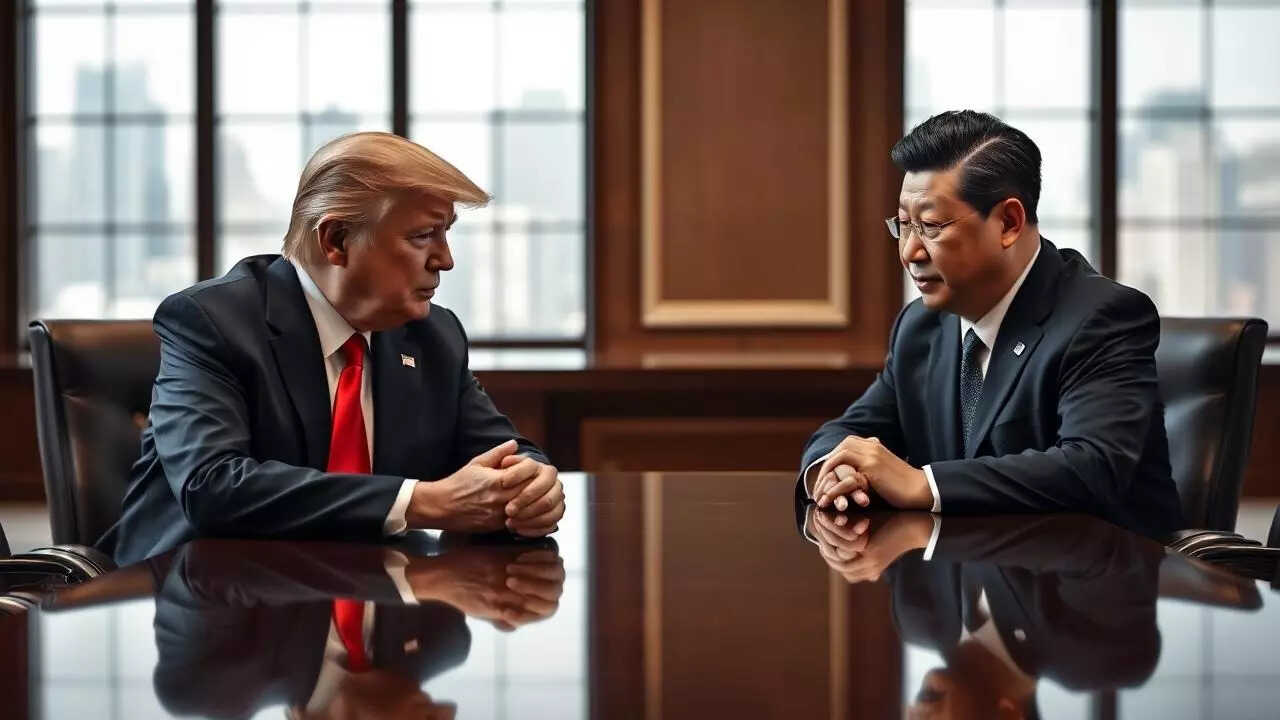
China’s top diplomat Wang Yi has cautioned about the rise of a multipolar global order ahead of the upcoming meeting between former U.S. President Donald Trump and Chinese President Xi Jinping. Wang emphasized the need to end trade conflicts and foster cooperation to ensure global stability.
China’s Wang Yi warns of an emerging multipolar world ahead of Trump-Xi meeting, urging an end to trade wars and promoting global cooperation for economic stability.
BEIJING — As the world prepares for a highly anticipated meeting between former U.S. President Donald Trump and Chinese President Xi Jinping, China’s State Councilor and Foreign Minister Wang Yi has issued a significant warning about the evolving global geopolitical landscape. Speaking on the eve of the summit scheduled for later this week, Wang highlighted the coming multipolarity of international power structures and urged both nations to work towards ending ongoing trade disputes to maintain global economic stability and peace.
In a statement released on October 27, 2025, Wang Yi described the shifting balance of power as an irreversible reality, underscoring the need for major world powers to acknowledge and adapt to the emerging multipolar world order. “The multipolar world is coming, and no country can single-handedly impose its will or standards on others,” Wang said. “It is imperative that trade wars and unilateral economic pressures are discontinued in favor of mutual dialogue and cooperation.”
The remarks come amid heightened anticipation surrounding the Trump-Xi summit, which is expected to address key bilateral issues including trade, technology, and geopolitical tensions. Wang’s comments signal China’s approach towards recalibrating its international relations strategy in a global environment where multiple nations wield significant influence.
The concept of a multipolar world contrasts with the unipolar or bipolar frameworks that have characterized global politics in previous decades, marked by dominance of single or two superpowers — notably the United States and the Soviet Union during the Cold War. Wang’s reference to multipolarity reflects China’s rising prominence alongside other influential nations such as the European Union, India, and Russia.
On trade relations, Wang Yi condemned prolonged tariff conflicts and economic sanctions, which, according to him, undermine mutual benefits and global supply chains. “Trade wars have inflicted damage not only on the countries involved but also on the broader international economy,” he noted. The call for an end to trade wars aligns with growing concerns from business communities and international organizations over supply chain disruptions and market uncertainties caused by ongoing economic frictions.
The upcoming meeting between Trump and Xi, which is set to take place in a neutral third country, holds considerable significance for the future trajectory of U.S.-China relations. Both leaders are expected to discuss strategies to ease tensions and identify areas for constructive engagement amid competitive challenges.
Observers note that Wang Yi’s statement serves as a preparatory diplomatic signal emphasizing cooperation over confrontation. Analysts suggest that China’s stance aims to project responsibility for global governance and stable international markets while responding to pressures from U.S. policymaking circles advocating a tougher approach towards Beijing.
In conclusion, Wang Yi’s warnings and appeals ahead of the Trump-Xi summit illustrate the complexities of modern international relations and the necessity for major powers to recognize evolving global dynamics. The call to end trade wars and embrace multipolarity marks a pivotal moment in the effort to foster peaceful coexistence and shared prosperity despite strategic competition.