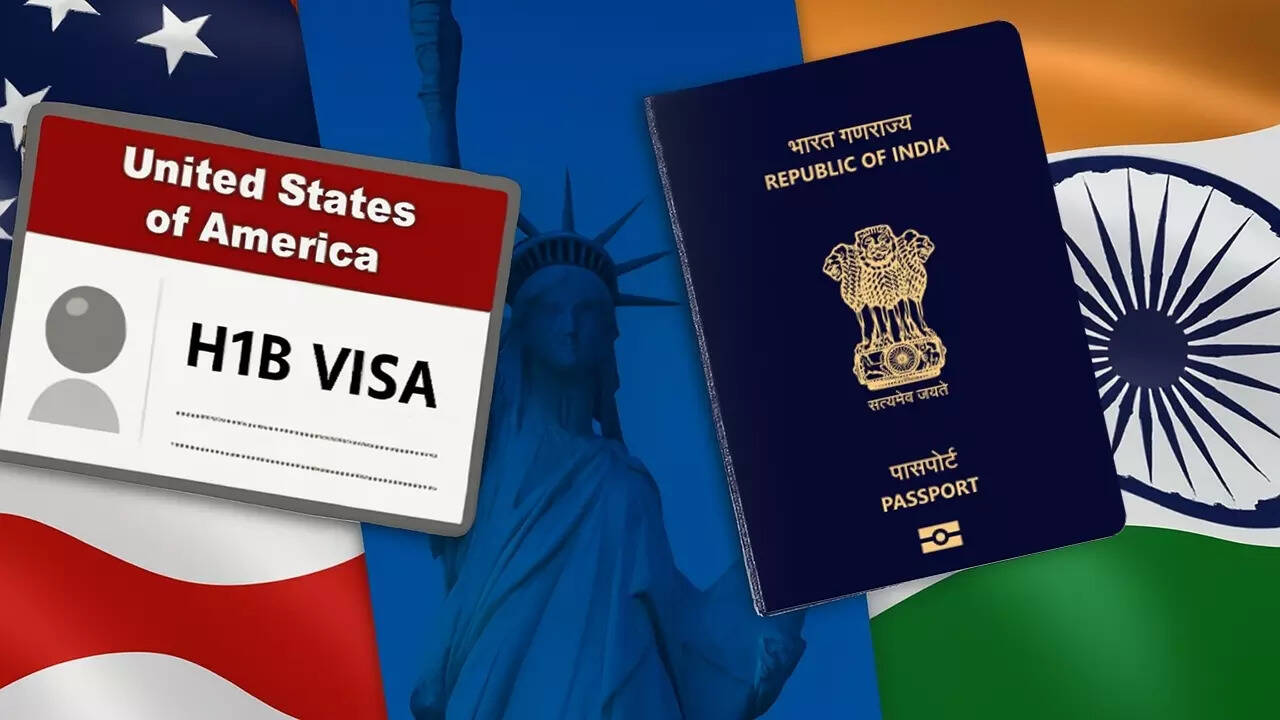
The reinstatement of a $100,000 H-1B visa fee, introduced during the Trump administration, has created confusion and distress among Indian students in the US seeking employment. Many students face potential automatic visa rejections, complicating their job search and future prospects in the country.
Trump-era $100,000 H-1B visa fee reinstated, causing uncertainty and automatic rejections for Indian students seeking jobs in the US tech sector.
Washington, D.C. – The reinstatement of a $100,000 fee on H-1B visa applications, originally introduced under the Trump administration, has left thousands of Indian students studying in the United States facing significant uncertainty and frustration as they seek employment. The policy, which took effect earlier this month, requires employers to pay a hefty additional charge for H-1B petition filings, causing concern over automatic visa rejections and the impact on the US job market for international graduates.
The H-1B visa is a non-immigrant visa that allows US companies to employ foreign workers in specialty occupations. Traditionally, Indian nationals have been the largest recipients of these visas, particularly recent graduates from American universities in fields such as technology and engineering. The newly enforced $100,000 fee is applicable to certain employers filing for H-1B sponsorship and was intended to discourage the outsourcing of jobs and protect domestic employment.
However, Indian students currently in the job-hunting phase say the new charge is a major setback. “It feels like a slap in the face after all the time, money, and effort we have invested studying here,” said Ravi Kumar, a master’s graduate from a leading US university. “Employers are reluctant to file the visa for us because of the prohibitively high cost, making our futures extremely uncertain.”
The fee was initially introduced in 2019 as part of a broader attempt by the Trump administration to reform immigration policies. It targets companies with substantial H-1B petition volumes or large offshoring operations by imposing an additional $100,000 fee on each application. The measure aims to encourage businesses to hire US workers and reduce dependency on foreign labor.
Industry experts warn that while the intent behind the policy is to prioritize domestic employment, it may also inadvertently stifle innovation and harm US competitiveness in global markets. “International students contribute significantly to the US economy and technology sector. Policies like the $100,000 fee could deter top talent from remaining in the country,” said Laura Chen, an immigration policy analyst.
Employers, particularly startups and smaller firms, have expressed concerns over the financial burden posed by the fee. Many fear it will decrease their ability to sponsor qualified foreign workers, pushing companies to outsource work abroad or limit growth.
The US Citizenship and Immigration Services (USCIS) has confirmed that the fee will remain in place for the foreseeable future. As a result, Indian students and professionals find themselves navigating a complicated landscape marked by increased costs and uncertainties.
Advocacy groups and educational institutions are reportedly seeking dialogue with government officials to reconsider or modify the fee structure, emphasizing the contributions of international students to the nation’s workforce and economy.
In the meantime, Indian students continue to weigh their options amid concerns over job prospects and long-term residency in the United States. Many express hope that future policy revisions will create a more welcoming environment for international talent.
Summary
The reinstated $100,000 H-1B visa fee, introduced during the Trump administration, has generated uncertainty for Indian students in the US seeking employment. The policy aims to protect domestic jobs but has raised concerns regarding its impact on the international talent pipeline and US competitiveness. Various stakeholders are calling for reconsideration of the fee to support foreign graduates in their pursuit of professional opportunities in America.