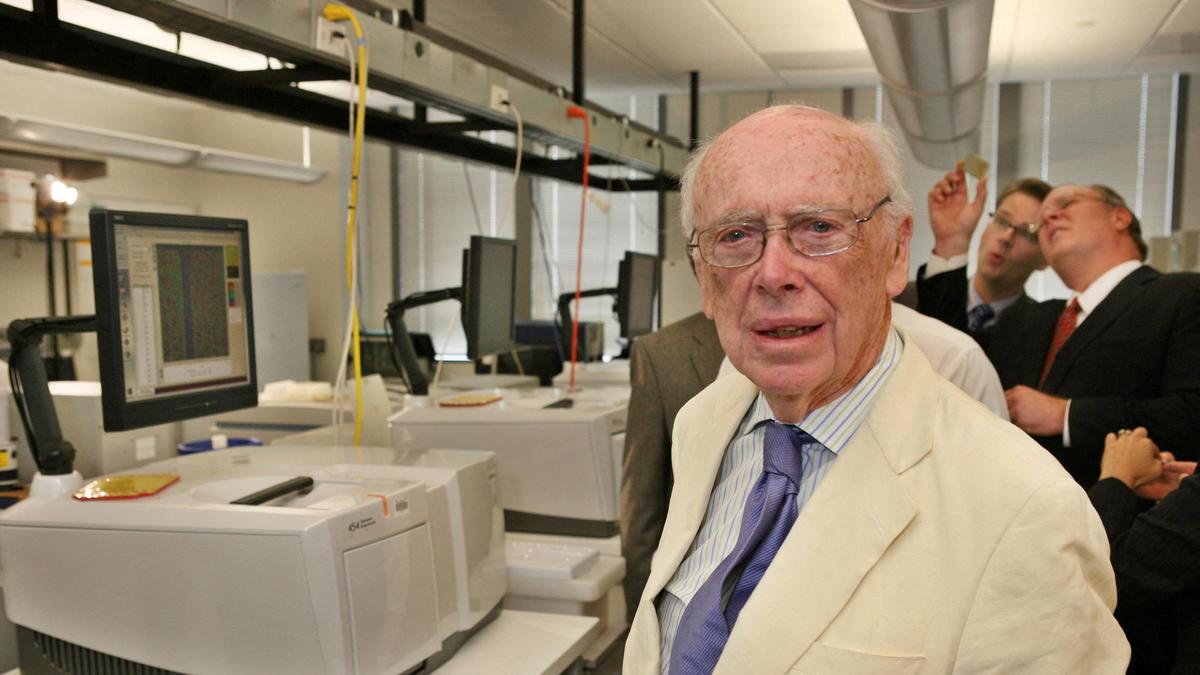
James Watson, the Nobel Prize-winning molecular biologist credited with co-discovering the structure of DNA, has died at the age of 97. His groundbreaking work laid the foundation for modern genetics and molecular biology. Watson’s legacy continues to influence scientific research worldwide.
James Watson, Nobel laureate and co-discoverer of DNA’s double helix, has died at 97. His work transformed genetics and molecular biology worldwide.
James Dewey Watson, the American molecular biologist renowned for co-discovering the double helix structure of DNA and awarded the Nobel Prize in Physiology or Medicine in 1962, passed away at the age of 97. His pioneering research fundamentally transformed the understanding of genetic material and propelled advances in medical science and biotechnology. Watson’s death marks the end of an era in the history of molecular biology.
Early Life and Scientific Breakthroughs
Born on April 6, 1928, in Chicago, Illinois, James Watson demonstrated an early passion for science and research. After earning his Ph.D. in zoology from the University of Chicago, he worked at the Cavendish Laboratory at the University of Cambridge, where he collaborated with Francis Crick. In 1953, Watson and Crick published their seminal paper revealing the double helix structure of DNA, a discovery that elucidated how genetic information is stored and transmitted in living organisms. This breakthrough is widely regarded as one of the most significant scientific achievements of the 20th century.
Recognition and Influence
For their discovery, Watson, Crick, and Maurice Wilkins were jointly awarded the Nobel Prize in Physiology or Medicine in 1962. Watson’s contributions extended beyond his Nobel-winning work; he served as director of Cold Spring Harbor Laboratory and later took leadership roles that helped advance molecular biology research. His publications, including the bestselling book “The Double Helix,” have inspired generations of scientists and students worldwide.
Controversies and Legacy
Throughout his career, Watson was also a figure of controversy, notably due to his outspoken remarks on social issues, genetics, and intelligence, which ignited public debate and affected his professional standing. Despite these controversies, his scientific achievements remain undisputed and continue to influence genomics, genetic engineering, and biomedical research.
Global Impact
The discovery of DNA’s structure paved the way for the Human Genome Project and modern genetic diagnostics and treatments. Watson’s work fundamentally changed medicine, agriculture, and forensic science, underscoring the profound significance of understanding DNA.
Conclusion
James Watson’s passing at 97 marks the conclusion of the life of a scientist whose discoveries revolutionized biology and medicine. His work laid the foundation for fields such as molecular genetics, personalized medicine, and biotechnology, leaving an enduring legacy in science.