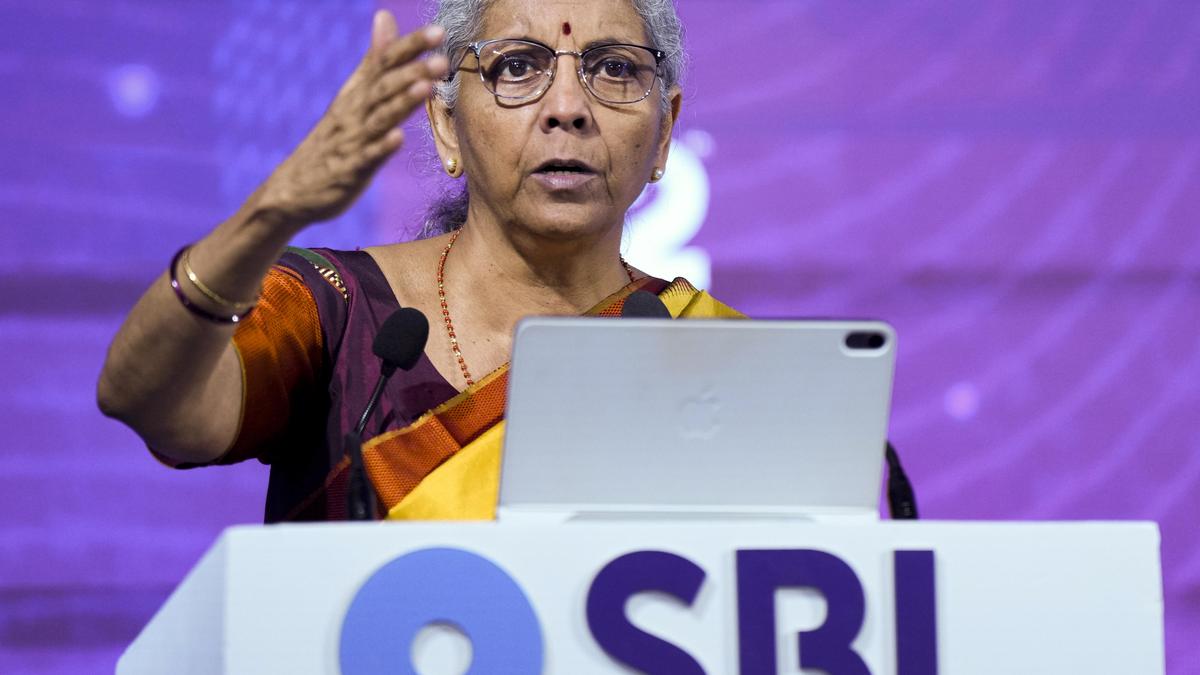
India’s Finance Minister emphasized the country’s need for numerous large, world-class banks to support its growing economy. Ongoing talks with the Reserve Bank of India and lenders focus on fostering the development of such institutions to enhance the financial sector’s global competitiveness.
India’s Finance Minister highlights the need for many large, world-class banks as talks continue with RBI and lenders to boost the banking sector’s global competitiveness.
New Delhi, November 6, 2025 – India is actively pursuing the expansion of its banking sector by encouraging the emergence of many large and globally competitive banks, Finance Minister Nirmala Sitharaman stated on Thursday. In discussions with the Reserve Bank of India (RBI) and various lenders, the government is focusing on strengthening the banking landscape to better serve the expanding economy and enhance India’s position in the global financial arena.
India’s Growing Need for World-Class Banks
Speaking at a business event in New Delhi, Finance Minister Sitharaman underscored the increasing demands of India’s rapidly developing economy, which requires robust financial institutions capable of providing large-scale banking services. “India needs a lot of big, world-class banks,” she remarked, highlighting the government’s recognition of the crucial role played by such entities in driving economic growth and stability.
Sitharaman elaborated that having a larger number of big banks is essential not only to support domestic economic activities but also to participate effectively in international finance. The banks must be adept at managing complex financial operations and expanding credit delivery to diverse sectors of the economy.
Ongoing Talks with the RBI and Lenders
The Finance Minister revealed that the government is engaged in continuous dialogue with the RBI and key lenders to devise strategies that facilitate the creation and sustainability of world-class banks. These discussions focus on regulatory reforms, capital adequacy frameworks, and technological upgradation to enable Indian banks to compete on a global scale.
The RBI, as the country’s central bank and banking regulator, plays a pivotal role in shaping banking policies. The collaboration between the government and the RBI aims to balance financial stability with innovation and growth within the banking sector.
Significance for India’s Financial Sector
India’s banking industry has traditionally been dominated by public sector banks, which despite their wide reach, face challenges such as non-performing assets and capital constraints. The government’s push for more globally competitive banks indicates a strategic shift towards creating stronger, more efficient institutions that can support large infrastructure projects, facilitate international trade, and integrate with global financial markets.
Industry experts note that an increase in the number of large banks can improve financial inclusion, result in enhanced product offerings, and encourage healthy competition within the sector. Moreover, it could attract significant foreign investment, providing a further boost to India’s economic prospects.
Conclusion
India’s Finance Minister Nirmala Sitharaman has conveyed the country’s ambition to develop many large, world-class banks through ongoing cooperation with the Reserve Bank of India and lending institutions. This initiative reflects India’s commitment to strengthening its banking infrastructure to meet the demands of a growing economy and to elevate its status in global finance. The success of these efforts will be instrumental in shaping the future trajectory of India’s financial sector.