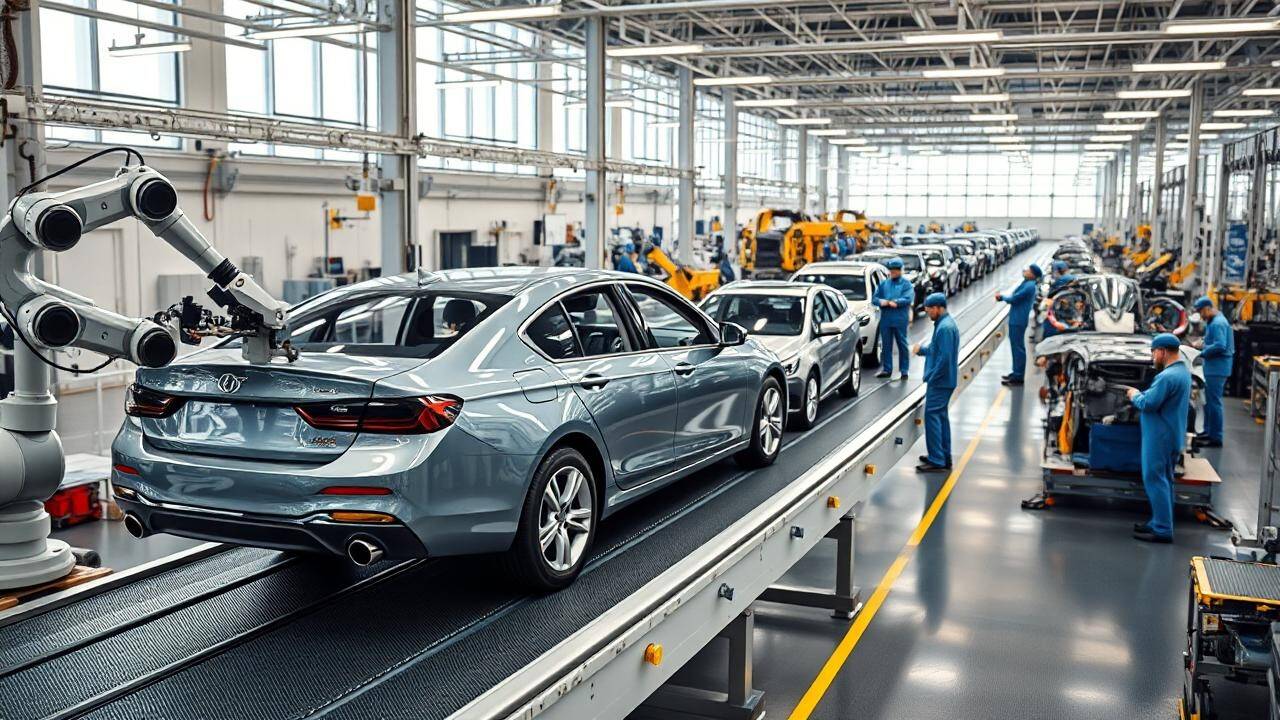
The recent cut in Goods and Services Tax (GST) on automobiles has triggered a significant increase in car sales across India, prompting automakers to plan a 40% expansion in production. This move aims to enhance vehicle supply and reduce customer wait times amid rising demand.
GST cuts fuel a 40% increase in car production as Indian automakers boost supply and reduce wait times to meet rising demand.
New Delhi, November 13, 2025 – The Indian automobile industry is witnessing a robust surge in car sales following the government’s recent reduction of the Goods and Services Tax (GST) on vehicles. In response, major automakers have announced plans to ramp up their production capacity by nearly 40 percent to meet growing consumer demand and shorten long waiting periods for buyers.
GST Cuts Drive Market Growth
Earlier this year, the Indian government implemented a significant cut in GST rates for various categories of vehicles as part of efforts to stimulate economic growth and boost consumption. This policy adjustment has made automobiles more affordable to a broader segment of the population, leading to a rapid increase in retail sales across urban and semi-urban regions.
Industry leaders report a marked uptick in booking volumes, indicating a positive consumer response to the tax revision. “The GST cut has played a pivotal role in reviving demand, making car ownership a more accessible reality for many Indians,” stated a senior executive at one of the country’s leading car manufacturers.
Automakers’ Strategy to Elevate Production
In light of this surge, manufacturers are accelerating production schedules and scaling up operations. Several automakers revealed plans to expand output by approximately 40 percent over the next fiscal year. This expansion involves upgrading manufacturing facilities, optimizing supply chains, and enhancing workforce capacities to maintain quality while increasing volume.
The scale of ramped-up production is expected to not only fulfill current demand but also accommodate anticipated growth driven by favorable economic conditions and greater consumer purchasing power.
Reducing Wait Times and Improving Supply Chain Efficiency
Alongside increasing production, companies are focusing on strategic measures to minimize wait times for customers who have experienced delays due to prior supply chain constraints. Automakers are investing in improvements across logistics, inventory management, and dealer networks to streamline vehicle delivery.
“Our goal is to enhance customer satisfaction by ensuring timely availability of vehicles, reducing lead times significantly,” explained another industry spokesperson. The emphasis on quicker deliveries aligns with competitive pressures and a customer-centric approach as the industry navigates a rapidly expanding market.
Economic Context and Future Outlook
The surge in automobile sales triggered by GST reductions offers substantial growth opportunities for the broader automotive ecosystem, including components manufacturers, dealerships, and after-sales services. Industry analysts project sustained growth ahead, driven by improved affordability, a growing middle class, and government initiatives supporting the automotive sector.
However, manufacturers remain cautious about potential challenges such as fluctuating raw material costs and global supply chain disruptions. Continuous monitoring and adaptive strategies will remain critical to sustaining momentum.
Conclusion
The GST rate cut has acted as a catalyst in invigorating India’s automobile market, prompting manufacturers to boost production capacity by 40 percent to address heightened demand and reduce vehicle wait times. These developments signify a positive trajectory for the Indian auto industry amid supportive policy measures and evolving consumer dynamics.