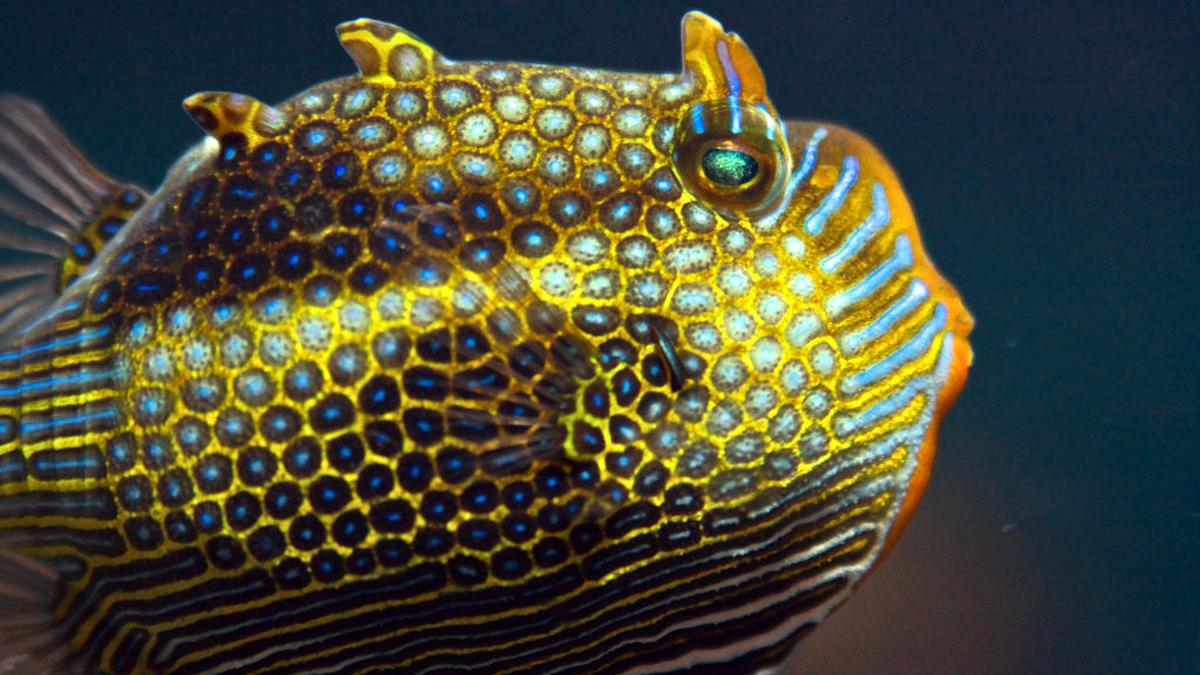
Researchers have uncovered how variations in cell size and clumping contribute to the formation of sharp, distinct patterns in animals, resolving long-standing questions in developmental biology. This breakthrough enhances understanding of Turing patterns, shedding light on the mechanisms behind natural animal markings.
New research reveals how cell size differences and clumping explain sharp animal patterns, advancing understanding of Turing pattern formation.
Scientists have advanced our understanding of how animals develop sharp, distinct patterns on their bodies through a new study focusing on cell sizes and clumping behaviors. Published on November 12, 2025, the research addresses a fundamental question in developmental biology about the formation of Turing patterns—complex designs that emerge during animal development due to chemical and biological processes.
Patterns in nature, such as stripes on zebras and spots on leopards, have fascinated researchers for decades. Traditional theories based on Alan Turing’s reaction-diffusion models explained pattern formation but struggled to account for the sharpness and clarity of patterns observed in real animals. The new study identifies that differences in cell size and the tendency of cells to clump together, combined with a process known as diffusiophoresis, provide the key to understanding these sharp transitions.
Using a combination of experimental techniques and computational modeling, the research team discovered that cells of varying sizes influence the distribution and concentration of signaling molecules crucial to pattern development. The clumping of cells enhances this effect by creating localized environments where chemical gradients become more pronounced, allowing patterns to emerge with distinct edges rather than gradual fades.
One of the notable findings is the role of diffusiophoresis—a process where particles move along concentration gradients of solutes—in driving the movement and organization of cells during pattern formation. By incorporating cell size variability and diffusiophoretic effects into their models, the researchers successfully simulated sharp and stable patterns observed in nature.
Dr. Anita Kapoor, lead author of the study, remarked, “Our work bridges a critical gap in developmental biology by demonstrating how physical cellular properties combine with biochemical signaling to produce the precise, sharp patterns we see in animals. This insight opens avenues for exploring how organisms control pattern formation at the microscopic level.”
The implications of this research extend beyond biology, offering potential applications in tissue engineering and synthetic biology, where controlled patterning of cells is essential. Additionally, understanding these mechanisms provides a foundation for studying developmental disorders and evolutionary biology.
This breakthrough enriches the conceptual framework surrounding Turing patterns, moving beyond classical reaction-diffusion explanations to incorporate physical cellular factors that enable the exquisite complexity of natural animal markings. It underscores the importance of interdisciplinary approaches combining biology, physics, and mathematics to solve intricate biological puzzles.
As the scientific community continues to explore the nuances of pattern formation, this study stands as a significant milestone, illuminating how subtle cellular characteristics translate into the remarkable diversity of patterns seen across the animal kingdom.