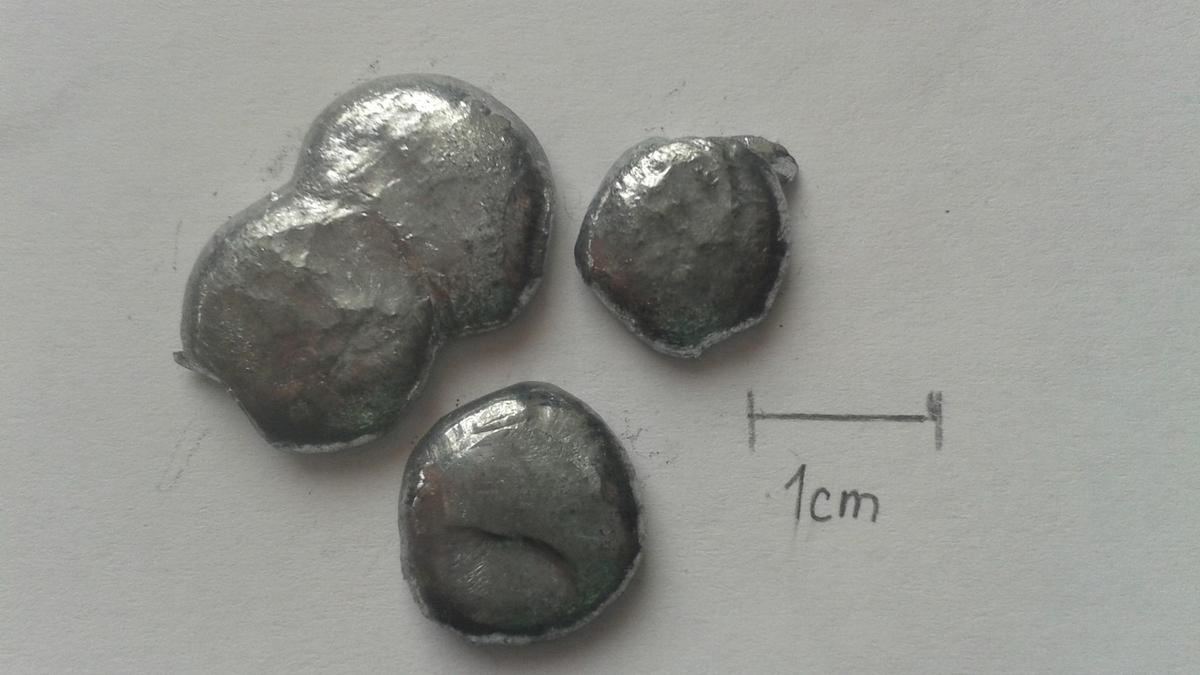
The element gallium was identified as eka-aluminium, a prediction made by Dmitri Mendeleev over a century ago. This discovery confirmed the accuracy of the periodic table’s predictions and advanced the understanding of elemental properties.
Gallium identified as eka-aluminium confirms Mendeleev’s periodic table prediction, enhancing chemical science and element discovery insights.
In a significant advancement in chemical science, gallium has been recognized as eka-aluminium, fulfilling Dmitri Mendeleev’s 19th-century prediction. This identification not only solidifies the periodic table’s role as a powerful tool in chemistry but also highlights the foresight of Mendeleev in anticipating elements that were yet to be discovered.
Dmitri Mendeleev, the Russian chemist credited with creating the periodic table, predicted the existence and properties of several elements that were unknown in his time. One such element, termed ‘eka-aluminium’, was theorized based on gaps in his periodic arrangement. The term ‘eka’ meaning ‘one’ in Sanskrit, indicated an element positioned one place below aluminium in the periodic table.
Gallium, discovered in 1875 by French chemist Paul Émile Lecoq de Boisbaudran, matched Mendeleev’s earlier predictions about eka-aluminium’s atomic mass, density, melting point, and chemical characteristics. This coincidence substantiated the framework and predictive power of the periodic table, a cornerstone of modern chemistry.
Gallium’s properties are unique; it is a soft, silvery metal that melts just above room temperature, allowing it to liquefy in one’s hand. Its discovery brought new insights into element behavior and applications, including its use in electronics, semiconductors, and high-temperature thermometers.
The confirmation of gallium as eka-aluminium underscores the importance of systematic scientific inquiry and theoretical models, which can lead to groundbreaking discoveries even decades later. It also serves as a reminder of the periodic table’s enduring relevance and its utility in guiding contemporary scientific research.
As scientific techniques continue to advance, such historical insights into element discovery not only enrich our understanding of chemical elements but also inspire future explorations into undiscovered elements and materials. The story of eka-aluminium and gallium exemplifies the synergy between prediction and empirical discovery in the progress of science.