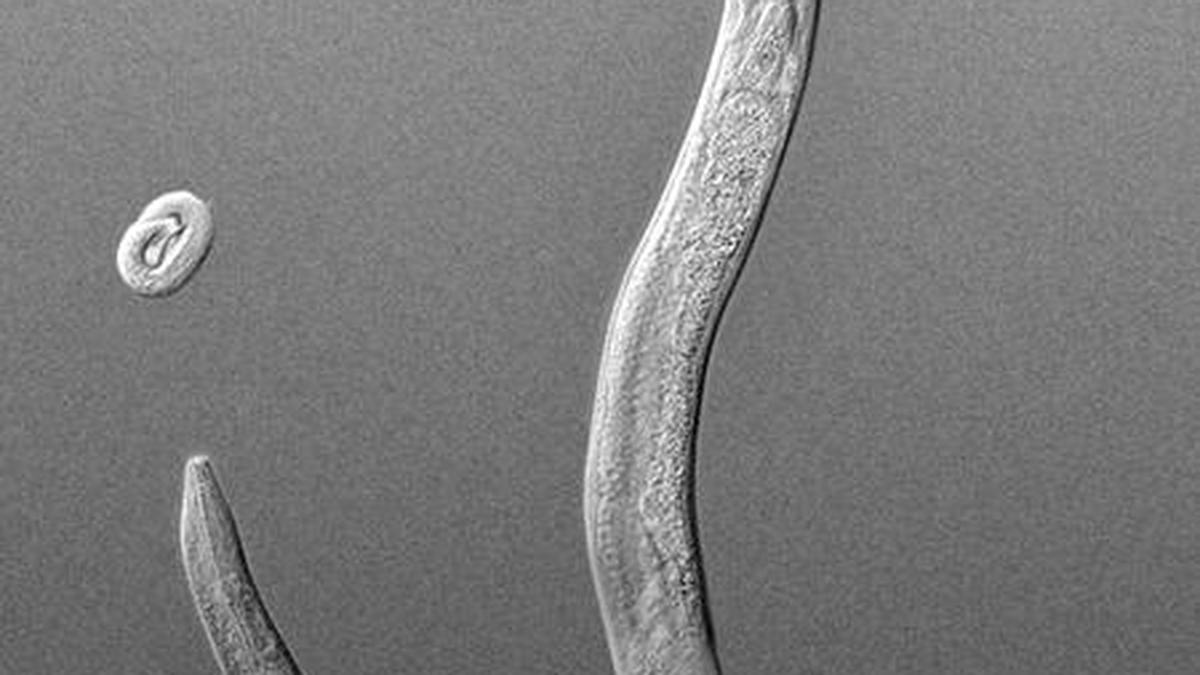
New research shows that roundworms can pass on information about environmental threats to their offspring, although this inherited knowledge comes with certain constraints. The findings shed light on the mechanisms of transgenerational inheritance and stress responses in simple organisms.
Research shows roundworms inherit information on threats to avoid, revealing epigenetic inheritance with temporary, context-dependent limitations.
In a groundbreaking study published on November 17, 2025, researchers have uncovered that roundworms possess the ability to inherit information about environmental threats from previous generations, albeit with significant limitations. The study offers new insights into the complex mechanisms of transgenerational inheritance and how simple organisms adapt to stressful conditions.
Scientists have long been intrigued by epigenetic inheritance — the process by which organisms pass on traits that are not encoded in the DNA sequence but influenced by environmental factors. This new research focuses on roundworms (Caenorhabditis elegans), extensively used as model organisms in genetic studies due to their simplicity and well-mapped genome.
According to the study, when roundworms experience certain threats such as exposure to specific toxins or stressful environmental conditions, they can transmit warning signals to their progeny. These inherited cues help the offspring avoid similar dangers, enhancing their chances of survival. However, this inherited information is not without its drawbacks; the transmission appears to be temporary and context-dependent, diminishing after a few generations.
The research team conducted a series of controlled laboratory experiments exposing roundworms to various environmental stressors. They then observed the behavior and survival rates of subsequent generations without direct exposure to the threats. The descendants demonstrated increased aversion and adaptive behaviors towards these threats, confirming that some form of threat-related information was passed down.
Dr. Anjali Verma, the lead scientist on the project, stated, “Our findings illuminate an intriguing form of biological memory that transcends the classical genetic inheritance. Though limited in scope and duration, this epigenetic transmission equips the next generation with an added layer of defense against immediate dangers experienced by their ancestors.”
Despite the promising findings, the researchers caution that the process is not entirely reliable or permanent. The inherited threat information tends to fade after several generations, and the specificity of the transmitted information can vary depending on the type of threat and environmental context. Moreover, the exact molecular mechanisms underlying this phenomenon remain to be fully deciphered.
The study has broader implications for understanding how organisms respond to environmental challenges and adapt over relatively short timescales without genetic mutations. It also raises questions about the potential role of such epigenetic inheritance in evolution and species survival.
Experts in the field have welcomed the study, emphasizing its contribution to the growing body of knowledge on epigenetics. “This research offers valuable evidence that behavioral and environmental experiences can have biological repercussions beyond a single generation,” said Professor Michael Thompson, a geneticist not involved in the study.
Further investigations are needed to explore how widespread this phenomenon is among other species and to identify the molecular pathways facilitating this memory inheritance. Such insights could unlock new understanding in developmental biology, neurobiology, and even ecological resilience.
In summary, the research reveals that roundworms can inherit information about threats encountered by their ancestors, granting them improved survival strategies in adverse environments. However, this inherited knowledge is subject to decay over generations and depends heavily on environmental specifics. These findings provide a pivotal advance in comprehending non-genetic inheritance mechanisms and their biological significance.