


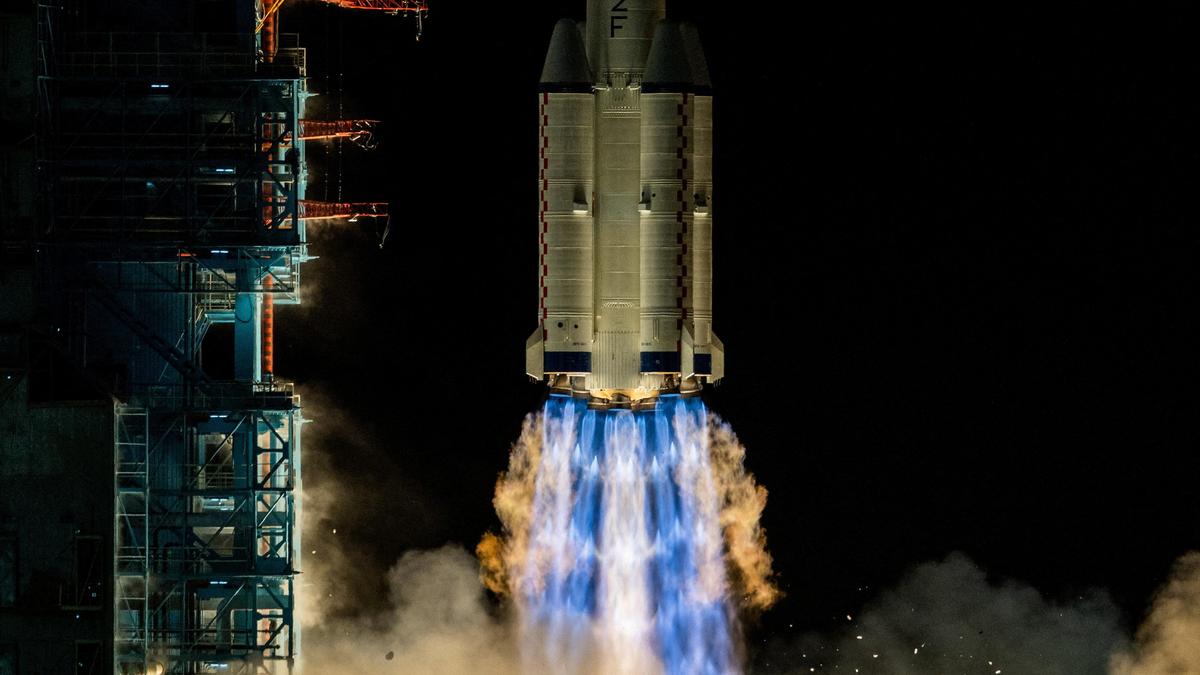
China’s Shenzhou-20 crew is set to return to Earth on November 14 following a delay caused by space debris concerns. The postponement highlighted the growing challenges posed by orbital debris to crewed space missions.
China’s Shenzhou-20 crew to return on Nov 14 after mission delay caused by space debris concerns impacting spacecraft safety.
China’s Shenzhou-20 crew is scheduled to return to Earth on November 14, after a delay due to space debris concerns that posed potential risks to the mission. Launched as part of China’s ambitious space station program, the Shenzhou-20 spacecraft’s return was initially planned earlier but was postponed to ensure crew safety amid increasing orbital debris activity.
The mission, which marked another milestone in China’s efforts to establish a permanent presence in space, involved a team of astronauts conducting experiments and station maintenance aboard the Tiangong space station. However, the return trajectory was adjusted after ground controllers detected nearby space debris that could interfere with the spacecraft during re-entry.
According to mission officials, the delay was a precautionary measure to avoid possible collision or damage. “Ensuring the safety of our astronauts is our top priority,” a spokesperson from the China National Space Administration (CNSA) stated. “The decision to delay the return was made after careful analysis of orbital conditions and debris trajectories.”
Space debris has become an increasing concern for all spacefaring nations, as defunct satellites, spent rocket stages, and fragments from previous missions orbit the Earth at high velocities. These objects pose significant risks to active satellites and crewed missions, requiring constant monitoring and maneuvering.
The Shenzhou-20 mission contributed valuable scientific data and demonstrated China’s growing capabilities in long-duration human spaceflight. The crew’s return will conclude a critical phase of China’s space station construction, which aims to solidify the country’s position in space exploration.
Experts emphasize that the delay underscores the importance of enhanced debris tracking and mitigation strategies to ensure the sustainability of space activities worldwide. International collaboration and improved debris management remain essential to safeguard both current and future missions.
Despite the postponement, the mission has been deemed successful, with the astronauts remaining in good health and all objectives largely fulfilled. The scheduled return on November 14 will mark the end of a pivotal chapter in China’s expanding presence in low Earth orbit.
As the global space community continues to grapple with the challenges of orbital debris, China’s experience with Shenzhou-20 serves as a timely reminder of the complexities involved in maintaining safe and sustainable operations in space.
