For the first time, astronomers have observed a coronal mass ejection (CME) emanating from a star outside our solar system. This breakthrough discovery offers new insights into stellar activity and space weather phenomena beyond the Sun.
Astronomers have detected the first coronal mass ejection (CME) on a star outside our solar system, unveiling new insights into stellar activity and space weather.
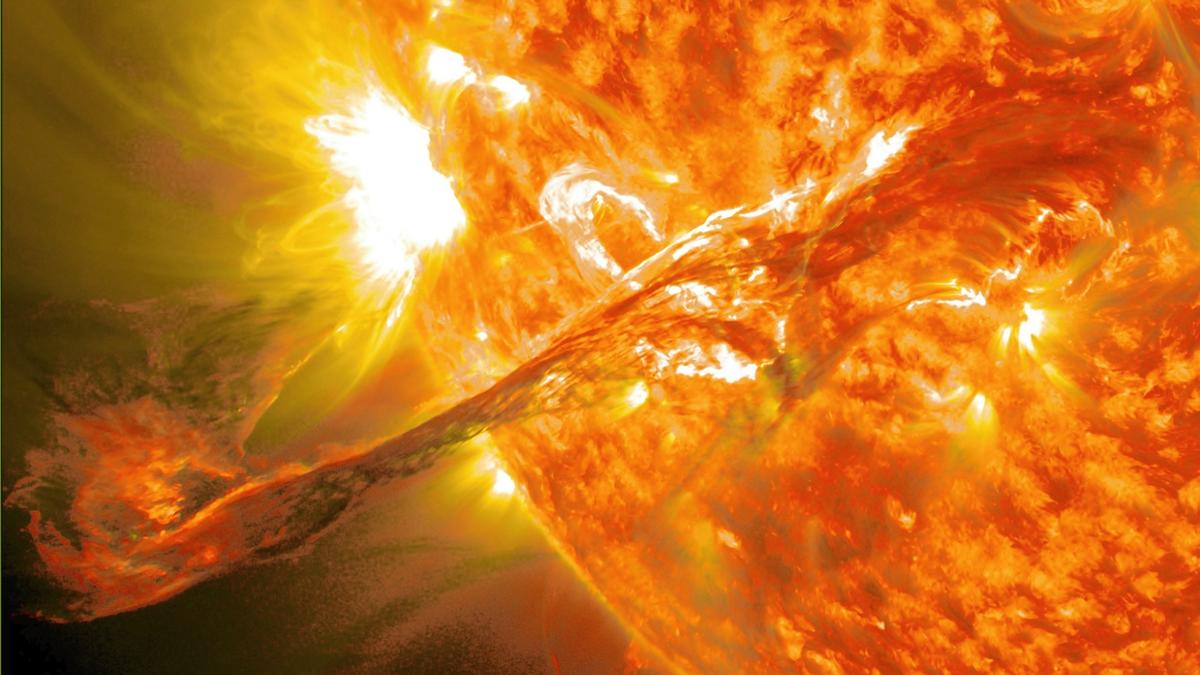
In a groundbreaking discovery, astronomers have detected a coronal mass ejection (CME) on a star beyond our solar system for the first time. The observation, announced on November 16, 2025, marks a significant advancement in the study of stellar weather and the dynamic processes taking place on stars similar to or different from our Sun. Coronal mass ejections are massive bursts of solar wind and magnetic fields rising above the stellar corona or being released into space. They are known to affect space weather in our solar system, impacting satellite operations and communications on Earth.
The detection was made using a combination of advanced telescopic instruments that observed the star’s activity in high detail. Previously, CMEs had only been identified on our own Sun, making this stellar event a vital piece in understanding the universality and behavior of such phenomena. The star under observation, located several light-years away, exhibited signs of intense magnetic activity culminating in this large-scale ejection of plasma and magnetic field material from its surface.
According to the research team, led by astrophysicists specializing in stellar dynamics, this finding will help enhance models of stellar atmospheres and improve predictions regarding the impact of stellar activities on exoplanets orbiting these stars. Such information is crucial as it influences the habitability conditions and atmospheric stability of planets outside our solar system.
Dr. Priya Nair, a prominent astronomer involved in the study, explained, “Observing a CME on another star allows us to compare stellar weather patterns and magnetic activity across different types of stars. It opens up new avenues to assess how frequent and severe such events might be elsewhere in the galaxy.”
The discovery also has implications for the broader understanding of magnetic field generation in stars and the lifecycle of stellar coronae. As researchers continue to monitor this star and others, they anticipate uncovering more about the frequency, size, and energy levels of CMEs beyond the Sun.
This initial detection sets a precedent for future studies aiming to map space weather phenomena across the cosmos and could eventually aid in safeguarding future space missions from stellar events. With improved observational technologies and coordinated international efforts, scientists are poised to deepen knowledge of these explosive events that play a pivotal role in the cosmic environment.
In summary, the first ever observation of a coronal mass ejection on a star other than the Sun expands the frontiers of astrophysics, offering fresh insights into stellar behavior and advancing our understanding of the universe’s dynamic nature.