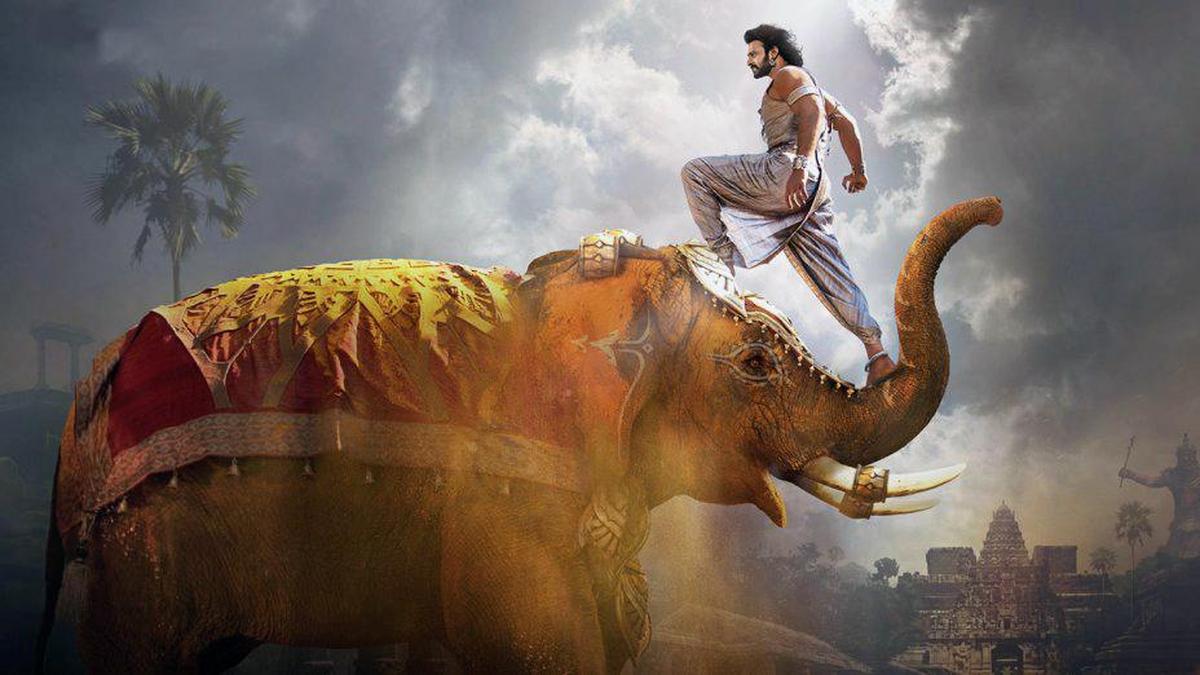
A decade after its release, SS Rajamouli’s ‘Baahubali: The Epic’ continues to captivate audiences with its monumental storytelling and grand cinematic vision. The film, starring Prabhas and Rana Daggubati, remains a landmark in Indian cinema, combining epic scale with compelling narratives.
Baahubali: The Epic review highlights SS Rajamouli’s enduring vision and storytelling strength a decade after its release, starring Prabhas and Rana Daggubati.
Baahubali: The Epic, directed by SS Rajamouli, has marked its tenth anniversary as one of the most influential films in Indian cinema. Released in 2015, this landmark Telugu-language historical fiction film not only redefined epic storytelling in Indian films but also set new standards for visual effects and production design. Its impact endures, as audiences continue to be drawn to its grand narrative and breathtaking visuals.
From its ambitious scale to its intricate plot, Baahubali narrates a tale of power, betrayal, and legacy. Starring Prabhas as Amarendra Baahubali and Rana Daggubati as Bhallaladeva, the film explores the complex dynamics within the kingdom of Mahishmati. The story is told across two parts, with the first focusing on the rise and fall within the royal family and the second exploring the quest to restore justice.
SS Rajamouli’s direction is widely praised for blending mythology with modern filmmaking techniques. The movie’s pioneering use of special effects in Indian cinema elevated the visual narrative to international standards, creating epic battle scenes and lush landscapes that remain striking a decade later. The intricate choreography of both action and dance sequences, combined with a stirring musical score by M.M. Keeravani, contributes significantly to the film’s immersive experience.
The performances of the lead actors, particularly Prabhas and Rana Daggubati, have been lauded for their depth and intensity, bringing authenticity to their characters. Additionally, the supporting cast, including Anushka Shetty and Tamannaah Bhatia, played pivotal roles that enriched the storyline and enhanced emotional engagement.
Critics and audiences alike note that Baahubali’s storytelling stands tall due to its combination of universal themes such as valor, honor, and sacrifice, which resonate across different cultures and time periods. Its success has also inspired a new wave of epic filmmaking within India, influencing numerous projects that strive to match its scale and ambition.
Furthermore, Baahubali’s commercial success—grossing over 1,800 crore INR worldwide—demonstrates how regional cinema can achieve pan-Indian and global appeal. The film’s dubbing into multiple languages and strategic marketing were crucial in reaching diverse audiences beyond the Telugu-speaking population.
On this tenth anniversary, reflections on Baahubali highlight how SS Rajamouli’s grand vision not only entertained millions but also reshaped audience expectations for Indian films. It established a benchmark for technical excellence and narrative depth that contemporary filmmakers continue to aspire to.
In conclusion, Baahubali: The Epic remains a monumental achievement in Indian cinema. Through its compelling storytelling, memorable performances, and groundbreaking production values, the film’s legacy endures as a defining moment in the industry’s evolution over the past decade.