New research reveals how black holes and their cosmic jets work together to shape the structure and evolution of galaxies. This discovery sheds light on the dynamic forces influencing galactic growth and morphology, highlighting the significant role of black hole activity.
Discover how black holes and their cosmic jets collaborate to influence galaxy formation and evolution according to new astrophysical research.
Scientists have uncovered fresh insights into the interplay between black holes and cosmic jets and their combined effect on the formation and evolution of galaxies. This groundbreaking research enhances our understanding of galactic dynamics and the role of black hole phenomena in the cosmos.
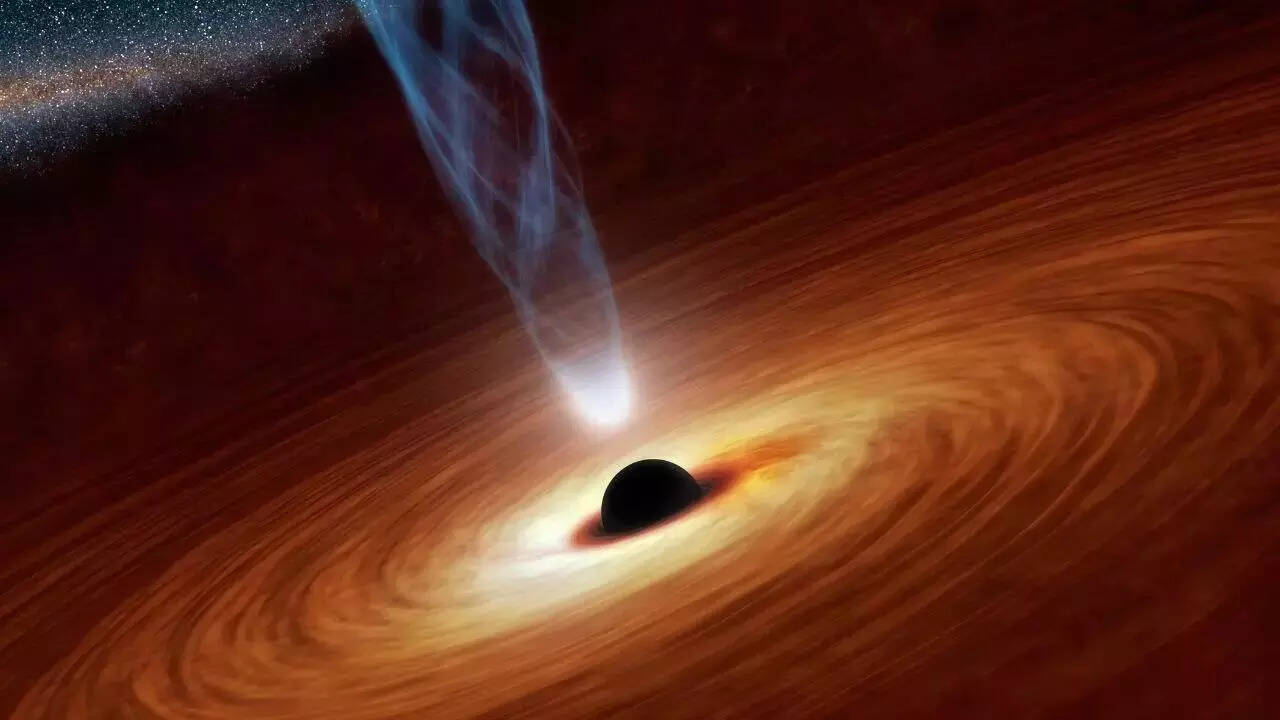
Black holes, known for their intense gravitational pull, often emit high-energy jets of particles at near-light speeds. These cosmic jets extend thousands of light years and are capable of impacting the interstellar medium significantly. According to a study published on October 27, 2025, by researchers using observational data and simulations, these jets collaborate with the black holes to regulate star formation and influence the shape of the host galaxies.
Dr. Anita Sharma, lead astrophysicist at the Indian Institute of Astrophysics, explains, “Our observations show that the energy released by cosmic jets from supermassive black holes can compress gas clouds, triggering new waves of star formation or, conversely, heating the gas to prevent stars from forming. This dual action helps sculpt the galaxy’s development over millions of years.”
The research draws on a combination of data from advanced telescopes and computational modeling to establish a causal link between black hole activity and galactic morphology. Previously, the effects of black holes were primarily thought to be limited to their immediate surroundings, but this new work expands their significance to encompass large-scale galactic processes.
Cosmic jets, propelled by the rotational energy of black holes, exert enormous pressure and influence on the galactic environment. This pressure can clear out dense gas, effectively suppressing star formation in some regions while catalyzing it in others by inducing shock waves within interstellar clouds. Observations from radio and X-ray telescopes have been critical in identifying these effects.
“Understanding these mechanisms is pivotal in mapping galaxy evolution across cosmic time,” states Dr. Miguel Ortega, co-author of the study from the European Southern Observatory. “It allows astronomers to refine models that predict how galaxies grow, change shape, and sometimes become quiescent.”
The findings also have implications for grasping the lifecycle of quasars and the growth of supermassive black holes themselves, as the feedback loop created by jet activity influences accretion rates and black hole mass accumulation.
Current efforts will focus on expanding the sample size by observing more galaxies at varied stages of development and with different black hole masses, aiming to generalize the newfound relationship. The integration of multi-wavelength observational data alongside next-generation simulations is expected to further clarify how black holes and cosmic jets coalesce to shape the universe’s structure.
In conclusion, this study marks a significant advance in astrophysics by demonstrating the collaborative role of black holes and cosmic jets in influencing star formation and galactic morphology. It highlights the complex interplay between these cosmic phenomena, providing new avenues for future research into galaxy formation and evolution.