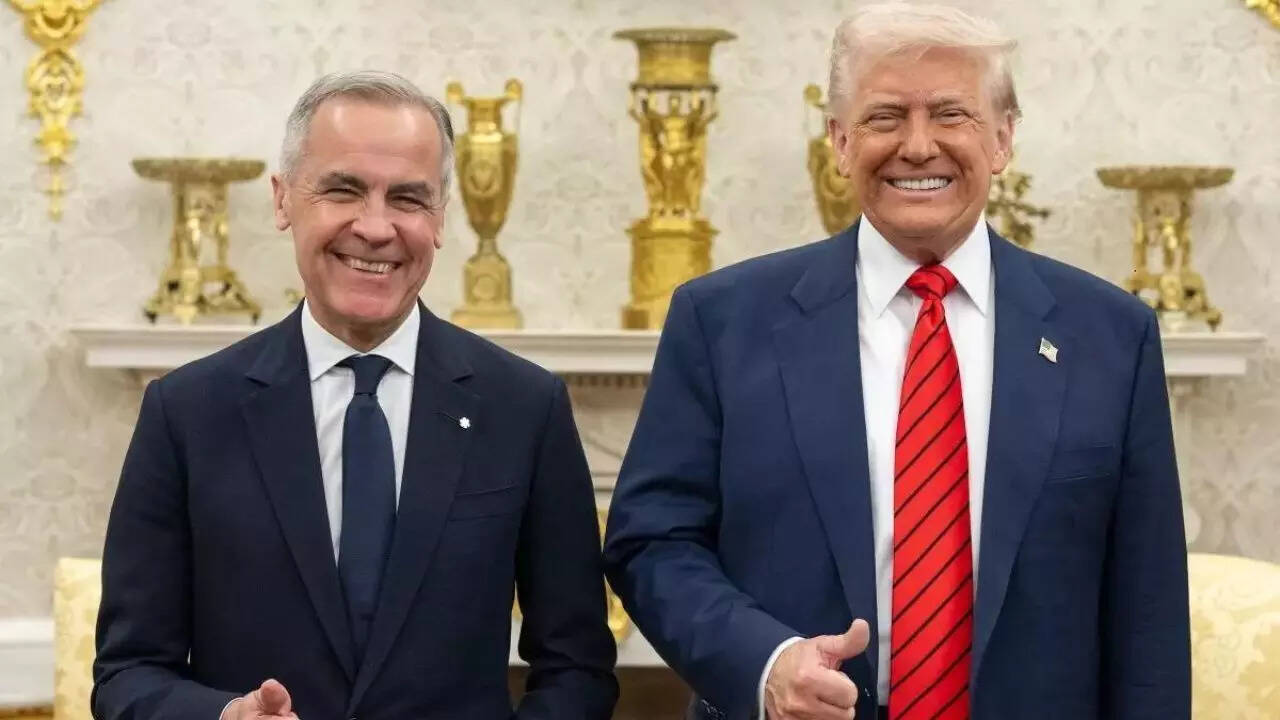
Canadian Prime Minister signals willingness to restart trade negotiations with the United States under President Trump’s administration, aiming to ease ongoing trade tensions. Meanwhile, Bank of Canada Governor Mark Carney is scheduled to meet Chinese President Xi Jinping to discuss economic cooperation and trade matters.
Canadian Prime Minister open to resuming US trade talks with Trump; Bank of Canada Governor Carney to meet Chinese President Xi on economic cooperation.
OTTAWA — Canadian Prime Minister Justin Trudeau has expressed openness to resuming trade talks with the administration of U.S. President Donald Trump, aiming to resolve ongoing commercial disputes and strengthen bilateral economic ties. The statement, made on October 27, 2025, signals a potential thaw in the trade tensions that have persisted between the two North American neighbors over the past several years.
In a press briefing, Prime Minister Trudeau emphasized Canada’s readiness to engage in constructive dialogue to address critical trade issues, including tariffs and market access that have affected key sectors such as agriculture, automotive, and natural resources. “We’re ready to talk and work collaboratively with the United States to find mutually beneficial solutions that support workers and businesses on both sides of the border,” Trudeau said.
The announcement comes amid a backdrop of ongoing negotiations following previous rounds of trade disputes, including the renegotiation of NAFTA into the United States-Mexico-Canada Agreement (USMCA). Although USMCA addressed many concerns, differences on specific policies and trade practices have continued to surface, prompting the need for further discussions.
In parallel, Bank of Canada Governor Mark Carney is slated to travel to Beijing for a high-level meeting with Chinese President Xi Jinping. The meeting aims to strengthen financial and economic cooperation between Canada and China, focusing on issues such as trade facilitation, investment opportunities, and currency stability. Carney’s engagement reflects Canada’s strategic efforts to diversify trade partnerships amid evolving global economic dynamics.
Experts suggest that Trudeau’s willingness to reopen talks with the U.S. may improve Canada’s negotiating position with other global partners, including China. The coordinated approach underlines Canada’s broader strategy to maintain balanced trade relations and reduce vulnerability to unilateral trade barriers.
Trade analysts note that, while President Trump’s administration has historically adopted a protectionist stance, there are signs of pragmatic flexibility as economic pressures mount. Canada’s proactive stance seeks to capitalize on this by promoting dialogue over escalation.
“Our priority remains protecting Canadian jobs and industries, and open communication with the United States is essential to achieving that goal,” Trudeau added. “At the same time, strengthening ties with China through Governor Carney’s meeting demonstrates our commitment to fostering diversified and resilient international trade partnerships.”
The timing of both diplomatic engagements reflects the importance of reinforcing economic cooperation amid ongoing global uncertainties, including inflationary pressures and shifting supply chains. Market observers will closely watch developments from the Canadian-U.S. trade discussions and the outcome of Carney’s talks in China for indicators of future trade policies.
In summary, Canada’s approach signals a dual strategy to engage its largest trading partner, the United States, while simultaneously deepening economic relations with China. These efforts are aimed at enhancing trade stability and supporting Canada’s economic growth amidst a complex international landscape.