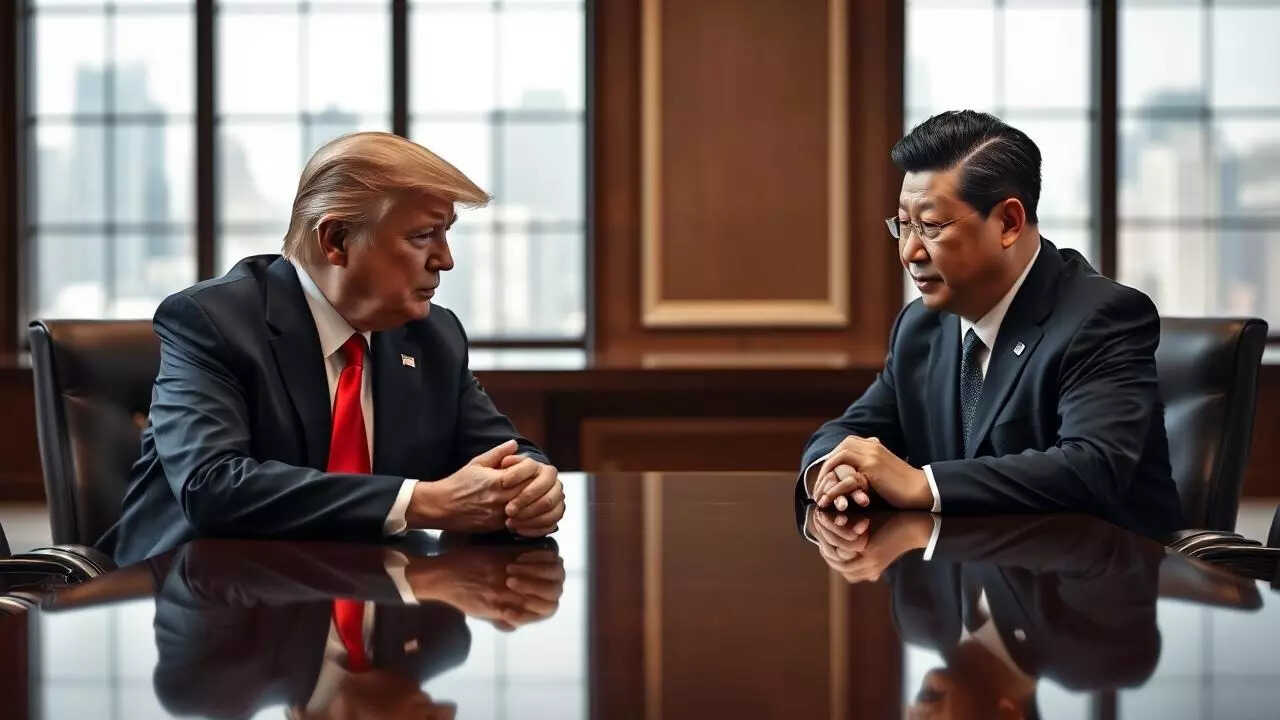
China’s top diplomat Wang Yi has cautioned that a multipolar world order is emerging as he called for an end to trade wars ahead of a high-stakes meeting between former US President Donald Trump and Chinese President Xi Jinping. Wang emphasized the need for cooperation amidst global shifts and urged both nations to resolve trade disputes.
China’s Wang Yi warns of an emerging multipolar world and urges an end to trade wars ahead of Trump-Xi meeting aimed at easing US-China tensions.
Beijing – In a significant diplomatic statement ahead of an anticipated meeting between former US President Donald Trump and Chinese President Xi Jinping, China’s State Councilor and Foreign Minister Wang Yi issued a cautionary message about the evolving global order and urged an end to escalating trade disputes. Speaking on October 27, 2025, Wang pointed to the increasing complexity of international relations characterized by the rise of multiple influential global powers, signaling the arrival of a multipolar world.
Wang Yi highlighted the necessity for China and the United States to engage constructively to manage economic competition and maintain global stability. “The world is transitioning into a multipolar era, where no single nation can dominate unilaterally,” Wang declared during a press briefing in Beijing. “Cooperation and dialogue should replace conflict and confrontation, particularly in terms of trade relations.”
The upcoming Trump-Xi meeting, which has attracted global attention, comes at a time when Sino-American relations remain tense due to longstanding issues related to tariffs, intellectual property rights, and market access. Wang’s remarks suggested a desire from China’s leadership to reset ties and focus on mutual economic benefit.
Historical Context and Current Challenges
Since the initiation of trade tensions between the U.S. and China several years ago, there have been repeated efforts to negotiate and resolve disputes, but fractures remain. Analysts note that the Trump administration’s trade policies significantly reshaped U.S.-China economic engagement, with tariffs impacting hundreds of billions of dollars in goods. Although there has been some easing under subsequent US leadership, underlying strategic competition continues.
Wang Yi’s comments underscore China’s strategic adaptation to a changing global environment, where emerging powers such as the European Union, India, and others play an increasingly prominent role. This multipolarity challenges the previously dominant unipolar order centered largely around the United States.
Reactions and Implications
Diplomatic observers regard Wang’s statement as both a warning and an olive branch. By emphasizing the multipolar world, China frames its rise as part of a broader shift rather than a threat to U.S. preeminence. Simultaneously, the call to end trade wars reflects a pragmatic stance in pursuit of economic stability.
Trade experts suggest that the Trump-Xi meeting could serve as a pivotal moment for recalibrating trade relations. Successful dialogue may reduce tariffs, foster dialogue on technology and security concerns, and pave the way for enhanced cooperation on global challenges such as climate change and public health.
However, some caution remains amid skepticism about the durability of agreements, given previous cycles of tension. Both nations face domestic pressures that complicate diplomacy, including political opposition and nationalist sentiments.
A Multipolar Future
Wang Yi’s articulation of a multipolar world describes an international system where power is distributed among several influential states and blocs rather than dominated by one or two superpowers. This reflects broader trends in geopolitics marked by regional alliances, diversified economic partnerships, and shifting security architectures.
China’s approach advocates for multilateralism, respect for sovereignty, and peaceful coexistence, positioning itself as a responsible global actor committed to stability. The message also implicitly challenges U.S. dominance while proposing a framework where shared interests can guide international cooperation.
Conclusion
On the eve of the Trump-Xi summit, China’s Foreign Minister Wang Yi’s statement sheds light on Beijing’s strategic outlook emphasizing a multipolar global order and the imperative to end trade conflicts. As the world watches this high-profile meeting, the focus remains on whether both nations can translate diplomatic rhetoric into substantive agreements that foster economic cooperation and global peace in an increasingly complex international landscape.