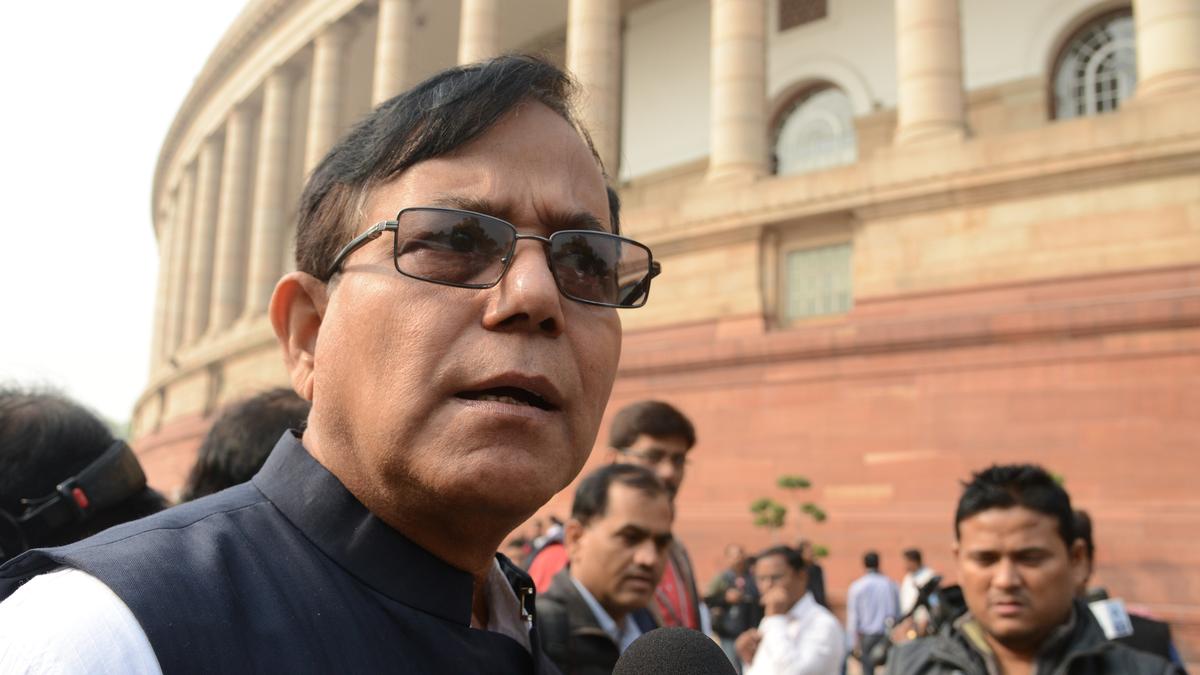
The Communist Party of India (Marxist) has condemned the Union Budget 2025, claiming it prioritizes poll-bound Bihar while ignoring the developmental needs of other states. The CPI(M) alleges that the budget allocations are politically motivated, emphasizing Bihar at the expense of balanced regional growth.
CPI(M) accuses Union Budget 2025 of favoring poll-bound Bihar while neglecting other states, raising concerns over regional disparities.
New Delhi, February 1, 2025 – The Union Budget 2025, presented recently, has sparked criticism from the Communist Party of India (Marxist), which accused the government of tailoring the financial blueprint predominantly to benefit Bihar, a state scheduled for upcoming assembly elections. The CPI(M) expressed concerns that other states were overlooked in terms of budgetary allocations and developmental initiatives, raising questions about the equitable distribution of resources across the country.
The Critique by CPI(M)
In a formal statement issued on Saturday, the CPI(M) asserted that the Union Budget 2025 disproportionately favors Bihar. According to the party leadership, this selective focus appears to be a calculated move catering to electoral gains rather than catering to the nationwide need for balanced socioeconomic development. The party emphasized that while Bihar enjoyed increased financial support, several other states received minimal or no significant budgetary attention.
The CPI(M)’s critique highlights that key sectors in multiple states outside Bihar were left underfunded, which could hamper ongoing developmental projects and stall economic progress in those regions. The party urged the central government to adopt a more inclusive approach that ensures equitable growth and resource distribution.
Budget Highlights and Regional Focus
The Union Budget 2025, unveiled amid growing political activity and election preparations, has been designed with several flagship schemes and initiatives targeted at Bihar. These include increased funding for infrastructure development, agriculture, education, and health services within the state. The government’s plan to boost economic growth in Bihar is seen as a strategic effort to secure political support in the forthcoming polls.
Conversely, states not featuring prominently in the political landscape this year reported receiving relatively modest budget enhancements. Experts note that such region-centric budgetary focus might lead to disparity in the pace of development across the country, potentially widening existing regional inequalities.
Political Context and Implications
Bihar is scheduled to hold assembly elections later this year, making it a key battleground for political parties. The Union Budget’s emphasis on Bihar has drawn widespread attention, with opposition parties and analysts interpreting it as an attempt by the ruling coalition to consolidate votes by showcasing commitment to the state’s progress.
The CPI(M)’s statements add to a chorus of voices calling for a more balanced fiscal approach. Observers note that while targeting resources to poll-bound states is not uncommon, it raises concerns about the marginalization of other regions and may affect the overall economic harmony of the nation.
Government Response and Outlook
As of now, the central government has not issued an official response to the criticism. However, proponents of the budget argue that prioritizing states with immediate electoral significance is part of democratic processes and does not necessarily undermine the development of others. They point out that budgets are complex documents attempting to balance numerous competing demands.
Conclusion
The discourse surrounding the Union Budget 2025 reveals underlying tensions between political strategy and national development goals. The CPI(M)’s criticism underscores the importance of equitable allocation of resources to foster inclusive growth across all Indian states. As the political scenario evolves with upcoming elections, the impact of the budget’s regional focus will remain a subject of scrutiny and debate.