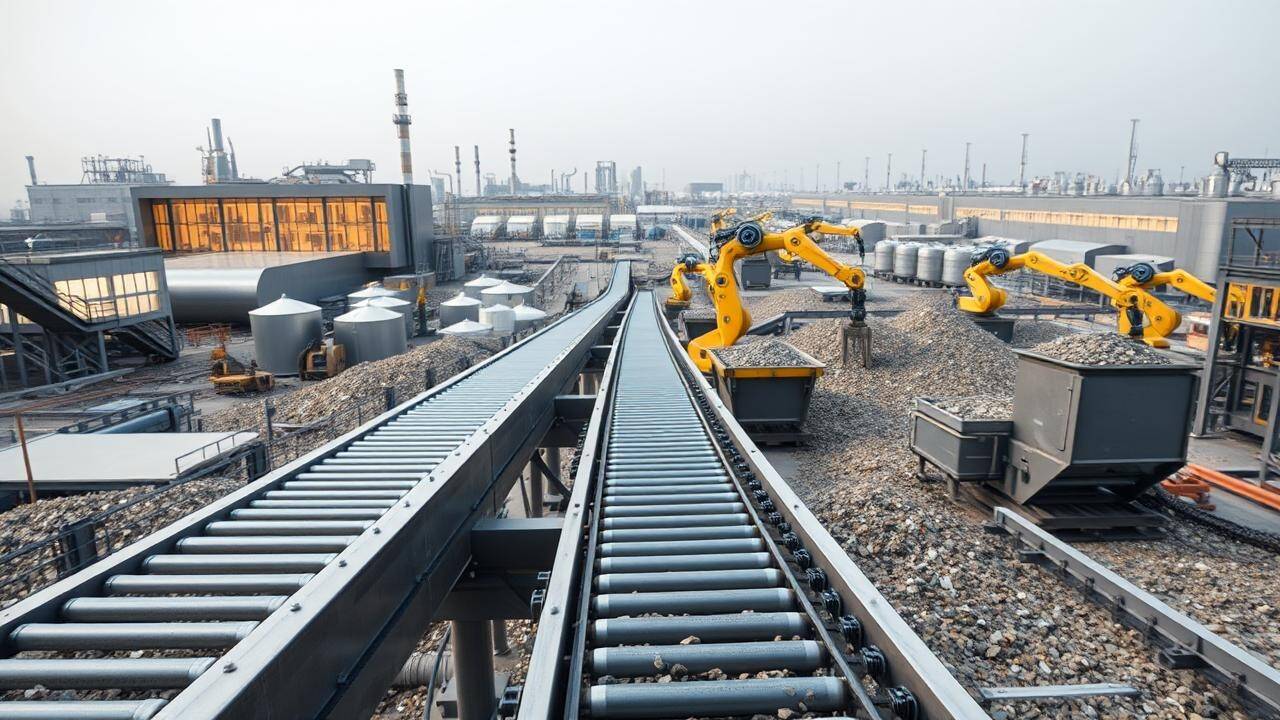
In light of rising global demand for rare earth elements, experts emphasize the importance of India developing international collaborations and strengthening its domestic refining infrastructure. These measures are critical for India to secure a strategic position in the rare earths supply chain and reduce dependence on imports.
Experts recommend India build global partnerships and develop domestic rare earth refining to strengthen supply chains and capitalize on growing demand.
Mumbai, November 8, 2025 – Industry experts and analysts have called on India to proactively establish global partnerships and develop a robust domestic ecosystem for refining rare earth elements (REEs) to capitalize on the growing demand worldwide. With geopolitical shifts and supply chain disruptions affecting rare earth availability, India’s strategic push in the sector is seen as essential to enhance its economic security and technological capabilities.
Experts note that rare earths are vital components in high-tech and clean energy applications, including electric vehicles, wind turbines, and defense systems. India, despite having significant reserves of rare earth minerals, currently relies heavily on imports for refined materials necessary for manufacturing advanced products. This dependency underscores the urgency for India to cultivate a comprehensive refining and processing infrastructure.
“India holds a substantial reserve of rare earth minerals, but the challenge lies in efficiently refining and processing these materials domestically,” said Dr. Anil Mehta, a mineral resources specialist. “Developing partnerships with countries advanced in refining technologies can help India bridge existing gaps swiftly.”
The global market for rare earth elements is witnessing rapid growth, driven by the transition toward renewable energy and electric mobility. Key nations such as China currently dominate refining and processing capabilities, making it imperative for India to diversify its sources and establish resilient supply chains.
Stakeholders emphasize multilateral cooperation as a strategic approach. Collaborations with countries rich in refining expertise and secure supply chains can facilitate technology transfer and infrastructure development. This strategy aligns with India’s broader goals of self-reliance and technological advancement.
Additionally, building a domestic refining ecosystem would not only reduce import dependency but also create employment opportunities and contribute to technological innovation within the country. Government initiatives aimed at promoting research and development in mineral processing technologies are considered pivotal in this context.
As part of the recommendations, experts urge the Indian government to formulate clear policies promoting investment in rare earth refining facilities and to foster international alliances through diplomatic and trade engagements. Encouraging private sector participation and public-private partnerships can accelerate progress in this area.
India’s strategic location and resource base, coupled with an expanding industrial sector, make it well-positioned to emerge as a key player in the global rare earth market. However, realizing this potential requires coordinated efforts among policymakers, industry leaders, and international partners.
In summary, strengthening global partnerships and establishing a robust domestic refining ecosystem for rare earths are critical steps for India to secure its supply chains, support emerging technologies, and promote sustainable economic growth in the face of increasing global demand.