IIT-Kanpur proceeded with a cloud-seeding experiment over Delhi despite the India Meteorological Department’s assessment indicating an absence of suitable clouds. The trial has sparked discussions on the scientific validity and communication between research institutions and weather authorities.
IIT-Kanpur conducted a cloud-seeding trial over Delhi despite IMD warnings of no suitable clouds, raising questions on research and meteorological coordination.
In a recent development, the Indian Institute of Technology Kanpur (IIT-Kanpur) conducted a cloud-seeding trial over Delhi despite warnings from the India Meteorological Department (IMD) that the conditions were not conducive for such an experiment due to a lack of sufficient cloud cover. The trial took place on October 31, 2025, and has raised questions about the coordination between scientific research bodies and government meteorological agencies.
Cloud seeding is a form of weather modification aimed at enhancing precipitation by dispersing substances like silver iodide into the atmosphere to stimulate cloud condensation and rain formation. It is often used in regions facing water scarcity to augment rainfall, but its success is highly dependent on the presence of appropriate atmospheric conditions.
According to officials at the IMD, meteorological data and satellite images had indicated no significant presence of the necessary cloud formations over Delhi at the time of the trial. An official statement from the IMD mentioned, “Based on our observations and forecasts, the atmospheric conditions over Delhi on the night of October 31 were unsuitable for cloud seeding. There was a conspicuous lack of convective and precipitation-bearing clouds.”
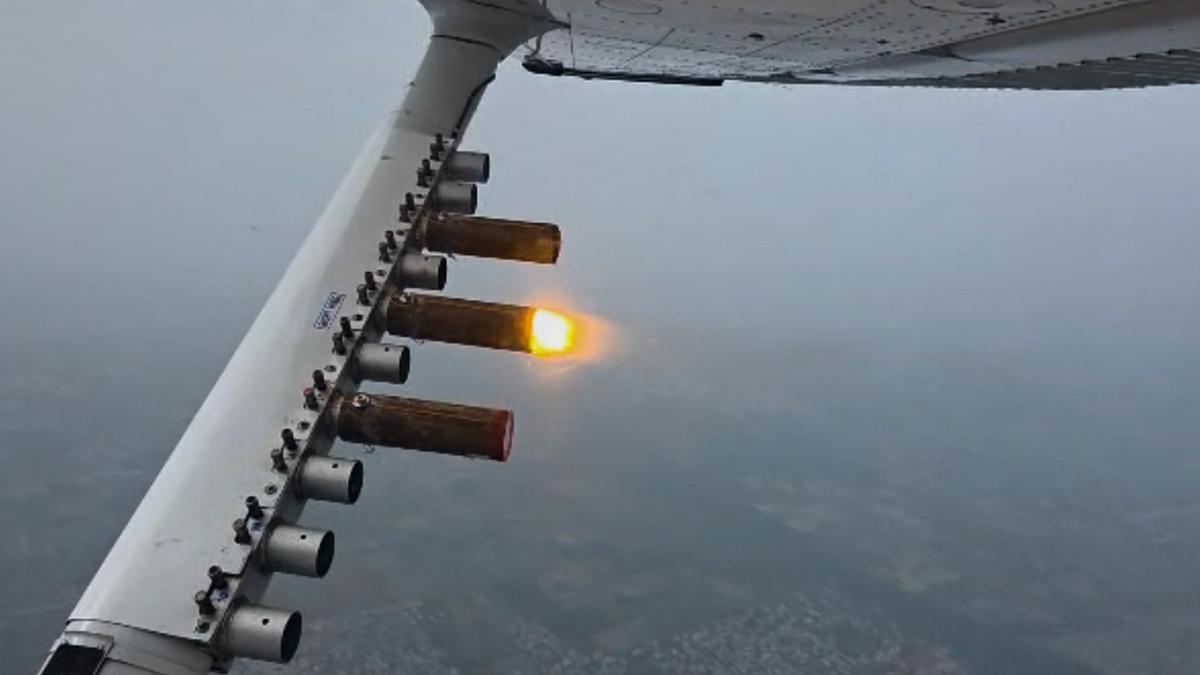
Despite this advisory, IIT-Kanpur’s Department of Atmospheric and Oceanic Sciences proceeded with the cloud-seeding experiment using aircraft to disperse silver iodide particles over targeted areas in Delhi. A spokesperson from IIT-Kanpur explained the rationale behind their decision: “Our cloud seeding trials are designed to test various parameters, including the minimum cloud cover thresholds for effective precipitation enhancement. The trial was part of a broader research project aimed at refining cloud-seeding techniques.”
The move, however, has been met with criticism from some meteorological experts who argue that conducting cloud-seeding without suitable cloud presence could lead to ineffective results and misallocation of resources. Dr. Anil Sharma, a meteorologist and climate scientist, remarked, “Cloud seeding requires certain baseline atmospheric conditions. Attempting such experiments without those conditions can undermine scientific rigor and public trust.”
The incident highlights challenges in communication and collaboration between research institutions and governmental weather authorities. Experts suggest that synchronized protocols and clear data sharing mechanisms are essential to ensure that trials like these are performed under scientifically valid conditions.
The Directorate General of Meteorology has indicated plans to review existing guidelines on collaboration and approvals for cloud-seeding activities, emphasizing the need for alignment with meteorological assessments. Meanwhile, IIT-Kanpur maintains that their research contributes valuable insights into weather modification technology, a field that holds potential for addressing water scarcity issues amid changing climate patterns.
Cloud-seeding experiments have been conducted in various Indian states with varying success, and they remain a subject of ongoing research and debate. As urban centers like Delhi grapple with erratic monsoon patterns and droughts, the aspiration to augment rainfall through technological interventions continues to attract attention.
In summary, the IIT-Kanpur cloud-seeding trial over Delhi, despite IMD’s warning citing lack of clouds, brings to the fore the complex interplay between scientific experimentation, environmental conditions, and institutional coordination. It underscores the importance of harmonizing efforts to ensure the efficacy and credibility of weather modification initiatives.