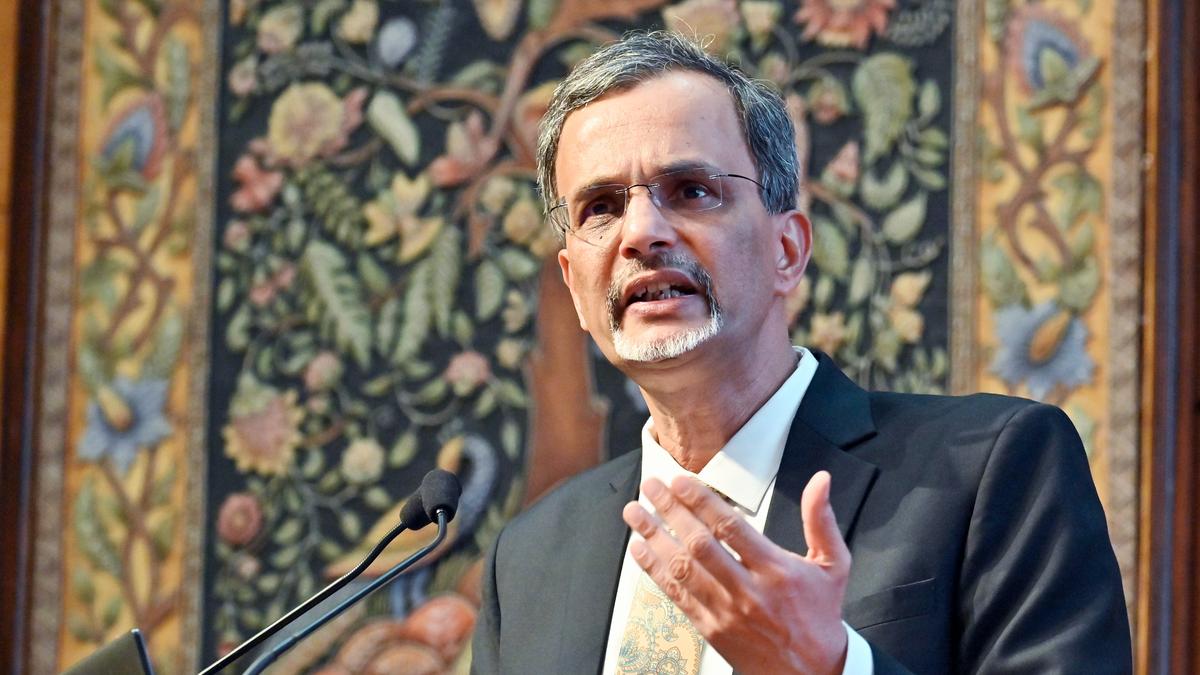
In response to rising global tariffs, India’s Chief Economic Advisor (CEA) has emphasized the need for the country to enhance its competitiveness rather than focusing solely on tariff adjustments. The CEA highlighted that improving productivity and efficiency will better position India to deal with external trade pressures.
India’s Chief Economic Advisor emphasizes enhancing competitiveness as the key strategy to tackle global tariff challenges and boost economic growth.
New Delhi, November 4, 2025 – India’s Chief Economic Advisor (CEA) has called on policymakers and industry leaders to focus on increasing the nation’s competitiveness as the primary strategy to address the challenges posed by international tariffs. The CEA emphasized that relying on tariff measures alone will not be sufficient to sustain economic growth in the evolving global trade environment.
Speaking at a recent economic forum, the CEA highlighted that while tariffs have been a traditional tool to protect domestic industries, the current global trade dynamics require a shift towards enhancing productivity and competitiveness. “To effectively deal with tariffs, India needs to concentrate on becoming more competitive by leveraging technology, streamlining processes, and fostering innovation,” the CEA stated.
The advisor noted that increased competitiveness would allow Indian businesses to withstand external tariff pressures and expand their presence in international markets. This approach, according to the CEA, would drive sustainable economic growth and integration with the global economy.
Contextualizing the tariff issue, the CEA pointed out that many countries are resorting to protectionist measures, which has led to heightened trade barriers. However, India’s strategic response should involve upgrading industrial capabilities and investing in human capital to boost production efficiency and product quality.
Experts agree that improving competitiveness can mitigate the negative impact of tariffs by reducing costs and enhancing export attractiveness. They also suggest that reforms aimed at regulatory simplification and infrastructure development are crucial to support this transition.
The CEA’s remarks come at a time when global trade tensions have intensified, prompting nations to reconsider their economic policies. India’s plan to focus on competitiveness aligns with its broader objective of becoming a significant player in the global market while safeguarding domestic industries.
In conclusion, India’s Chief Economic Advisor advocates for a strategic pivot from tariff-centric policies towards competitiveness-based solutions. By prioritizing innovation, technological advancement, and efficiency improvements, India aims to effectively navigate international trade challenges and strengthen its economic position.