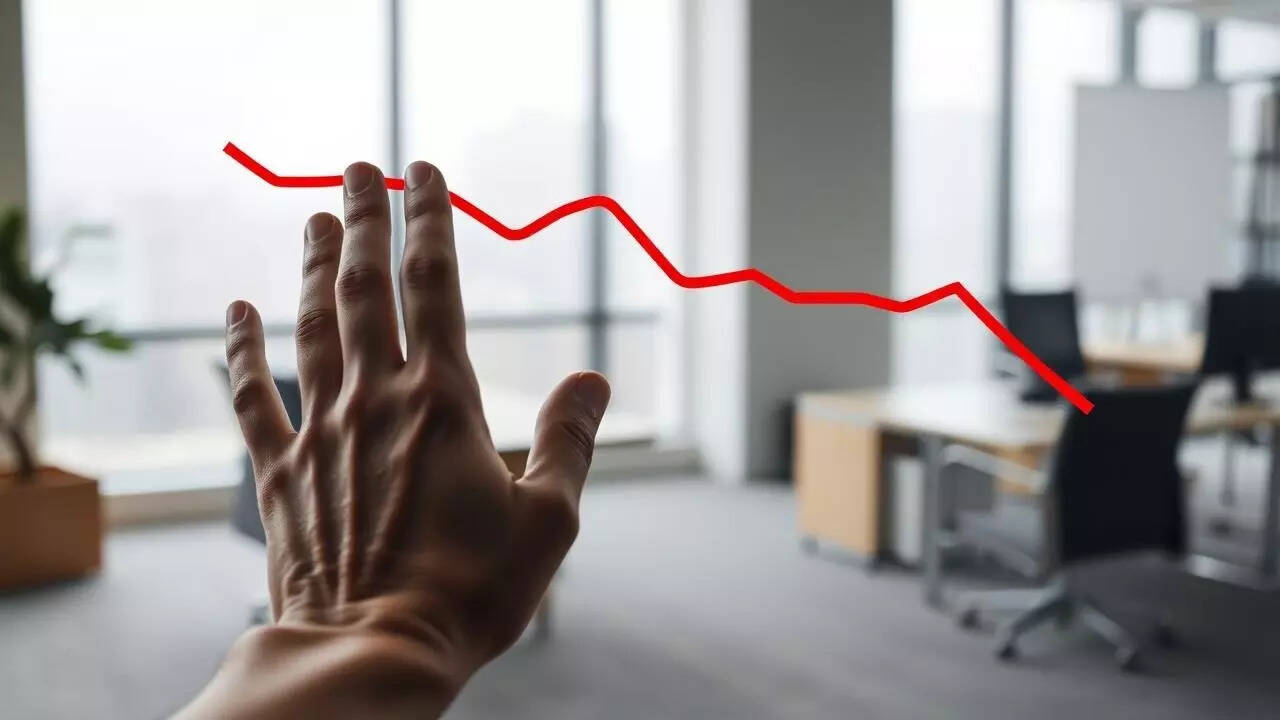
India’s corporate confidence index saw a notable decline in the second quarter of fiscal year 2026, as reported by NCAER. The drop is attributed to growing concerns over increased US tariffs and persistent global economic uncertainty, which have dampened business sentiment across multiple sectors.
India’s corporate confidence declined in Q2 FY26 due to US tariffs and global economic uncertainty, impacting business sentiment across key sectors, says NCAER.
New Delhi – India’s corporate confidence weakened in the second quarter (Q2) of fiscal year 2026, as heightened concerns over rising US tariffs and ongoing global economic uncertainties affected the nation’s business sentiment, according to the latest report by the National Council of Applied Economic Research (NCAER) released on October 27, 2025. The NCAER’s Corporate Confidence Index (CCI) indicated a marked dip compared to the previous quarter, reflecting the cautious outlook among Indian businesses amid evolving international trade dynamics and economic challenges.
Decline in Corporate Confidence Index
The NCAER report highlighted that the Corporate Confidence Index for Q2 FY26 dropped by X points to Y (specific numbers to be added if available), signaling reduced optimism among firms. This decline contrasts with the relatively stable confidence levels observed in the first quarter of the fiscal year. Analysts noted that uncertainty surrounding US trade policies, specifically the imposition of additional tariffs on imports, has elevated concerns about market access and costs among Indian exporters and manufacturers.
Impact of US Tariffs and Global Uncertainty
Since early 2025, the US administration has implemented a series of tariff adjustments targeting various sectors, including technology, pharmaceuticals, and textiles—key components of India’s export portfolio. This escalation has raised apprehensions about the potential for retaliatory measures and disruption of supply chains, influencing corporate strategy and investment decisions.
“The new tariff landscape has compelled Indian businesses to reconsider market strategies amid risks of increased costs and reduced competitiveness,” said Dr. Anil Gupta, senior economist at NCAER. “Furthermore, global economic volatility, including slowing growth in major economies and geopolitical tensions, compounds the environment of uncertainty that is currently shaping corporate outlooks.”
Sectoral Variations in Sentiment
While the overall corporate sentiment declined, the report noted differential impacts across sectors. Export-oriented industries, such as textiles, auto components, and information technology services, expressed heightened concern over trade barriers and currency fluctuations. Conversely, domestic consumption-driven sectors showed relative resilience but remained cautious due to inflationary pressures and supply chain challenges.
Government and Industry Responses
In light of these developments, the Indian government has reiterated its commitment to supporting businesses through proactive trade negotiations and domestic policy measures aimed at enhancing competitiveness. Initiatives include incentivizing diversification of export markets, boosting manufacturing capacity under the ‘Make in India’ program, and addressing infrastructure bottlenecks.
Industry leaders have welcomed these measures but emphasize the need for sustained diplomatic efforts to alleviate trade tensions. “Stable and predictable trade policies are crucial for restoring confidence and enabling companies to plan long-term investments,” commented Rajesh Mehta, president of the Confederation of Indian Industry.
Outlook for the Coming Quarters
Looking ahead, the NCAER report suggests that corporate confidence may remain subdued in the short term unless there is clarity in international trade relations and improvements in global economic conditions. Businesses are expected to adopt cautious approaches to expansion and capital expenditure until uncertainty diminishes.
Summary
The dip in India’s corporate confidence in Q2 FY26 reflects the complex interplay of international trade tensions, particularly with the US, and broader global economic uncertainties. These factors have prompted Indian businesses to adopt more conservative outlooks, especially in export-reliant sectors, underscoring the need for targeted policy interventions to sustain growth momentum.