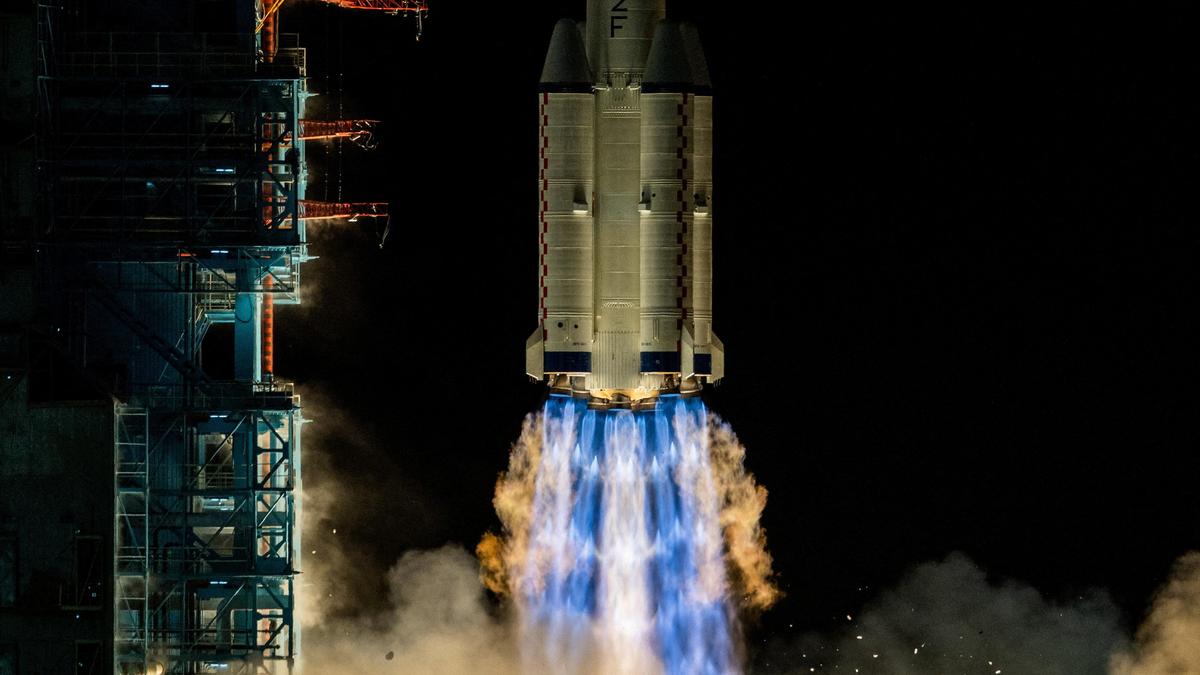
The Indian Space Research Organisation (ISRO) successfully tested the bootstrap mode start on its CE20 cryogenic engine, marking a significant advancement in engine restart technology. This demonstration enhances ISRO’s capabilities in cryogenic propulsion, potentially improving the reliability and efficiency of future space missions.
ISRO successfully tests bootstrap mode start on CE20 cryogenic engine, enhancing engine restart capability and boosting reliability for future space missions.
Indian Space Research Organisation (ISRO) has successfully demonstrated the bootstrap mode start on the CE20 cryogenic engine, a critical advancement that bolsters the engine’s restart capability. The test was conducted recently at ISRO’s testing facilities, showcasing the organisation’s continuous efforts to enhance cryogenic propulsion technology used in its launch vehicles. The CE20 engine serves as a vital component in the upper stages of ISRO’s launch vehicles, particularly the GSLV Mk III, facilitating the delivery of satellites into precise orbits. Bootstrap mode start is an advanced technique that enables the engine to restart reliably during flight, which is crucial for complex mission profiles requiring multiple burns or precise orbital insertions. Achieving this capability reduces dependency on secondary systems and offers greater control and efficiency during the mission. The successful test involved initiating the CE20 engine from a dormant state under controlled conditions, validating the engine’s ability to restart autonomously without manual intervention or additional start-up aids. This progress underscores ISRO’s commitment to developing state-of-the-art propulsion technologies that meet international standards. According to officials familiar with the project, the bootstrap start test was a culmination of extensive development and rigorous ground testing spanning several months. “The successful demonstration of the bootstrap mode start on the CE20 engine marks a significant milestone in India’s cryogenic engine technology,” an ISRO spokesperson remarked. “This advancement will enhance the reliability and performance of our launch vehicles, supporting more complex and demanding space missions in the future.” The CE20 is a high-thrust, staged combustion cycle engine designed to use liquid oxygen and liquid hydrogen as propellants. Its ability to start and restart efficiently is vital for missions that place payloads into geostationary orbits or involve multiple orbital maneuvers. This development aligns with ISRO’s broader strategy to increase mission flexibility and strengthen India’s position in the global space sector. Experts note that advancements in cryogenic engine restart capabilities are essential for a wide array of applications, including satellite deployment, interplanetary missions, and potentially reusable launch vehicles. The bootstrap mode start test positions ISRO alongside other leading space agencies focusing on enhancing engine reliability and mission versatility. The successful completion of this test not only validates the technical maturity of the CE20 engine but also sets the stage for incorporating this restart feature in upcoming missions. ISRO continues to push the boundaries of space technology, aiming to achieve greater self-reliance and competitiveness in the space domain. In conclusion, ISRO’s successful demonstration of the bootstrap mode start on the CE20 cryogenic engine represents an important technological breakthrough, enhancing the engine’s restart capability and contributing to the advancement of India’s space launch vehicles. This achievement is expected to improve the efficiency and reliability of future missions, reaffirming ISRO’s commitment to innovation in space propulsion technology.