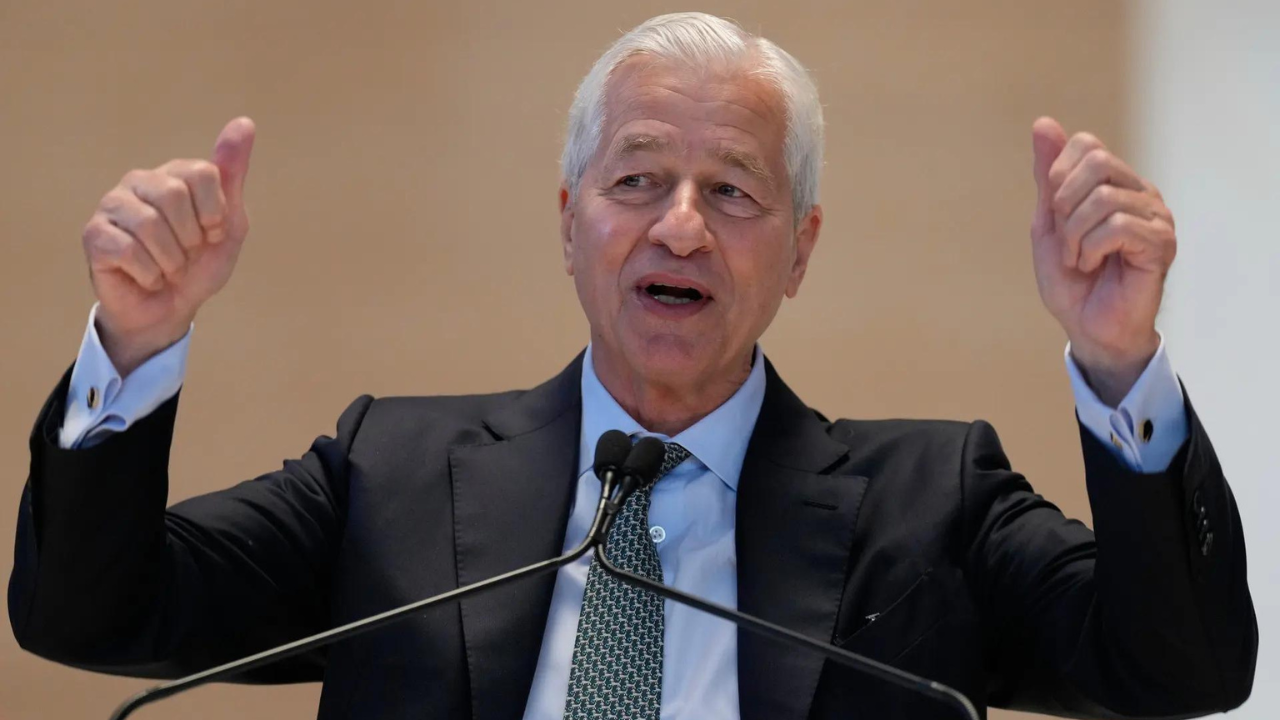
JPMorgan Chase CEO Jamie Dimon spoke out against fears that artificial intelligence will lead to widespread job losses, offering a nuanced perspective amid growing concerns. He also praised Nvidia as a key player in AI technology during a recent industry discussion.
JPMorgan CEO Jamie Dimon addresses AI job fears, praising Nvidia and emphasizing AI as a tool for growth, not job losses.
In a recent statement that has drawn significant attention, Jamie Dimon, CEO of JPMorgan Chase, addressed concerns regarding artificial intelligence (AI) and its impact on employment. Speaking on November 6, 2025, Dimon tackled fears that AI might lead to extensive job cuts, asserting a more balanced view on the technology’s influence on the workforce.
Dimon’s comments came amid heightened global apprehension about AI-driven automation potentially displacing workers across various industries. While acknowledging the transformative power of AI, Dimon emphasized the technology’s role as an augmentative tool rather than a wholesale replacement for human labor. “AI is not about stealing jobs; it’s about enhancing productivity and creating new opportunities,” he remarked.
JPMorgan Chase has been actively integrating AI into its business operations to streamline processes and improve financial services. However, Dimon noted that the implementation of AI technologies would be approached thoughtfully to minimize adverse effects on employment. “Our commitment is to use AI responsibly, ensuring that our workforce adapts through reskilling and evolving job roles,” he added.
Dimon also highlighted Nvidia, a leading technology company renowned for its AI hardware and software solutions, praising the firm as an “unbelievable company” driving innovation in the AI space. Nvidia’s advancements in graphics processing units (GPUs) and AI frameworks have been instrumental in accelerating machine learning and deep learning applications across sectors.
The JPMorgan CEO’s remarks come at a time when layoffs have been reported in various tech-related fields, fueling speculation that AI automation may be a catalyst for job cuts. Despite concerns, Dimon advocated for a pragmatic approach, encouraging businesses and policymakers to focus on harnessing AI’s benefits while managing workforce transitions carefully.
Industry experts note that AI’s impact on employment is multifaceted. While certain routine tasks may be automated, AI also creates new roles requiring technical skills, data analysis expertise, and human judgment. Economists suggest that continuous investment in education and training will be crucial to maximize AI’s potential without significant job displacement.
The discourse around AI and employment continues to evolve as technology advances. Dimon’s insights contribute to a broader conversation aiming to balance innovation with economic and social stability.
In summary, Jamie Dimon conveyed cautious optimism about AI’s role in reshaping the workforce, underscoring that AI should be seen as a complement to human workers rather than a threat. His praise for Nvidia reflects the importance of leading technology firms in driving AI development and its responsible application. As businesses increasingly adopt AI, Dimon’s perspective serves as a reminder of the need for a nuanced and strategic approach to technology-driven change.