The International Astronomical Union has approved names for Martian landforms proposed by Kerala-based researchers. This marks a significant contribution by Indian scientists to planetary nomenclature and highlights Kerala’s growing role in space research.
Kerala researchers’ proposed names for Martian landforms approved by the International Astronomical Union, marking a milestone in Indian space research.
Kerala-based researchers have earned international recognition with the International Astronomical Union (IAU) officially approving names they proposed for various landforms on Mars. The announcement, made on November 26, 2025, underscores India’s expanding footprint in planetary science and space exploration. The approved names reflect cultural and geographical significance linked to Kerala, bridging Earth’s heritage with extraterrestrial landscapes.
The International Astronomical Union is the internationally recognized authority responsible for assigning official names to celestial bodies and their features. In a recently published bulletin, the IAU ratified a list of names suggested by the research team from Kerala, marking a notable moment for India’s contribution to Martian cartography.
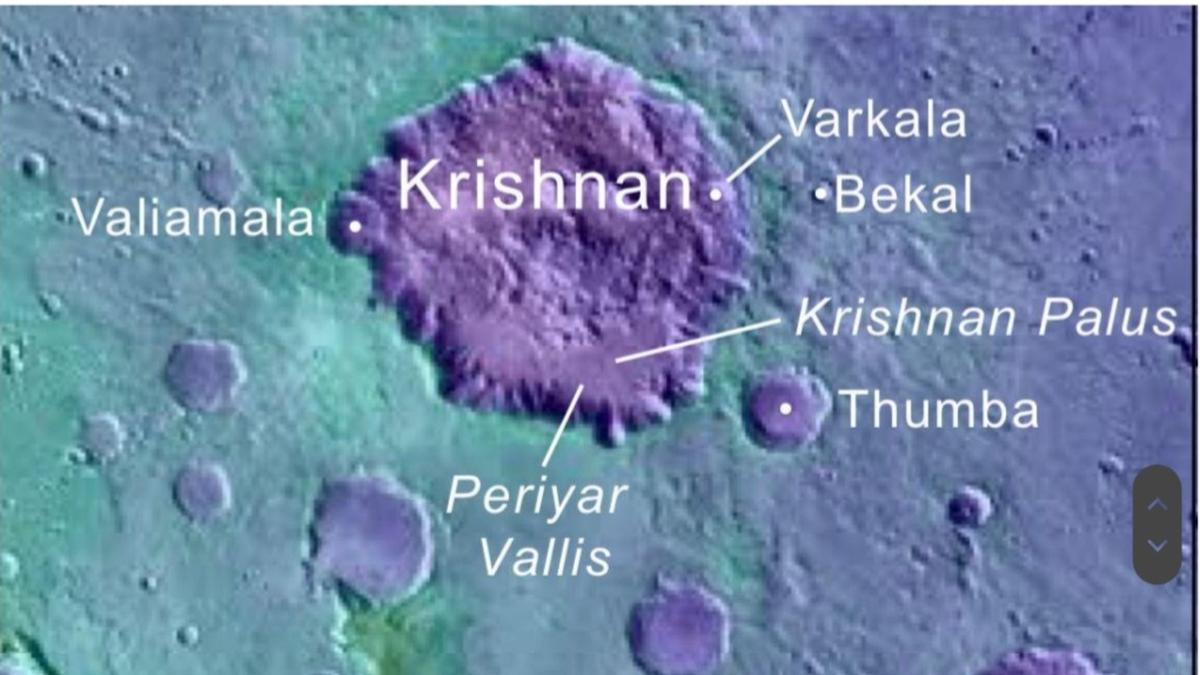
According to the researchers, the proposed names were carefully selected to honor Kerala’s rich cultural history and geographical landmarks. This includes names derived from local rivers, historical sites, and indigenous terms, which now label craters, valleys, and other notable Martian features.
Dr. Anil Kumar, lead scientist of the Kerala team, expressed his enthusiasm about the achievement: “Having our culturally significant names immortalized on Mars is a proud moment for us and reflects the growing capabilities of Indian space research.” The research was conducted in collaboration with several Indian space agencies and international bodies dedicated to planetary studies.
The naming process involved rigorous scientific validation and was subject to strict IAU guidelines to ensure that features are uniquely identified and globally accepted. The team submitted their proposals earlier this year, following comprehensive studies of Mars’ topography using data from orbiters and rovers.
This recognition also highlights the integral role of regional research centers in contributing valuable knowledge and cultural perspectives to planetary science. Kerala’s involvement in space research has been steadily increasing, with a focus on satellite technology, planetary geology, and astrobiology.
The initiative aligns with India’s broader ambitions in space exploration, including ongoing missions to Mars like the Mars Orbiter Mission and future plans for manned space exploration and interplanetary studies. By integrating local cultural elements into celestial naming conventions, Indian scientists are fostering a closer connection between the public and space science.
As humanity continues to explore and better understand Mars, standardized naming of its landforms is crucial for effective communication, navigation, and scientific research. The IAU’s approval of names from Kerala-based researchers not only acknowledges scientific merit but also emphasizes the global and inclusive nature of space exploration endeavors.
In summary, the approval of Martian landform names proposed by Kerala-based researchers represents a milestone in India’s growing presence in planetary science. It celebrates cultural heritage while advancing the scientific understanding of Mars, reinforcing the importance of collaborative and international efforts in space research.