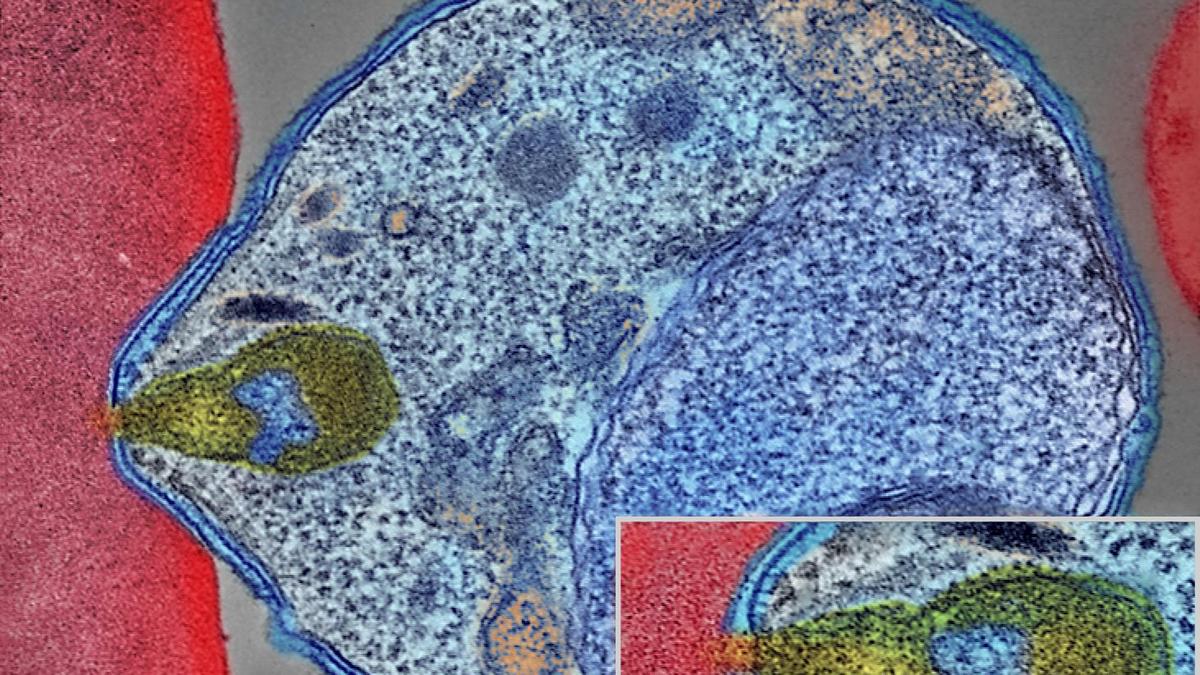
New research reveals that malaria parasites employ a unique corkscrew movement to burrow deeper into human skin, enhancing their ability to infect hosts. This discovery offers fresh insights into malaria transmission and could inform future strategies to combat the deadly disease.
New study shows malaria parasites use corkscrew movement to penetrate skin deeper, offering insights into infection mechanism and potential treatment targets.
Scientists have uncovered novel behavior in malaria parasites that could reshape our understanding of how the disease spreads. Published on December 4, 2025, in a recent study, researchers observed that Plasmodium parasites—the agents responsible for malaria—move through the skin using a corkscrew-like motion, enabling them to penetrate deeper tissue layers shortly after a mosquito bite.
Malaria remains one of the world’s most deadly infectious diseases, caused by Plasmodium parasites transmitted to humans through the bites of infected Anopheles mosquitoes. Understanding the parasite’s movement after entering the skin is crucial for developing targeted interventions.
In this study, conducted by an international team of scientists, including researchers from universities and medical institutions, advanced imaging techniques allowed close observation of the parasites immediately following their inoculation into the skin. The scientists noted that rather than moving linearly, the parasites twist and rotate in a corkscrew fashion, which facilitates deeper migration through the dermal layers.
Lead researcher Dr. Anita Sharma explained, “This corkscrew motility appears to be an adaptation that helps Plasmodium evade immune detection and reach blood vessels more efficiently, which is essential for establishing infection.” The findings challenge previous assumptions that parasites moved simply in a straight line or by random motion.
The researchers utilized high-resolution microscopy and three-dimensional imaging to track the parasites’ trajectory in real-time. This approach revealed that the corkscrewing enables parasites to navigate complex tissue architecture more effectively, potentially increasing the likelihood of successful infection.
Understanding the mechanical strategies malaria parasites use to invade host tissue could have significant implications for malaria prevention and treatment. By targeting this distinctive movement, new therapies or vaccines could be developed to block early parasite migration, thus reducing infection rates.
Professor Michael Lee, an expert in infectious diseases not involved with the study, commented, “These insights add an important piece to the malaria puzzle. The ability to visualize and characterize parasite movement within the skin opens new avenues for interrupting the infection process before it progresses.”
Malaria continues to afflict millions globally, particularly in sub-Saharan Africa and parts of Asia. Despite efforts including bed nets and antimalarial drugs, the disease persists, underlining the necessity for innovative approaches based on detailed biological understanding.
The discovery of corkscrew motility in Plasmodium parasites enriches the biological knowledge essential for these efforts. Future research could focus on the molecular mechanisms driving this movement and its potential as a target for interventions.
Overall, the study enhances scientific comprehension of malaria transmission dynamics and suggests new possibilities to combat a disease that poses a significant global health challenge.