Researchers have discovered that moss spores can survive exposure to the harsh conditions of space, challenging existing notions of life’s resilience. This finding, published recently, holds significant implications for astrobiology and the potential for life beyond Earth.
Moss spores survive harsh space conditions, challenging existing limits of life and offering new insights for astrobiology and space exploration.
In a groundbreaking study published on November 26, 2025, scientists have demonstrated that moss spores can withstand the extreme conditions of outer space, a discovery that challenges current understandings of life’s boundaries. The research, conducted through exposure experiments beyond Earth’s atmosphere, indicates that these simple plants possess remarkable survival mechanisms that enable them to endure vacuum, cosmic radiation, and intense ultraviolet light.
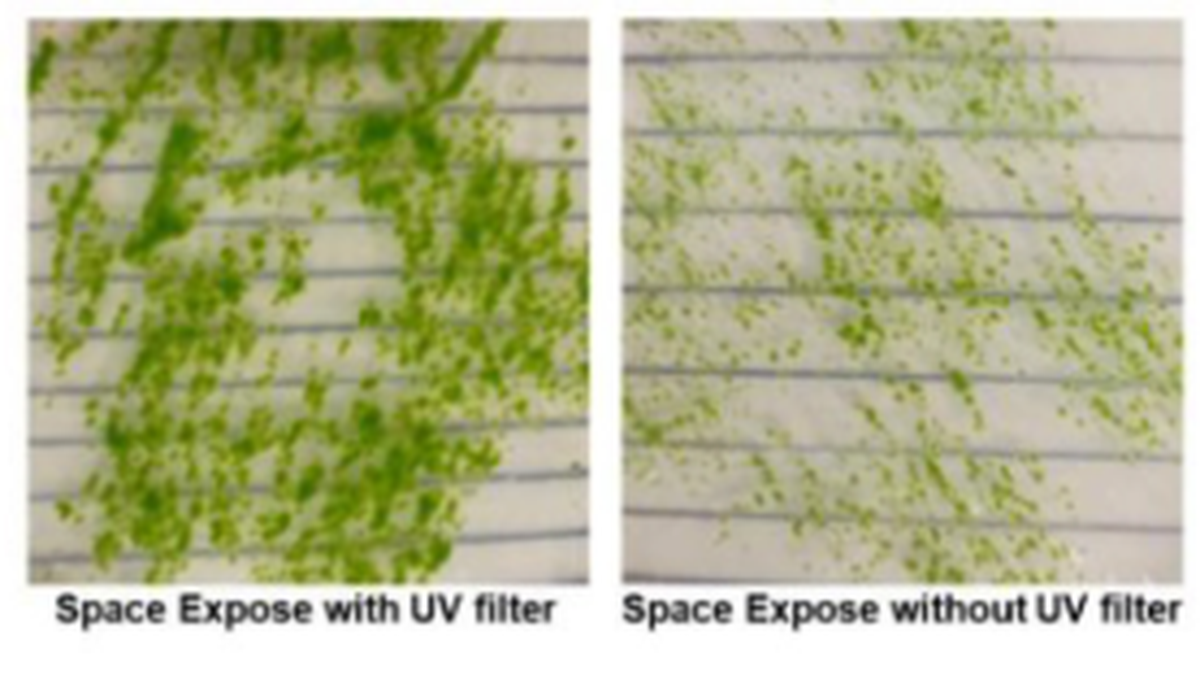
The experiments involved sending moss spores into low Earth orbit, where they were subjected to the vacuum of space, microgravity, and the full spectrum of solar radiation over extended periods. Upon return and analysis, many spores not only survived but maintained the capability to germinate and grow in terrestrial conditions. Lead researcher Dr. Asha Kumar explained, “Our findings suggest that moss spores have inherent resilience to space’s hostile environment, which compels us to reconsider the limits of life in the cosmos.”
The study was conducted using exposure facilities aboard satellites coordinated by international space agencies. The spores, chosen for their known durability and biological simplicity, were carefully prepared and contained to monitor their survival rate accurately.
Implications for Astrobiology and Planetary Protection
This discovery has significant implications for astrobiology, the study of life in the universe, as it implies that life forms with simple structures might endure interplanetary journeys or survive on other celestial bodies with harsh environments. The robustness of moss spores could inform strategies for detecting life or its traces on planets such as Mars or moons like Europa, where conditions may resemble aspects of space exposure.
Moreover, the findings raise important considerations for planetary protection policies. As moss spores survive space transit, there is potential for forward contamination, where terrestrial organisms might inadvertently be transported to other planets via spacecraft, impacting the integrity of extraterrestrial ecosystems or biosignatures.
Expert Reactions and Future Research
Astrobiologist Dr. Elena Rodriquez, uninvolved in the study, commented, “This research opens exciting avenues for understanding how life might spread and persist beyond Earth. It challenges us to refine our methods of detecting life and preventing contamination.”
Future research aims to investigate the molecular and physiological mechanisms underlying the spores’ resilience. Understanding how moss spores repair DNA damage, manage oxidative stress, and withstand desiccation in space could provide insights into the foundations of life’s adaptability.
Conclusion
The revelation that moss spores can survive direct exposure to space conditions expands scientific understanding of life’s resilience and adaptability. This advancement not only influences astrobiological theories about the potential for life beyond Earth but also informs practices in space exploration and planetary protection. As scientific inquiry continues, the resilience of simple life forms like moss spores may reshape humanity’s perspective on life’s capacity to endure the cosmos.