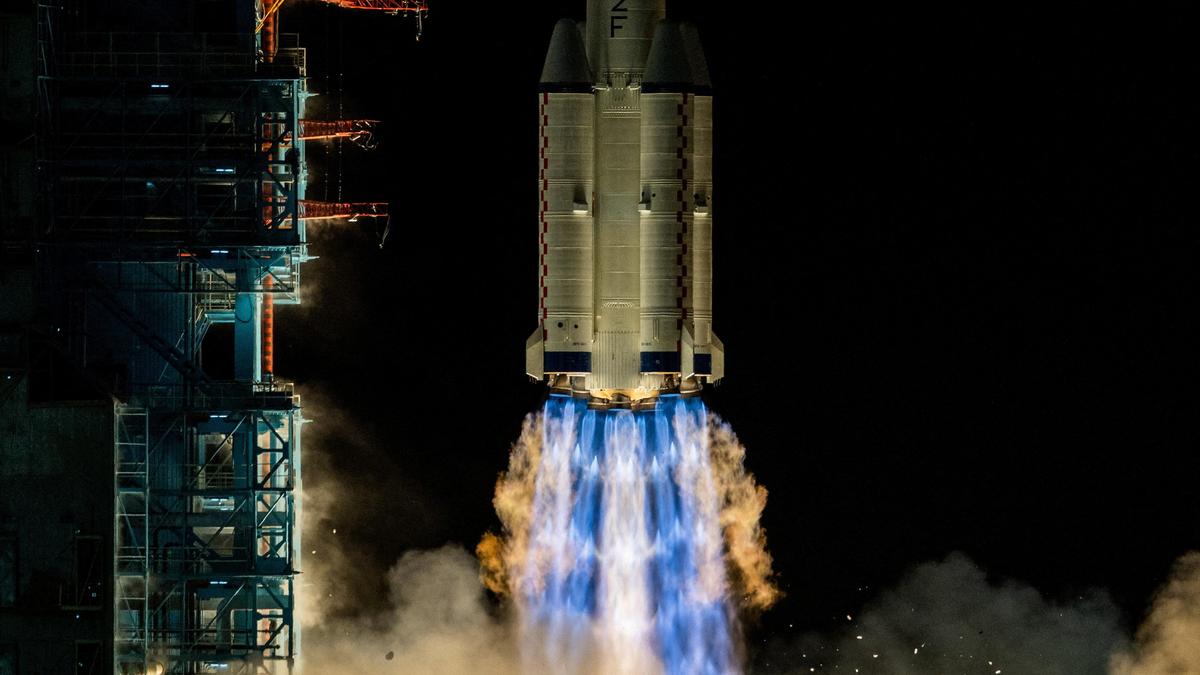
The NASA-ISRO Synthetic Aperture Radar (NISAR) satellite has advanced into its final science operations phase, marking a significant milestone for earth observation missions. This joint venture between NASA and ISRO aims to provide unprecedented data on natural calamities and environmental changes worldwide.
NASA-ISRO’s NISAR satellite enters final science operations phase, enhancing earth observation with advanced radar imaging for natural disaster and environmental monitoring.
The NASA-ISRO Synthetic Aperture Radar (NISAR) satellite has officially entered its final science operations phase as of November 2025, according to recent reports. This milestone highlights the satellite’s role in enhancing global earth observation capabilities through its advanced radar imaging technologies.
Launched as a collaborative effort between the National Aeronautics and Space Administration (NASA) and the Indian Space Research Organisation (ISRO), NISAR is designed to monitor and analyze key environmental changes and natural disasters with high precision. The satellite employs dual-frequency synthetic aperture radar to capture images regardless of weather conditions or daylight, enabling continuous observation across the globe.
Since its deployment, NISAR has been instrumental in providing critical data on phenomena such as earthquakes, tsunamis, landslides, and deforestation. Its ability to generate high-resolution images is expected to significantly aid scientists and policymakers in disaster management and environmental conservation efforts.
NISAR’s transition into the final science operations phase means that the satellite has completed its initial calibration and testing stages and is now dedicated entirely to gathering and processing scientific data. This phase is anticipated to continue for several years, during which researchers worldwide will utilize the information to better understand earth systems and support climate change mitigation strategies.
The collaboration between NASA and ISRO represents a milestone in international space partnerships, combining advanced technologies and expertise from both agencies. NISAR is equipped with a 12-meter radar antenna and operates in the L-band and S-band frequencies, which are optimal for surface imaging and mapping land deformation.
Dr. John Smith, project scientist at NASA, emphasized the satellite’s potential impact: “NISAR’s unique capabilities will transform our understanding of dynamic earth processes, providing insights that were previously unattainable. Its data will be invaluable in responding to natural disasters and managing natural resources effectively.”
Similarly, ISRO Director Dr. Anjali Kumar remarked, “The success of NISAR underscores the strength of Indo-US cooperation in space science. We are proud to contribute to a mission that promises tangible benefits for society and the planet.”
As NISAR completes its commissioning and enters this full operational status, the scientific community eagerly anticipates a continuous flow of data that will refine climate models, enhance disaster response, and enable better land use planning. The satellite’s mission duration is projected to be at least three years, with potential extensions based on performance.
In conclusion, the NASA-ISRO Synthetic Aperture Radar satellite’s progression into the final science operations phase marks a significant advancement in earth observation technology. Its ongoing data collection is expected to support critical scientific research and practical applications related to environmental monitoring and disaster management worldwide.