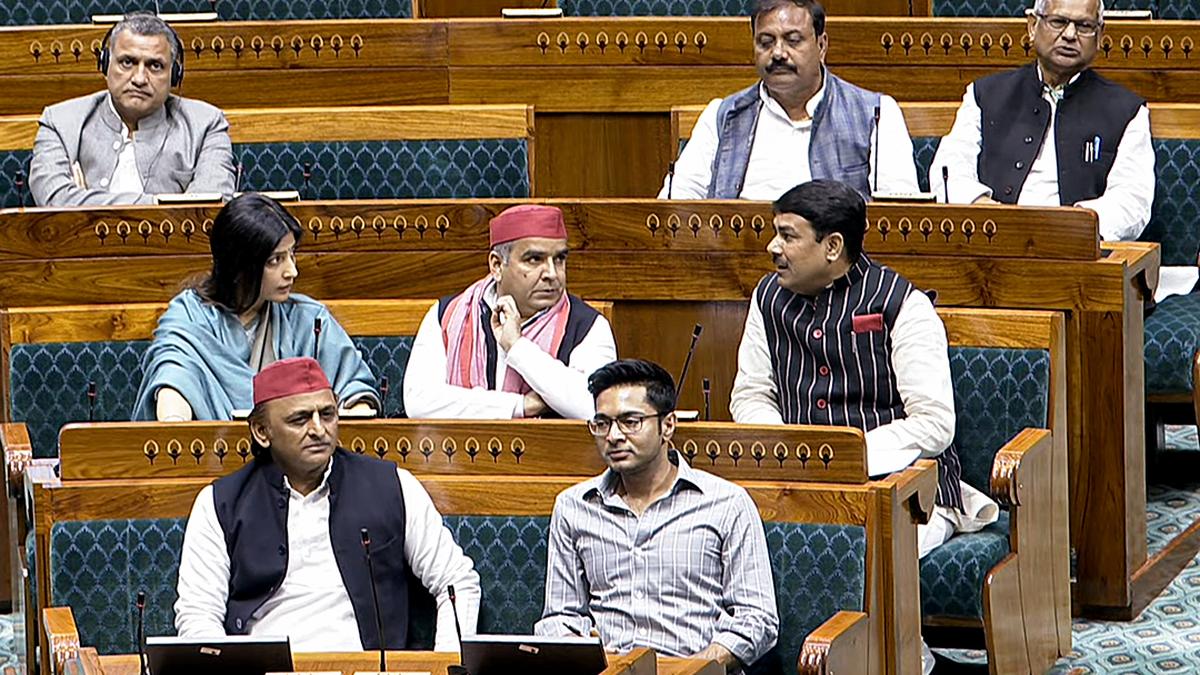
Opposition parties have labeled the Union Budget 2025 as biased towards the rich, raising concerns over its impact on economic equity. The budget, presented on February 7, has sparked a debate on fiscal priorities and social welfare allocations.
Opposition parties criticize Union Budget 2025 as favoring the rich, sparking debate on economic equity and fiscal priorities in India.
New Delhi, February 7, 2025 – The recently presented Union Budget 2025 has come under sharp criticism from opposition parties, who argue that the fiscal plan disproportionately benefits the wealthy sections of society. The opposition accused the government of prioritizing the interests of the rich while neglecting the needs of lower and middle-income groups.
The Union Budget, unveiled by the Finance Minister earlier today, outlines the government’s economic agenda and spending plans for the upcoming financial year. Opposition leaders voiced their concerns in a joint press conference held in New Delhi, emphasizing that the budget’s provisions, such as tax reliefs and capital investment incentives, primarily aid affluent individuals and corporates.
Critics highlighted that measures like the reduction of long-term capital gains tax thresholds and increased allocations for luxury sectors reflect a tilt towards the rich. Meanwhile, they pointed out insufficient focus on social welfare schemes, healthcare, education, and rural development.
An opposition spokesperson stated, “This budget clearly endorses wealth concentration and ignores the pressing needs of millions of ordinary citizens struggling amid inflation and unemployment. It is a pro-rich budget that sidelines inclusive growth.”
Economic analysts offered mixed assessments, noting that while some capital-intensive industries may benefit, comprehensive measures to boost consumption and support vulnerable populations are lacking. The debate also touched on the potential long-term implications for economic disparity and fiscal sustainability.
In response, government representatives maintained that the budget seeks to stimulate growth by incentivizing investment and entrepreneurship, which, in turn, will create jobs and expand the economy. They argued that broad-based development requires enabling all sectors, including the wealthy and corporate players, to thrive.
The Union Budget 2025 remains a focal point of political and public discourse, highlighting contrasting visions on the path to India’s economic progress. As debates continue, stakeholders await further analysis on the budget’s actual impact on various socio-economic groups.
In summary, the Union Budget 2025 has ignited a significant debate regarding its distributional effects, with the opposition branding it as favoring the rich, while the government defends it as a growth-oriented plan intended to benefit the economy at large.