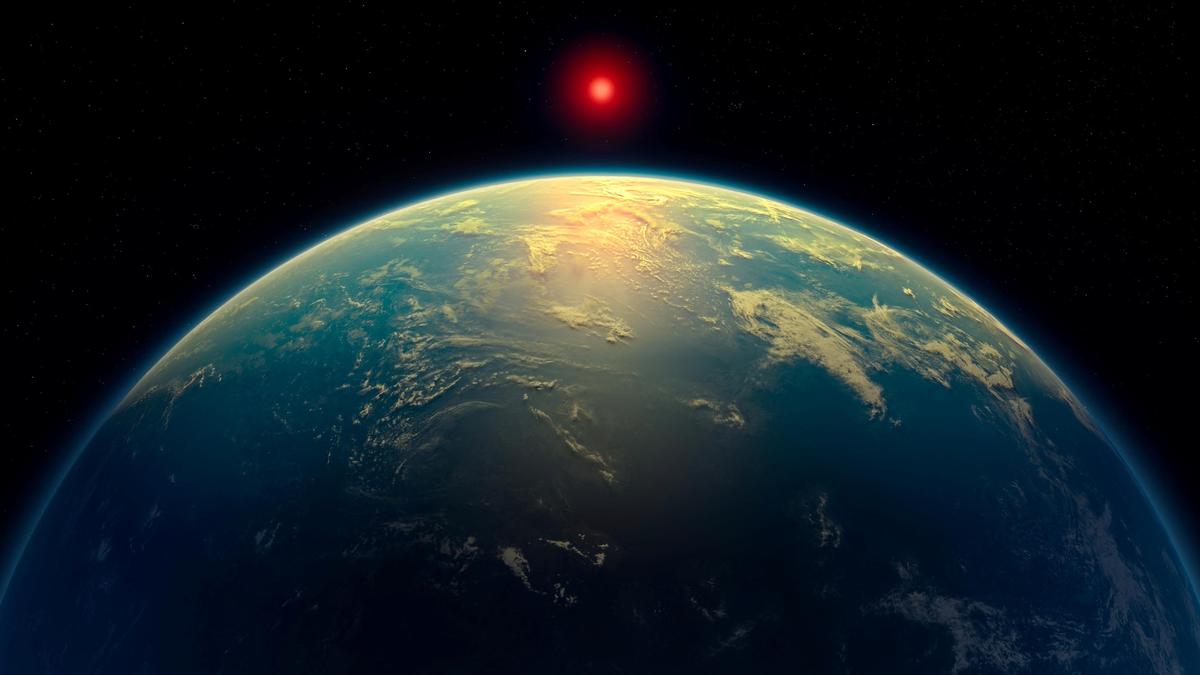
The rare earth hypothesis proposes that complex life is exceptionally uncommon in the universe due to a unique combination of Earth-like conditions. Recent research and scientific discussions have revisited this hypothesis, examining new evidence and debates around the factors influencing the emergence of complex life beyond our planet.
Explore the current status of the rare earth hypothesis and scientific insights into the rarity of complex life beyond Earth in the universe.
The rare earth hypothesis, which posits that complex life is a rare occurrence in the universe due to a unique set of geological and astronomical conditions found on Earth, remains a significant topic in astrobiology as of 2025. This concept has attracted attention since its formulation, especially as scientific advancements probe the likelihood of life elsewhere in the cosmos.
Understanding the Rare Earth Hypothesis
The hypothesis suggests that while microbial or simple life forms might be widespread, the evolution of complex, multicellular organisms requires a precise confluence of factors. These include a star system’s stability, the presence of a large moon to stabilize planetary tilt, a protective magnetic field, plate tectonics, and an orbit within the habitable zone—often referred to as the Goldilocks zone—where conditions allow liquid water to exist.
Recent Scientific Developments
In recent years, studies have re-examined these criteria with data from planetary missions and observations of exoplanets. Research indicates that while Earth-like planets are numerous, the specific conditions that foster complex life may be less common. Notably, astrophysicists emphasize the importance of a planet’s location in its galaxy and the likelihood of catastrophic events, such as asteroid impacts, which could influence evolutionary pathways.
Dr. Sara Kim, an astrobiologist at the University of California, commented, “Our understanding of habitable environments has expanded, but the rarity of stable, life-supporting conditions matching Earth’s remains a compelling argument supporting the hypothesis.”
Counterarguments and Debates
Despite support, some scientists argue that the rare earth hypothesis underestimates the diversity of potentially habitable environments. Discoveries of extremophiles on Earth, organisms thriving in conditions once thought inhospitable, suggest that life could adapt in a variety of settings.
Furthermore, the growing catalogue of exoplanets demonstrates a staggering range of planetary environments. Some in the scientific community propose that complex life might evolve under conditions vastly different from Earth’s, challenging the notion that Earth’s exact characteristics are uniquely essential.
The Search for Extraterrestrial Life Continues
Space agencies and observatories continue efforts to detect biosignatures — indicators of life — in exoplanet atmospheres and moons within our solar system, such as Europa and Enceladus. Upcoming missions equipped with advanced telescopes are expected to provide more data that may confirm or challenge the rare earth hypothesis.
Conclusion
The rare earth hypothesis remains a foundational framework in the ongoing quest to understand life’s distribution across the universe. While recent research supports the idea that Earth-like conditions suitable for complex life may be uncommon, scientific debates highlight the evolving nature of this field. Continued exploration and observation are vital for deepening insights into one of humanity’s most profound questions: Are we alone in the universe?