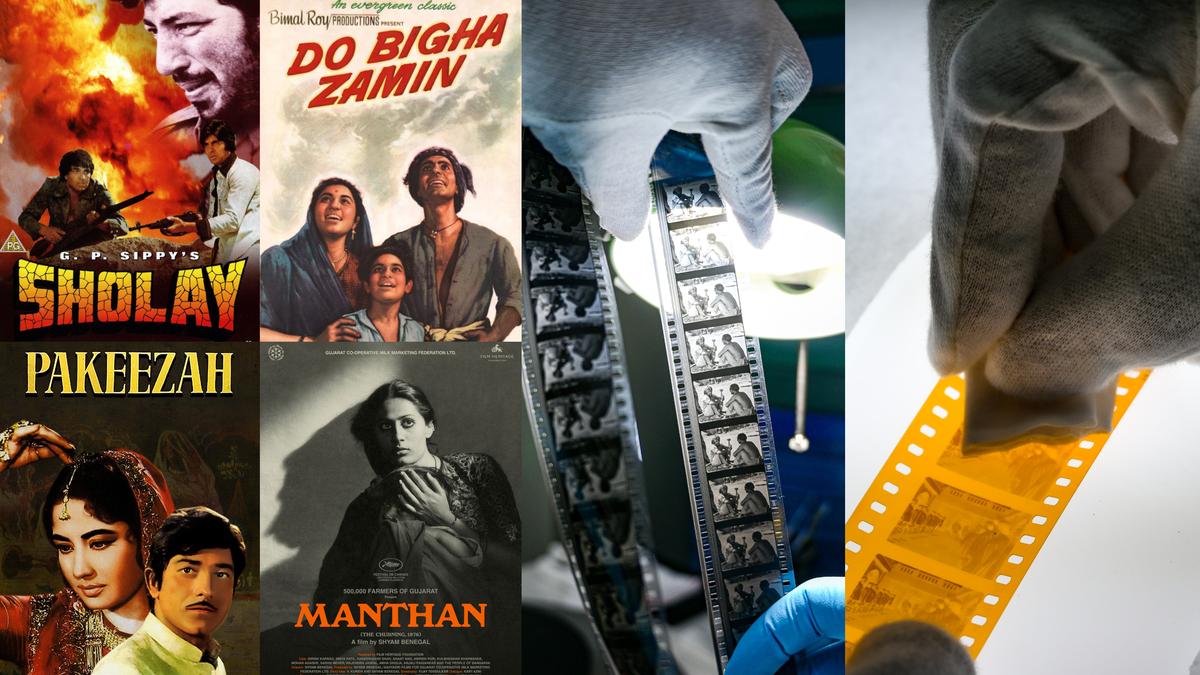
Indian cinema is witnessing a revival of its lost classics through dedicated restoration projects spearheaded by film preservationists and institutions. Iconic films such as Sholay, Do Bigha Zamin, and Pakeezah are being meticulously restored to preserve cultural heritage and reintroduce seminal works to contemporary audiences.
Indian cinema’s lost classics like Sholay and Pakeezah are being restored through preservation projects, reviving the nation’s rich film heritage for future generations.
In an ambitious cultural initiative, Indian cinema’s most revered lost classics are being meticulously restored, breathing new life into films considered fundamental to the country’s rich cinematic history. This restoration effort, led by film preservation organizations including the Film Heritage Foundation, aims to salvage and preserve foundational works like Sholay, Do Bigha Zamin, Manthan, and Pakeezah, ensuring their longevity for future generations.
Indian cinema, with its vast and diverse output, has faced significant challenges in film preservation due to the degradation of original prints and lack of archival infrastructure. Many cinematic treasures have been lost or severely damaged over decades, impeding access for scholars, cinephiles, and younger audiences. Recognizing this threat, preservationists have prioritized the restoration of seminal films spanning several decades, deemed critical to understanding India’s cultural and artistic heritage.
Sholay, often regarded as a landmark in Indian filmmaking, exemplifies the vitality of this restoration initiative. Released in 1975, the film is iconic for its narrative and technical innovations. The recent restoration, described by experts as ‘The Final Cut,’ involved painstaking frame-by-frame digital repair and color correction to revive the film’s original visual quality. “Restoring Sholay was not just about preservation but about reviving the experience for modern viewers,” said a senior archivist involved in the project.
Other classic films, including Do Bigha Zamin (1953), Manthan (1976), and Pakeezah (1972), have also undergone similar restoration processes. Do Bigha Zamin, a neo-realist film highlighting rural struggles, is critically important in India’s cinematic history. Manthan and Pakeezah, celebrated for their unique narrative styles and socio-cultural themes, were restored to address color fading and physical damage on film reels.
The Film Heritage Foundation is pivotal in coordinating these efforts, collaborating with national archives, private collectors, and international restoration labs. Their multifaceted approach combines traditional film conservation techniques with state-of-the-art digital technologies. This hybrid approach enhances the fidelity of the restored prints while respecting the original artistic intent.
Public screenings of restored films have been met with enthusiastic reception, both domestically and internationally. Film festivals and retrospectives are increasingly showcasing these renewed classics, offering educational value and renewed appreciation. According to film historian Dr. Anjali Rao, “Such restoration projects bridge the past and present, connecting audiences with the historical contexts and aesthetics that shaped Indian cinema.”
Despite progress, challenges remain. Restoration is an expensive and time-consuming process dependent on funding and technical expertise. Many films remain at risk due to deteriorating materials and incomplete records. However, growing awareness and institutional support have fortified the preservation movement in recent years.
In summary, the restoration and preservation of Indian cinema’s lost classics represent a significant cultural endeavor, safeguarding key films that define the nation’s cinematic legacy. Through collaboration and technological innovation, these efforts are revitalizing heritage films for contemporary viewing, education, and scholarly research.