Unexplained flashes and glowing phenomena observed on the Moon have caught the attention of scientists worldwide. Despite multiple observations and investigations, the origin of these sudden lunar illuminations remains uncertain.
Unexplained flashes and glowing events on the Moon have baffled scientists worldwide, fueling ongoing research to uncover their origins.
Unusual Flashes on the Moon Spark Scientific Curiosity
Scientists around the globe are closely examining a puzzling phenomenon occurring on the lunar surface: sudden and brief flashes of light accompanied by unexpected glows. These luminous events have been observed intermittently over recent months, capturing the attention of both astronomers and space research agencies.
Recent Observations and Global Interest
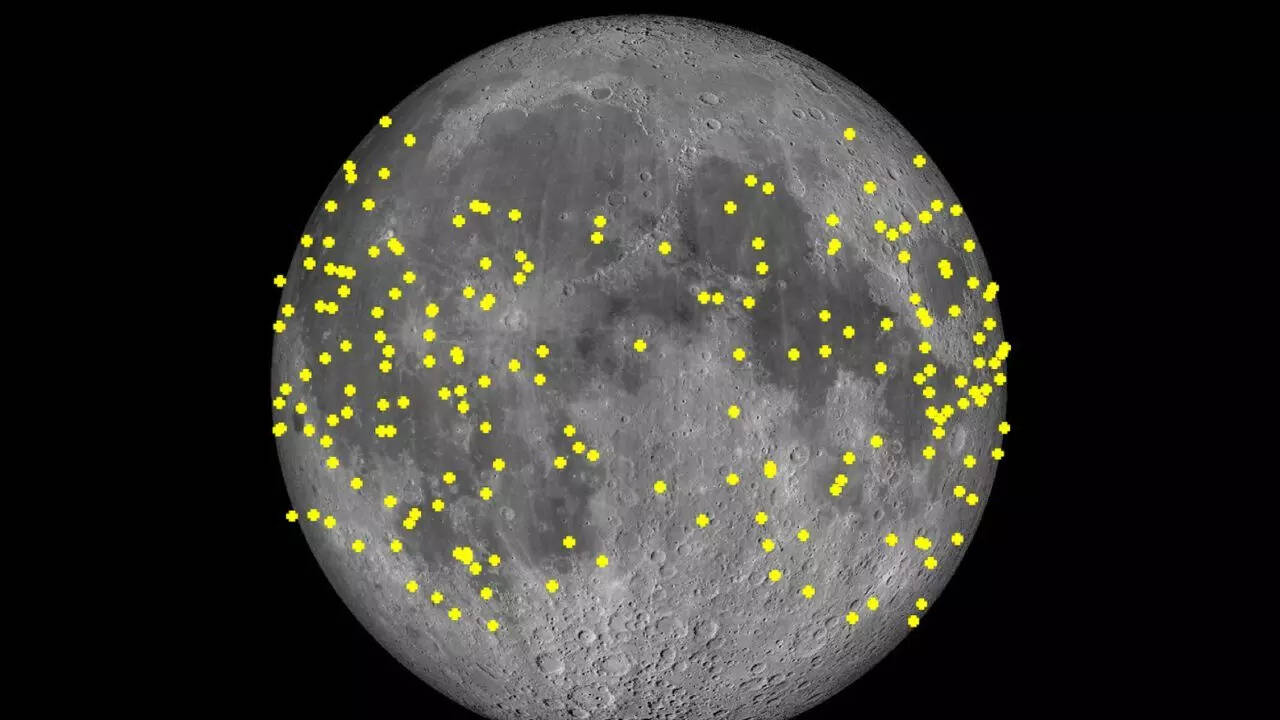
Since early this year, multiple telescopes and lunar orbiters have recorded transient bright spots on various regions of the Moon’s surface. These flashes last from a fraction of a second to several seconds, appearing without any predictable pattern. The phenomenon has prompted collaborative efforts among international space organizations to monitor and analyze the events.
While transient lunar phenomena (TLP) are not entirely new to science, the recent increase in reported occurrences and the intensity of some flashes have raised questions about their underlying causes. “Our instruments have detected flashes far brighter and more frequent than what typical lunar activity accounts for,” says Dr. Elena Martinez, a planetary scientist at the European Space Agency. “Understanding these could provide valuable insights into the Moon’s geology and potential interactions with space weather.”
Potential Causes Explored
Several hypotheses have been proposed to explain the mysterious lunar flashes. Some scientists suggest they may result from micrometeorite impacts that temporarily illuminate localized areas. Others speculate that electrostatic discharges caused by solar wind interactions with the lunar regolith might be responsible.
Adding to the intrigue, variations in glow intensity and duration have complicated efforts to identify a singular explanation. Some flashes coincide with predicted meteor showers, while others occur during seemingly quiet lunar nights. This variability has led to further investigations into the Moon’s subsurface activity and the influence of solar and cosmic radiation.
Historical Context and Previous Studies
Transient lunar phenomena have been documented sporadically since the 1950s, with astronomers reporting flashes, glows, and color changes on the Moon’s surface. Past observations often faced skepticism due to the difficulty in verifying events and the possibility of observational errors.
However, modern technology and continuous lunar observation missions have enabled more reliable data collection. Instruments aboard NASA’s Lunar Reconnaissance Orbiter and China’s Chang’e missions have recorded high-resolution images and data that may shed light on these phenomena.
Ongoing Research and Future Missions
Research teams worldwide are employing an array of observational platforms, including Earth-based telescopes equipped with high-sensitivity cameras and space-based sensors, to capture and analyze the fleeting lunar flashes.
Furthermore, upcoming missions aiming to establish a sustained human presence on the Moon may integrate specialized monitoring equipment to study these events in greater detail. Understanding the cause and nature of these flashes is critical, not only for scientific knowledge but also for the safety of future lunar explorers.
Conclusion
The sudden flashes and glow phenomena playing out on the lunar surface continue to puzzle the scientific community. While several plausible theories exist—ranging from meteorite impacts to electrostatic events—none have yet been conclusively validated. As international collaborations intensify and observation technologies advance, researchers hope to unravel the mysteries behind the Moon’s unexpected light shows, unlocking new insights into our celestial neighbor.