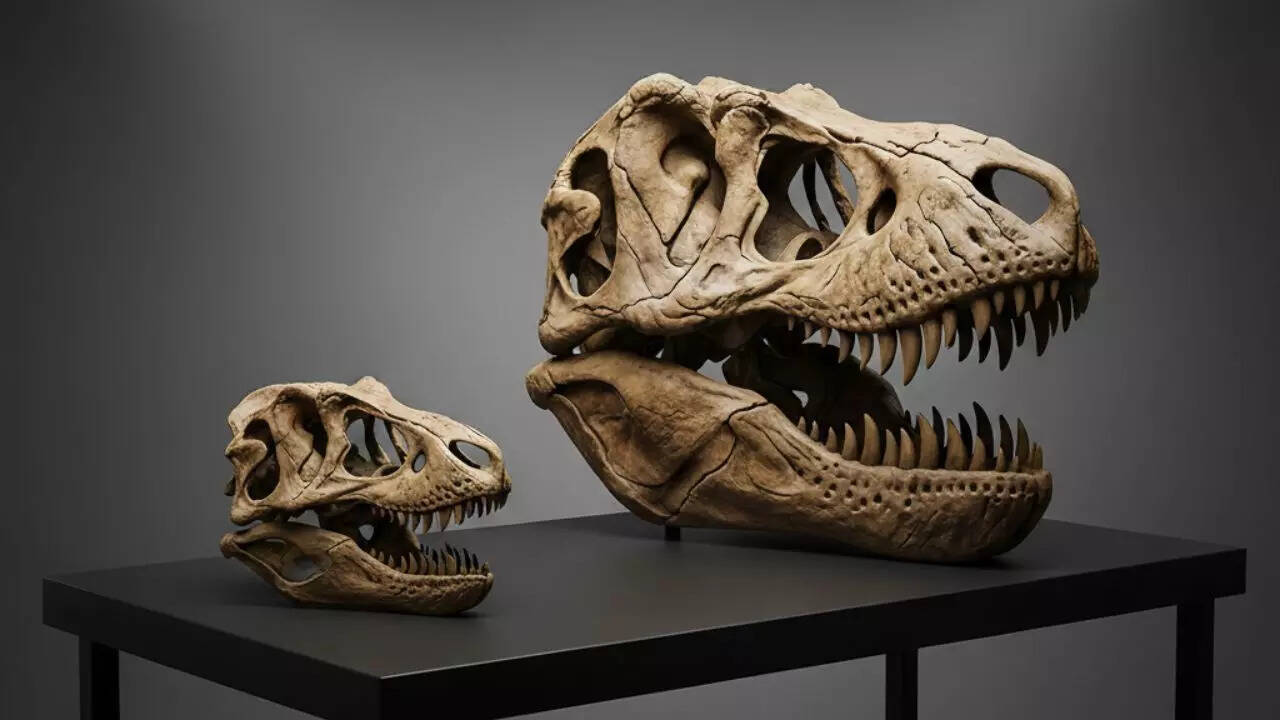
Researchers have resolved a decades-old paleontological mystery surrounding the existence of a tiny Tyrannosaurus rex specimen. The new findings clarify whether the fossil represents a juvenile or a distinct species, reshaping our understanding of T-Rex growth and evolution.
Scientists have solved the mystery of tiny T-Rex fossils, revealing they are juveniles, not separate species, enhancing understanding of T-Rex growth and evolution.
Paleontologists have finally solved the enigma of the ‘tiny’ Tyrannosaurus rex fossil that has baffled scientists for years. The revelation, announced on November 2, 2025, provides critical insights into the growth stages and diversity within the T-Rex lineage, one of the most iconic dinosaurs in Earth’s history.
The Mystery of the Mini T-Rex
Since the discovery of unusually small T-Rex fossils decades ago, researchers have debated whether these remains belonged to juvenile individuals or represented a new, diminutive species altogether. These tiny specimens, measuring significantly smaller than adult T-Rex skeletons, posed a puzzle: Were they simply young dinosaurs, or did they indicate a previously unknown variation?
A Collaborative Research Breakthrough
An international team of scientists led by experts from the Natural History Museum in London and the University of Montana undertook a comprehensive study involving fossil morphology, bone histology, and growth pattern analysis. Utilizing advanced imaging techniques and comparative anatomy, the group examined numerous fossil samples collected from North America over the past 30 years.
“By studying the bone microstructures, we could determine the age and growth rate of these specimens,” said Dr. Emily Carter, lead researcher and paleobiologist at the University of Montana. “Our results demonstrate that the tiny T-Rex fossils were, in fact, juvenile individuals rather than a separate species.”
Implications for Understanding T-Rex Development
The findings elucidate the growth timeline of Tyrannosaurus rex, confirming that these dinosaurs experienced rapid size increases during adolescence. This growth pattern helps explain the disparity in fossil sizes previously attributed to multiple species. The juveniles showed distinct anatomical features that changed significantly as they matured, which contributed to past classification confusion.
“This research fills a crucial gap in the T-Rex life history, showing how the species developed from hatchlings to apex predators,” added Dr. Carter. “It also highlights the importance of integrating multiple scientific approaches to resolve complex paleontological questions.”
Context Within Dinosaur Paleontology
The Tyrannosaurus rex, known for its massive size and formidable predatory capabilities, has been intensively studied since its first definition in the early 20th century. Understanding its growth phases provides broader insights into dinosaur biology and ecology during the Late Cretaceous period.
Previous studies often speculated about dwarf species coexisting with adults; however, the current study effectively dispels these notions for T-Rex, emphasizing ontogenetic (developmental) changes as the primary explanation for size variations in the fossil record.
Conclusion
The resolution of the tiny T-Rex mystery marks a significant advancement in dinosaur science, affirming that the smaller fossils are juveniles rather than separate species. This discovery refines our comprehension of T-Rex growth dynamics and offers a clearer picture of their developmental biology. The research underscores the value of multidisciplinary scientific collaboration in uncovering Earth’s prehistoric past.
The study is published in the latest issue of the Journal of Vertebrate Paleontology and is accessible online through the Times of India’s science section.