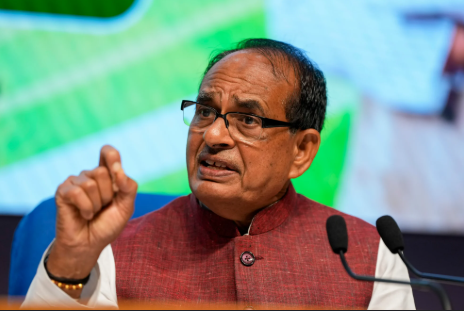
Madhya Pradesh Chief Minister Shivraj Singh Chouhan emphasized India’s need to pursue a self-reliant economic path in light of escalating global trade tariffs, describing tariffs as the new weapons in international commerce. Speaking on October 9, Chouhan highlighted the importance of domestic manufacturing and reducing import dependency to safeguard India’s economic sovereignty.
Madhya Pradesh CM Shivraj Singh Chouhan stresses India’s self-reliance amid rising global tariffs, urging boosted domestic manufacturing and reduced import dependency.
In a significant address on October 9, 2025, Madhya Pradesh Chief Minister Shivraj Singh Chouhan underscored the imperative for India to chart an independent economic course focused on self-reliance amid increasing global trade tensions. Speaking at a business forum in Bhopal, Chouhan characterized tariffs imposed by various countries as ‘new weapons’ in international trade, urging India to strengthen its domestic industries to withstand these external pressures.
Addressing trade challenges, Chouhan said, “India has to choose its path and focus on self-reliance. The rising use of tariffs globally is a clear indication that economic competition is intensifying, and it is essential for us to reduce dependency on imports and boost indigenous manufacturing.”
He pointed out that in recent years, many countries have resorted to imposing tariffs and trade barriers as strategic tools to protect their own markets, creating an unpredictable environment for exporters and importers alike. “Tariffs have become the new weapons in global economic warfare,” he added.
Chouhan stressed that India’s journey towards Atmanirbhar Bharat (self-reliant India) should be accelerated to build resilient supply chains. He highlighted government initiatives aimed at incentivizing startups, enhancing infrastructure, and improving ease of doing business as steps towards this goal.
The Chief Minister also called for increased investment in technology and innovation to boost competitive advantage. “We need to focus on sectors where India can not only meet domestic demand but also become a global supplier,” he said, referencing key industries such as electronics, pharmaceuticals, and renewable energy.
Experts concur that the global increase in tariffs, especially between major economies, has prompted countries like India to rethink their trade strategies. The World Trade Organization (WTO) has reported a steady rise in protectionist measures over the past few years, affecting global supply chains and trade flows. In this context, India’s policy of self-reliance may serve to shield its economy from external shocks and fluctuating international trade dynamics.
However, economists note that self-reliance should not translate into isolationism. Sustainable growth depends on a balance between fostering domestic industries and maintaining healthy global trade relationships. Chouhan’s remarks align with the broader national agenda promoted by the central government under Prime Minister Narendra Modi, which seeks to enhance India’s manufacturing capacity while engaging in strategic trade partnerships.
In Madhya Pradesh, Chouhan’s administration has launched multiple initiatives aimed at attracting foreign direct investment and supporting local entrepreneurs to drive economic development. These efforts complement his call for a self-reliant India by aiming to create employment opportunities and stimulate innovation.
As India navigates a complex geopolitical and economic landscape marked by tariff wars and shifting alliances, the emphasis on self-reliance encapsulates a strategic approach to secure its economic future. Chouhan’s address on October 9 serves as a reaffirmation of this vision, calling on all stakeholders to contribute to building a resilient and competitive Indian economy.
In conclusion, Shivraj Singh Chouhan’s recent remarks highlight the growing significance of self-reliance in India’s economic policy amidst the evolving global trade environment. By viewing tariffs as modern economic weapons, he stresses the urgency for India to amplify domestic production capabilities and reduce supply chain vulnerabilities, ensuring sustainable growth in an increasingly protectionist world.