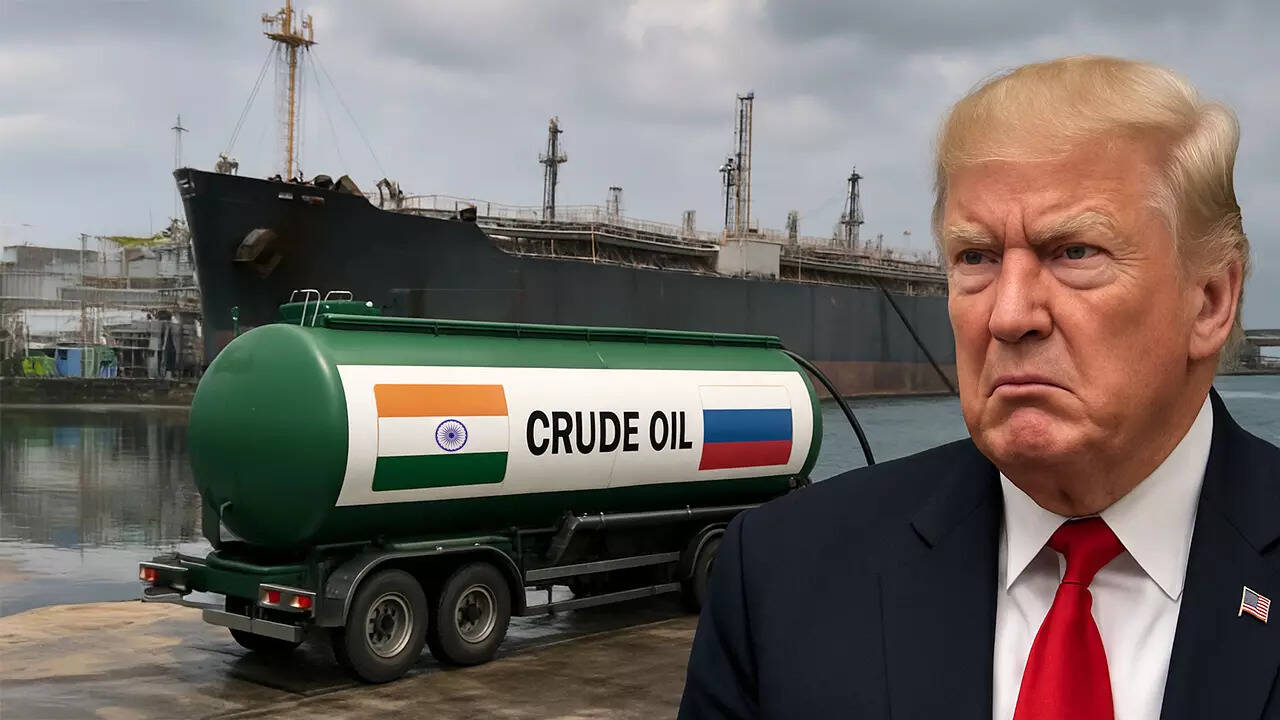
Newly announced Trump-era sanctions are set to disrupt global oil markets in the short term. However, experts suggest it is highly unlikely that India and China will completely cease purchasing Russian oil due to strategic and economic considerations.
Trump-era sanctions cause short-term disruption to Russian oil exports, but India and China unlikely to halt purchases entirely due to strategic and economic reasons.
The recent announcement of sanctions on Russian oil reminiscent of policies from the Trump administration is expected to cause short-term disruption in the global oil trade. However, the likelihood that large buyers such as India and China will completely stop their imports of Russian oil remains low due to various strategic and economic factors.
The sanctions, imposed on October 30, 2025, target key facets of the Russian energy export infrastructure, aiming to curtail Moscow’s revenues amid ongoing geopolitical tensions. While these measures are expected to create immediate challenges in supply chains and pricing, market analysts emphasize the complexity of the trade relationships that Russia maintains, particularly with Asian economies.
India and China, as two of the world’s largest importers of crude oil, have consistently sourced significant volumes from Russia, benefiting from discounted prices and favorable trade terms. Both nations have been keen to secure stable energy supplies to power their growing economies while managing inflationary pressures at home.
Trade experts note that a complete cessation of Russian oil imports by India and China is improbable in the short to medium term. Economic interests, existing contracts, and infrastructural dependencies create substantial inertia against an outright embargo. Furthermore, both countries have voiced cautious diplomatic stances, balancing their relationships with Western powers and Russia.
“India and China have built robust energy procurement networks with Russia that are not easily supplanted,” said energy analyst Priya Mehta. “While the sanctions will cause disruptions and may push these countries to seek alternative sources over time, a total stop immediately is unlikely.”
The sanctions follow a series of steps by Western governments to restrict Russian energy exports, aiming to pressure Moscow over its foreign policy actions. However, Russia has adapted by redirecting exports toward Asian markets, negotiating price discounts and payment arrangements that make Russian oil a competitively priced option.
Market observers also point out logistical and infrastructural realities. India’s refineries and China’s energy import systems have specific compatibility features shaped by long-term sourcing patterns, which cannot be swiftly altered without significant investment and reorganization.
Analysts caution that while short-term market volatility is expected, the long-term impact of sanctions depends on the dynamic interplay among geopolitical developments, global energy demand, and emerging trade partnerships.
In conclusion, the renewed sanctions initiated on October 30, 2025, are poised to disrupt Russian oil exports in the near term. Nevertheless, the entrenched economic and strategic ties between Russia and major Asian oil buyers like India and China make a complete halt in their purchases unlikely in the immediate future. The evolving geopolitical landscape and energy market conditions will continue to shape these critical trade relationships.