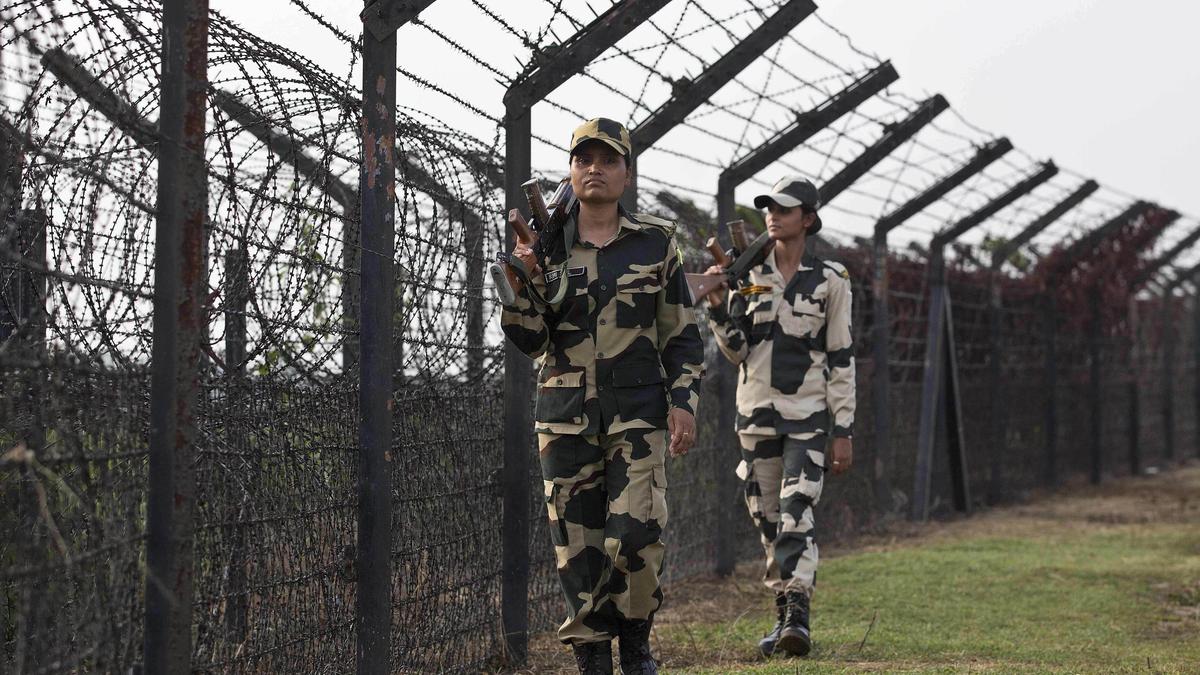
The Union Budget 2025 presented on February 1 includes a marginal increase in the Ministry of Home Affairs (MHA) allocation, focusing significantly on enhancing border infrastructure and management. This strategic emphasis aims to strengthen national security amid evolving geopolitical challenges.
Union Budget 2025 boosts border infrastructure with focused investments amid marginal increase in Ministry of Home Affairs allocation for enhanced national security.
New Delhi – The Union Budget 2025, unveiled on February 1, 2025, by the Government of India, marks a significant step towards strengthening the country’s border infrastructure and management, amidst a marginal increase in the overall allocation to the Ministry of Home Affairs (MHA). The budgetary proposals reflect the government’s prioritization of national security and border preparedness in response to dynamic regional security conditions.
A Marginal Increase for the Ministry of Home Affairs
The Ministry of Home Affairs, responsible for internal security, law and order, and border management, received a restrained budget increase this year. The allocation saw a marginal uptick compared to the previous fiscal year, signaling continued support albeit with measured fiscal prudence. Analysts note that while the cumulative increase is modest, the budget distinctly highlights border-related infrastructure as a focal area.
Focus on Border Infrastructure and Management
A notable aspect of the 2025 budget is the dedicated emphasis on enhancing border infrastructure development. The government has earmarked significant funds towards modernizing border roads, improving fencing and surveillance systems, and upgrading border outposts and communication networks. These investments aim to improve the mobility and operational capabilities of security forces stationed along India’s borders.
In addition to physical infrastructure, the budget addresses advanced technological enhancements to boost border surveillance and management. This includes deploying state-of-the-art monitoring equipment, strengthening intelligence capabilities, and integrating modern communication tools, which are critical for addressing complex security challenges.
Contextualizing the Strategic Imperative
India shares extensive and sensitive borders with several countries, including China, Pakistan, and Bangladesh, making border management a strategic priority. Recent geopolitical developments and border incidents have underscored the need for robust infrastructure to facilitate rapid mobilization and effective surveillance.
Government officials emphasize that the enhanced budgetary focus on border infrastructure aligns with the broader national security framework, which seeks to create resilient and responsive systems. “Strengthening our borders is essential for safeguarding sovereignty and ensuring stability,” stated a senior official from the Ministry of Home Affairs.
Complementary Initiatives and Future Outlook
Apart from infrastructure, the 2025 budget reinforces support for paramilitary and border security forces, who are central to implementing these security measures. Allocation for training, welfare, and modernization of equipment also forms a part of this holistic approach.
Experts believe that while the incremental increase in overall MHA funding may appear modest, the targeted use of funds reflects strategic prioritization. The government is balancing fiscal responsibility with the imperative to fortify national borders amid evolving security dynamics.
Conclusion
The Union Budget 2025 articulates a clear directive towards bolstering India’s border infrastructure and management, despite only a marginal rise in the Ministry of Home Affairs allocation. By focusing on upgrading physical infrastructure and technological capabilities at the borders, the government aims to enhance national security readiness in a complex geopolitical environment. This nuanced budget approach underscores the importance of strategic investments in security amidst broader fiscal considerations.