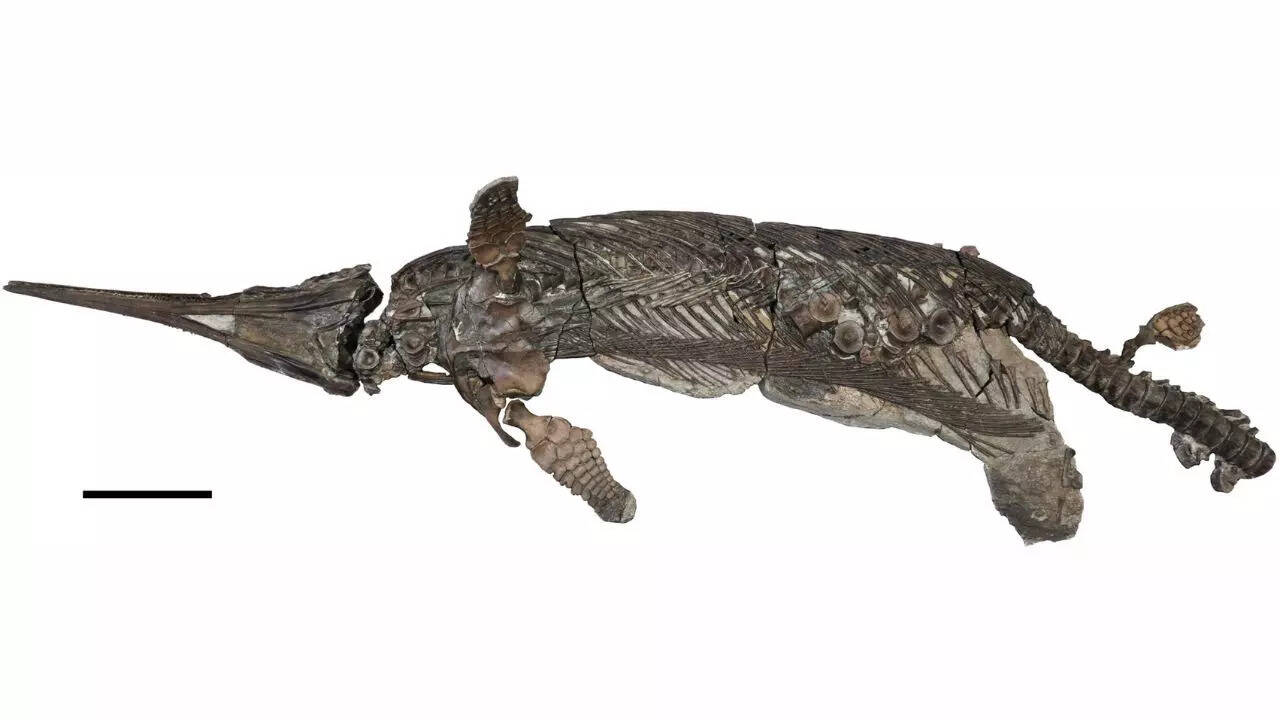
Scientists have uncovered a 190-million-year-old marine reptile featuring a distinctive sword-shaped snout along the Jurassic Coast in the United Kingdom. This remarkable fossil offers new insights into marine life during the Early Jurassic period and expands understanding of prehistoric sea dragons.
Discover the 190-million-year-old sea dragon with a sword-like snout found on the UK’s Jurassic Coast, revealing new Jurassic marine life insights.
In a significant paleontological discovery, researchers have unearthed the fossilized remains of a 190-million-year-old marine reptile, commonly known as a sea dragon, along the UNESCO-listed Jurassic Coast in southern England. The creature is notable for its unique sword-like snout, a feature that distinguishes it from other marine reptiles from the Jurassic period. The find sheds light on marine biodiversity approximately 190 million years ago during the Early Jurassic epoch.
The fossil was discovered during a recent excavation at a well-known fossil-rich site along the Jurassic Coast, a UNESCO World Heritage Site famous for its extensive geological history dating back to the Mesozoic Era. Experts believe the sea dragon belonged to a group of prehistoric marine reptiles called ichthyosaurs, which dominated the seas in the Triassic and Jurassic periods.
Dr. Emily Carter, a leading paleontologist involved in the discovery, stated, “The sword-like snout we observed in this specimen is an incredible adaptation that likely played a role in its predatory habits, possibly used to hunt smaller fish or to navigate complex underwater environments.” The anatomy suggests specialized feeding strategies that have not been documented in similar ichthyosaur species.
Detailed analysis of the fossil structure indicates that the sea dragon measured approximately 3 meters in length, with the elongated snout constituting a significant portion of its head. Its streamlined body hints at swift swimming capabilities, which would have been advantageous in the dynamic marine ecosystems of the Early Jurassic seas.
The Jurassic Coast, stretching over 95 miles along the southern coast of England, offers a unique window into Earth’s geological and evolutionary past. It has been the site of numerous landmark fossil discoveries, including early dinosaurs, marine reptiles, and ancient plant life. This latest find adds to the growing body of evidence highlighting the diversity and complexity of Jurassic marine ecosystems.
Marine reptiles such as ichthyosaurs were vital components of the prehistoric oceans, filling ecological niches similar to modern dolphins and large fish. Discoveries like this sword-nosed sea dragon provide critical data to paleobiologists studying evolutionary adaptations and species interactions in ancient marine environments.
The research team plans to conduct further studies on the fossil, including CT scans and biomechanical modeling, to better understand the functionality of the sword-like snout and its implications for the animal’s behavior and ecology. The specimen will be housed in a museum for public viewing and educational purposes, underscoring the importance of preserving geological heritage.
This discovery not only highlights the rich paleontological significance of the Jurassic Coast but also underscores the continuing advancements in fossil excavation and analysis techniques. As scientists continue to explore these fossil beds, more remarkable insights into Earth’s distant past are expected to emerge.
In summary, the unearthing of the 190-million-year-old sea dragon with its distinctive sword-shaped snout offers fresh perspectives on the diversity of marine reptiles during the Jurassic period and demonstrates the ongoing importance of the Jurassic Coast as a treasure trove of ancient life.