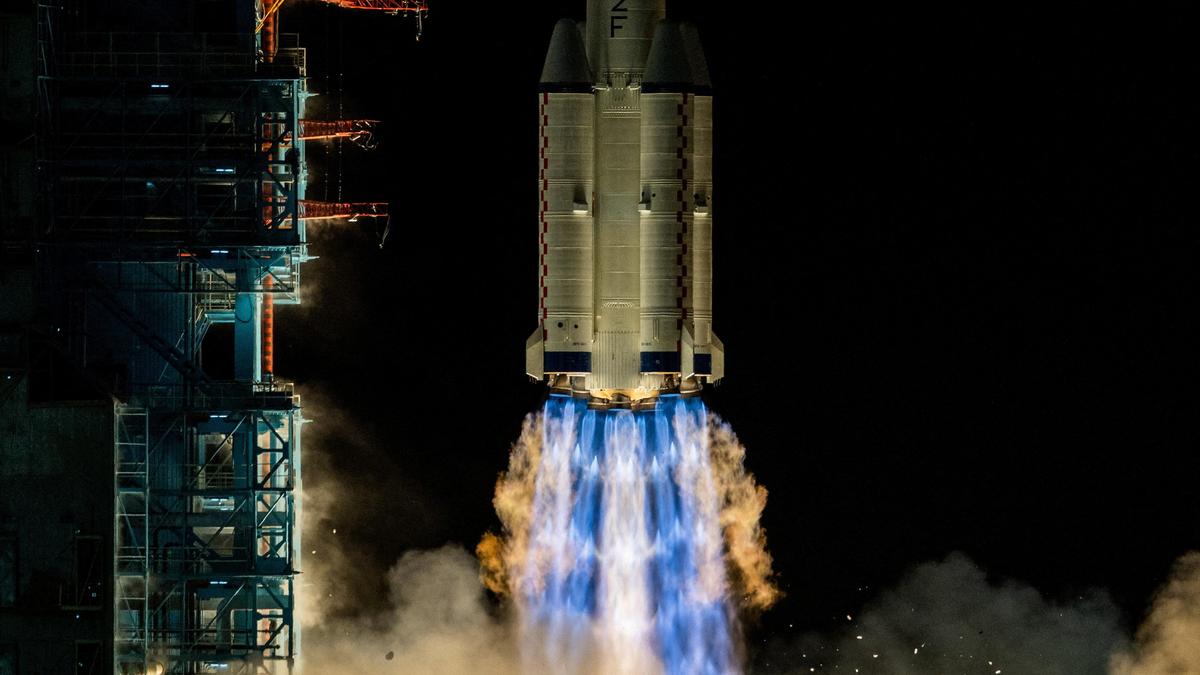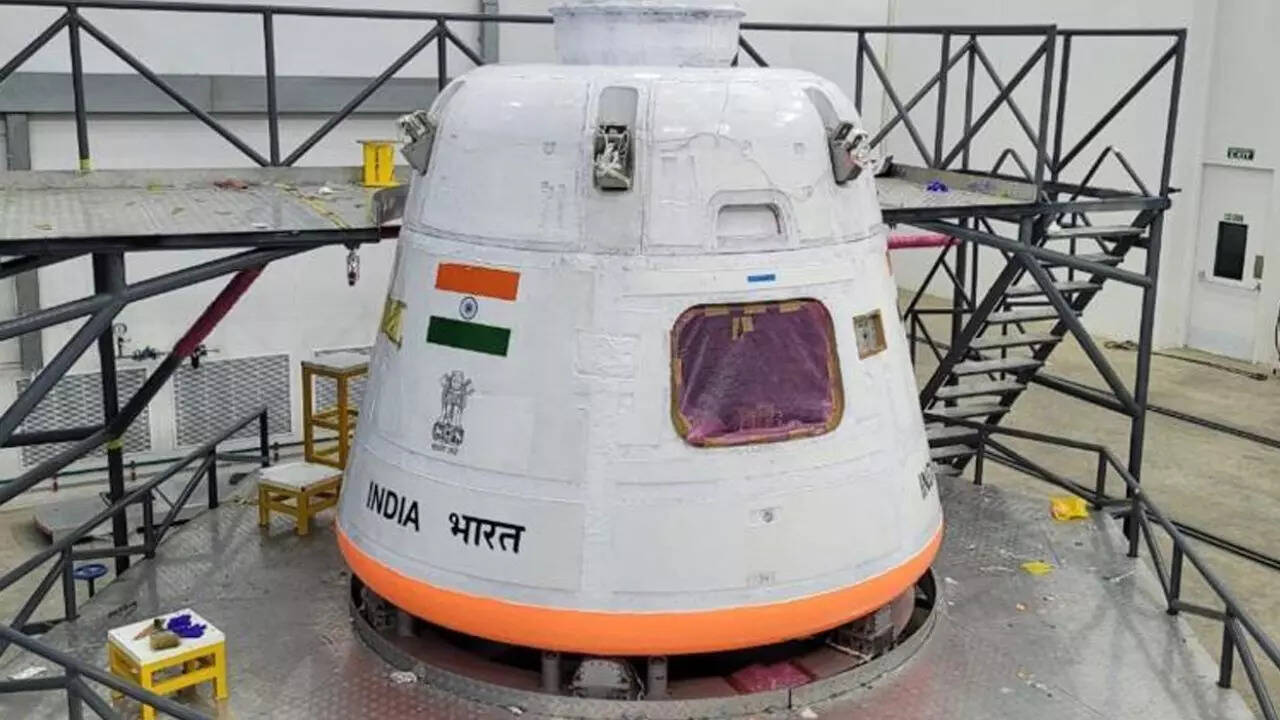
India’s space agency ISRO has announced that its Gaganyaan mission has reached 90% completion as it prepares for the country’s first manned spaceflight. Chairman V Narayanan confirmed the significant progress, marking a critical milestone in India’s human space exploration efforts.
ISRO’s Gaganyaan mission reaches 90% completion ahead of historic first Indian human spaceflight, marking a key milestone in the country’s space exploration efforts.
Indian Space Research Organisation (ISRO) is nearing a major milestone with its ambitious Gaganyaan mission, having achieved 90% completion as it advances toward launching India’s first crewed spaceflight. The progress was confirmed by ISRO Chairman V Narayanan during a press briefing on October 24, 2025. This development places India on the cusp of joining an exclusive club of nations capable of human spaceflight, highlighting the technological and scientific strides made by the country’s space program.
Gaganyaan, ISRO’s flagship human spaceflight initiative, aims to demonstrate India’s capability to send astronauts safely to low Earth orbit and return them back to earth. The mission plan includes sending a crew of up to three astronauts on a circular low Earth orbit approximately 300 kilometers above the Earth’s surface. If successful, the mission will mark India’s first human spaceflight, placing it alongside countries like the United States, Russia, and China.
According to Chairman Narayanan, several critical components of the Gaganyaan mission have reached advanced stages of development and testing. “We have completed 90 percent of the hardware development, including the crew module, service module, and launch vehicle integration, ensuring stringent safety and quality standards,” he stated. The mission’s launch vehicle, based on the proven GSLV Mk III platform, has undergone extensive modifications to support the added requirements of human spaceflight.
The Gaganyaan spacecraft features a crew module equipped to support astronaut life for the duration of the mission, including environmental control, life support systems, and emergency escape capabilities. ISRO has also conducted unmanned test flights to validate critical technologies before proceeding with the crewed mission. The successful completion of these trials has paved the way for final preparations and astronaut training.
India’s Human Spaceflight Programme was announced in 2018 with a budget allocation supporting research, development, astronaut training, and mission operations. India has partnered with international agencies for astronaut training and safety protocols, including collaboration with Russia’s Glavkosmos, which provides training facilities and expertise. The Indian astronauts, known as ‘Vyomanauts,’ have been undergoing rigorous training since 2023.
The mission is currently scheduled for launch in late 2026, with ISRO finalizing preparations in the coming months. Chairman Narayanan emphasized the agency’s commitment to safety and mission success, noting that “all systems are being subjected to exhaustive tests to meet the highest standards expected of human spaceflight missions.”
Gaganyaan’s success is expected to boost India’s position in the global space community and spur advancements in related technologies. It also aims to inspire younger generations to pursue science and engineering careers, aligned with the national vision of technological self-reliance and innovation.
In addition to the primary crewed mission, ISRO plans to advance space research through follow-up human spaceflight programs and expand its presence in space exploration initiatives. The agency’s progress exemplifies India’s growing capabilities in space technology and its strategic ambitions for space science and exploration.
With 90% completion achieved, the Gaganyaan mission stands at the forefront of India’s space dream, poised to make history as the nation prepares to launch its first astronauts into space.