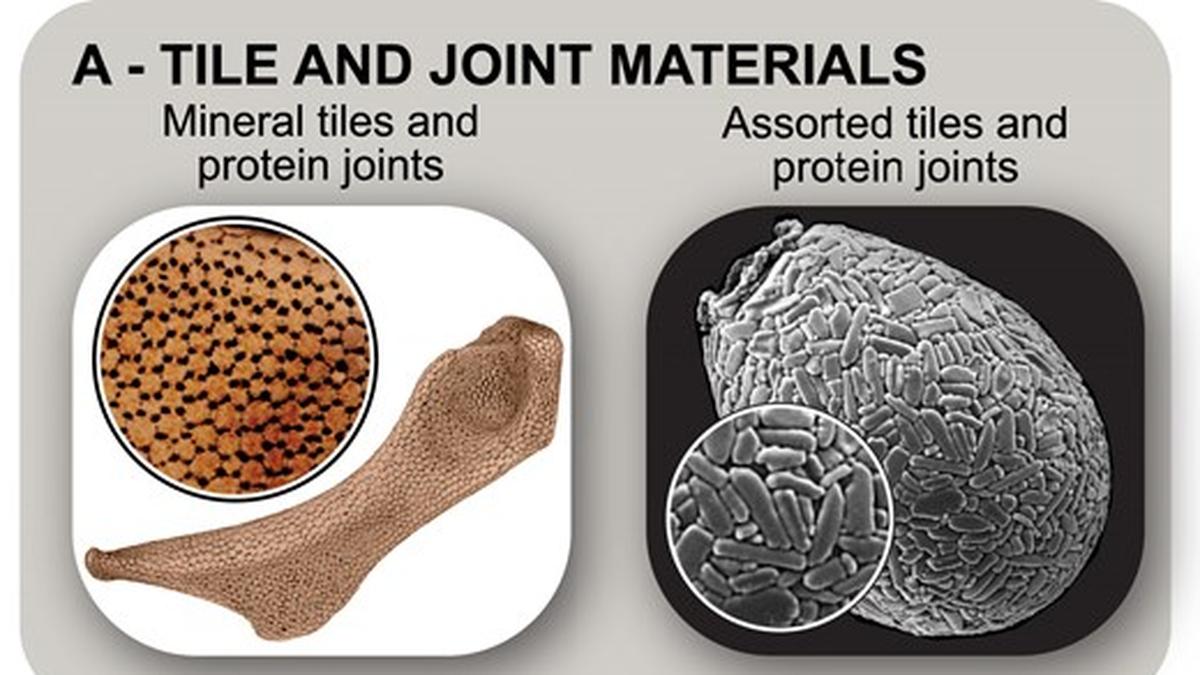
A recent scientific atlas reveals that tiled body structures are more common across diverse life forms on Earth than previously understood. This groundbreaking study provides insights into how evolution utilizes modular body plans, enhancing our understanding of biodiversity and biological design.
New scientific atlas reveals tiled body structures are widespread across Earth’s life, offering insights into evolutionary biology and modular body plans.
A groundbreaking new atlas published on November 19, 2025, reveals that tiled body patterns, once thought to be limited to specific species, are widespread across various life forms on Earth. This comprehensive research expands our understanding of biological structures, emphasizing the prevalence of modular, repeating body components that resemble tiles.
The atlas, assembled by an international team of evolutionary biologists and published in a peer-reviewed scientific journal, demonstrates that tiled bodies occur in organisms ranging from microscopic life to complex animals. These tiled structures play crucial roles in the growth, movement, and survival of organisms by providing both flexibility and strength.
Understanding Tiled Body Structures
Tiled body patterns refer to the arrangement of body parts in repetitive, often rectangular or polygonal, units that together form the organism’s body plan. These modular units can be cells, scales, plates, or other biological components assembled like tiles in a mosaic.
Dr. Maria Lopez, a lead researcher in evolutionary morphology and co-author of the atlas, explains, “The repeated use of tile-like structures across different species highlights a fundamental evolutionary strategy. It allows organisms to develop complex forms from simple repeating units, facilitating repair, growth, and adaptability.”
Significance to Evolutionary Biology
The new atlas challenges long-held notions that tiled body structures were rare or confined to isolated groups. Instead, it documents their prominence in a wide range of taxa, including reptiles with scaled skins, certain fish with armored plates, and even some plants that grow in modular leaf patterns.
The researchers used advanced imaging techniques and comparative anatomy to catalog these features across hundreds of species. Their data suggest that the tiled pattern likely evolved independently multiple times, demonstrating convergent evolution driven by similar functional needs.
Implications for Biodiversity and Biomimetics
Recognizing the ubiquity of tiled body plans also has important implications for biodiversity studies and the design of bio-inspired technologies. Materials science and engineering can draw from these natural modular designs to develop durable yet flexible materials.
“This atlas not only enriches our biological knowledge but also inspires new approaches in material engineering and robotics,” said Dr. Lopez. “Nature’s tiled designs are optimized over millions of years, presenting valuable templates for human innovation.”
Future Research Directions
The atlas’s authors call for further interdisciplinary studies to understand the genetic and developmental mechanisms behind tiled body formation. They also emphasize the need to explore ecological roles of these structures in organismal survival and evolution.
The comprehensive documentation provided by this atlas serves as a valuable resource for scientists studying evolutionary biology, developmental genetics, and related fields. It paves the way for new explorations into how life on Earth organizes itself at fundamental structural levels.
In summary, the newly released atlas reveals that tiled body patterns are a common and evolutionarily significant feature across a diverse array of life forms on Earth. This discovery provides fresh insights into the modular nature of biological design and opens avenues for future scientific and technological advancements.